Dave's Pest Control

Blog

  • Termites in Florida: Why Florida Homeowners Need to Inspect Their Homes Annually

    Termites in Florida: Why Florida Homeowners Need to Inspect Their Homes Annually

    Termites are a common problem in Florida, where the warm and humid climate provides the perfect environment for these destructive pests to thrive. If left unchecked, termites can cause significant damage to homes and other structures, leading to costly repairs and potential safety hazards. That’s why it’s essential for homeowners to have their homes inspected annually to prevent termites from taking hold. We find major termite infestations in Volusia, Flagler, Seminole, Orange, and Lake counties on a regular basis.

    According to a report by the National Pest Management Association (NPMA), termites cause an estimated $5 billion in property damage each year in the United States.

    This includes damage to homes, businesses, and other structures.
    In the housing market specifically, termites can cause significant damage to homes, leading to costly repairs and potential safety hazards. The cost of termite damage in the housing market can vary depending on the severity of the infestation and the extent of the damage.

    In Florida, where termites are a common problem, the cost of termite damage in the housing market is estimated to be in the hundreds of millions of dollars each year. This includes the cost of repairs and the loss of property value due to termite damage.

    Overall, the cost of termite damage in the housing market is significant and underscores the importance of regular inspections and preventative measures to protect homes from termite infestations.

    Why are Termites such a Problem in Florida?

    Termites are a type of insect that feed on wood and other cellulose-based materials. In Florida, there are several species of termites that are common, including subterranean termites, drywood termites, and Formosan termites. These pests can cause significant damage to homes and other structures, including wooden decks, fences, and even trees.

    Subterranean termites are the most common type of termite in Florida. They live in underground colonies and build mud tubes to travel from their nests to their food sources. These termites can enter homes through cracks in the foundation or other openings, such as gaps around pipes or electrical wires.

    Drywood termites, on the other hand, live inside the wood they infest. They don’t require contact with the soil and can enter homes through small cracks or openings in the wood. These termites can be difficult to detect, as they often infest hidden areas such as attics, crawl spaces, and wall voids.

    Formosan termites are a particularly aggressive species of termite that can cause significant damage in a short amount of time. They are known for their large colonies and ability to build mud tubes up the sides of buildings to reach their food sources.

    Why Annual Inspections are Necessary

    Termites can cause significant damage to homes and other structures, often without being detected until it’s too late. That’s why it’s essential for homeowners to have their homes inspected annually by a licensed pest control professional. An annual inspection can help detect termite activity early before it has a chance to cause significant damage.

    During an inspection, the pest control professional will look for signs of termite activity, such as mud tubes, termite droppings, and damaged wood. They will also inspect the crawl space, attic, and other hidden areas of the home where termites are known to infest.

    If termites are detected, the pest control professional will recommend a treatment plan to eliminate the infestation. Treatment options may include liquid termiticides, baits, or fumigation, depending on the severity of the infestation and the type of termite involved.

    Preventing Termite Infestations

    In addition to annual inspections, there are several steps homeowners can take to prevent termite infestations. These include:

    1. Remove wood debris around the home: Termites are attracted to wood, so it’s important to remove any wood debris, such as fallen trees or branches, from around the home.
    2. Keep firewood away from the home: If you store firewood outside, keep it at least 20 feet away from the home to reduce the risk of termites.
    3. Fix leaks and moisture problems: Termites are attracted to moisture, so it’s important to fix any leaks or moisture problems in and around the home.
    4. Seal cracks and openings: Termites can enter the home through small cracks and openings, so it’s important to seal these up to prevent entry.
    5. Install termite barriers: Termite barriers, such as metal mesh or sand barriers, can be installed around the foundation of the home to prevent termites from entering.

    How Termites Find Wood in Homes

    Termites are attracted to wood and other cellulose-based materials, such as paper and cardboard. They are able to find wood in homes by following moisture and scent trails. Termites are able to detect moisture in wood and other materials, which is why they are often found in areas of the home that are damp or have water damage.

    Termites are also able to detect the scent of wood and other cellulose-based materials. They are able to follow scent trails to find their food source, which is why they are often found in areas of the home where wood is present, such as in the walls, floors, and ceilings.

    Once termites have found a food source, they will begin to feed on the wood and other materials. They will create tunnels and galleries in the wood, which can weaken the structure of the home and cause significant damage over time.

    Destructive Effects of Termites on Homes in Florida

    Termites can cause significant damage to homes in Florida, often without being detected until it’s too late. Termites are known for their ability to weaken the structure of the home, which can lead to safety hazards and costly repairs.

    Subterranean termites are the most common type of termite in Florida. They live in underground colonies and build mud tubes to travel from their nests to their food sources. These termites can enter homes through cracks in the foundation or other openings, such as gaps around pipes or electrical wires.

    Drywood termites, on the other hand, live inside the wood they infest. They don’t require contact with the soil and can enter homes through small cracks or openings in the wood. These termites can be difficult to detect, as they often infest hidden areas such as attics, crawl spaces, and wall voids.

    Formosan termites are a particularly aggressive species of termite that can cause significant damage in a short amount of time. They are known for their large colonies and ability to build mud tubes up the sides of buildings to reach their food sources. Termites can cause significant damage to the structure of the home, including the foundation, walls, floors, and ceilings. They can weaken the structure of the home, which can lead to safety hazards and costly repairs. In some cases, termites can cause so much damage that the home is no longer safe to live in and must be demolished.

    Water leaks and your Home

    Water leaks are a common problem in homes and can cause significant damage if left unchecked. There are several reasons why homeowners may experience water leaks in their homes. In this response, we will list some of the reasons and describe the damage that leaking water can cause.

    Reasons for Water Leaks in Homes

    Aging Pipes: Over time, pipes can become corroded and weakened, leading to leaks. This is especially true for older homes with outdated plumbing systems.

    High Water Pressure: High water pressure can cause stress on pipes and fittings, leading to leaks.

    Clogged Drains: Clogged drains can cause water to back up and overflow, leading to leaks.

    Damaged Seals: Seals around faucets, toilets, and other fixtures can become damaged over time, leading to leaks.

    Extreme Temperatures: Extreme temperatures, such as freezing temperatures, can cause pipes to burst and leak.

    Damage Caused by Leaking Water

    Structural Damage: Leaking water can cause significant damage to the structure of the home, including walls, floors, and ceilings. Over time, water can weaken the structure of the home, leading to safety hazards and costly repairs.

    Mold and Mildew: Leaking water can create a damp environment that is ideal for mold and mildew growth. This can lead to health problems for the occupants of the home, especially those with allergies or respiratory issues.

    Electrical Damage: Water can damage electrical systems and appliances, leading to safety hazards and costly repairs.

    Increased Water Bills: Leaking water can cause an increase in water bills, as water is being wasted and not being used efficiently.

    Pest Infestations: Leaking water can attract pests, such as termites, rodents, and many other insects which can cause additional damage to the home.

    As you see, termites are a common problem in many counties in Florida, and homeowners need to take steps to prevent infestations and detect termite activity early. Annual inspections by a licensed pest control professional like Dave’s Pest Control are essential for detecting termite activity early and preventing significant damage to the home.

    Call us today for a free estimate for your home, business, or condominium.

  • Top 10 Common Pests Found in Homes

    Top 10 Common Pests Found in Homes

    When it comes to keeping your home clean and comfortable, one of the biggest challenges can be dealing with pests. Whether you’re dealing with ants, cockroaches, or any other type of pest, it’s important to take action to keep them at bay. Not only can pests be a nuisance, but they can also carry diseases and cause damage to your home.

    In this blog, we’ll be discussing the top 10 common pests found in homes, their behaviors, and how to prevent or get rid of them. By understanding the pests that may be lurking in your home, you’ll be better equipped to keep your living space pest-free and comfortable.

    In states like Florida, where warm temperatures and humidity are the norm, pests can be a particularly big problem. With an abundance of moisture and food sources, pests like cockroaches, ants, and mosquitoes can thrive year-round. In addition, the state’s proximity to tropical regions means that exotic pests can easily make their way into homes and gardens. For homeowners in Florida, dealing with pests can be an ongoing battle that requires a comprehensive approach.

    From sealing up entry points to using pest-repelling plants, there are many steps that homeowners can take to keep their living spaces pest-free. By being proactive and staying vigilant, Florida residents can protect their homes and families from the harmful effects of pests.

    Now, let’s take a closer look at the top 10 common pests found in homes. These pests can range from tiny insects to larger rodents, and each has its own unique characteristics and behaviors. Some pests are attracted to food, while others seek shelter from the elements. Some pests are known for their ability to spread diseases, while others can cause damage to your property. By understanding the habits and behaviors of these pests, you can take steps to prevent or control infestations in your home. 

    10 Common Pests Found in Homes:

    Let’s dive in and learn more about the top 10 common pests found in homes:

    1. Ants: Ants are social insects that can form large colonies in and around homes. They are attracted to sweet and sugary foods and can enter homes through even the tiniest cracks and crevices. While they are not usually dangerous, they can be a nuisance and difficult to get rid of.
    2. Cockroaches: Cockroaches are notorious for their ability to survive in almost any environment. They can carry diseases and trigger allergies and asthma attacks in some people. They are attracted to warm, moist environments and can be found in kitchens, bathrooms, and basements.
    3. Spiders: Spiders are usually harmless to humans and can actually help to control other pests like flies and mosquitoes. However, some species of spiders can be venomous and dangerous to humans. They are often found in dark, quiet corners of homes.
    4. Termites: Termites are known for their ability to cause extensive damage to homes and other wooden structures. They feed on cellulose material and can go undetected for years, causing thousands of dollars in damage.
    5. Bed Bugs: Bed bugs are small, reddish-brown insects that feed on human blood. They are usually found in bedding, mattresses, and upholstered furniture. Bed bug bites can cause itchy, red welts and can be difficult to get rid of.
    6. Mosquitoes: Mosquitoes are flying insects that feed on blood and can transmit diseases like West Nile virus, Zika virus, and dengue fever. They are attracted to standing water and can breed quickly in warm, humid environments.
    7. Fleas: Fleas are small, wingless insects that feed on the blood of mammals and birds. They are often brought into homes by pets and can infest carpets, bedding, and upholstery. Flea bites can cause itchy, red bumps and can transmit diseases.
    8. Mice: Mice are small rodents that can cause damage to homes by chewing on wires, insulation, and other materials. They can also contaminate food and spread diseases like salmonella.
    9. Rats: Rats are larger than mice and can cause similar types of damage. They can also spread diseases like leptospirosis and hantavirus.
    10. Wasps: Wasps are flying insects that can build nests in and around homes. Some species of wasps can be aggressive and sting multiple times, causing pain and swelling.

    At Dave’s Pest Control, we offer complimentary inspections and evaluations to assist you in determining the best solution for your pest control needs. By taking proactive measures, you can help safeguard your home from the destructive effects of these troublesome pests.

    We recognize the significance of detecting and addressing termite infestations at the earliest stage possible. In addition, we provide continual prevention and maintenance services to keep pests from returning. Our team collaborates with you to implement strategies such as sealing up potential entry points, eliminating food sources, and conducting routine inspections.

    Conclusion

    Dealing with pests in your home can be a frustrating and time-consuming task. However, by understanding the habits and behaviors of common pests, you can take steps to prevent and control infestations. If you find that you have a pest problem in your home, it’s crucial to act quickly before the infestation becomes more severe.

    We have the knowledge and expertise to effectively treat and prevent pest infestations in your home. Our team of experienced professionals is dedicated to providing high-quality pest control services tailored to your specific needs. Take the first step in safeguarding your home.

  • Protecting Your Florida Home from Subterranean Termites

    Protecting Your Florida Home from Subterranean Termites

    In Florida, Subterranean Termites are a common problem, especially during the warm and humid months of spring and summer. During this time, termite colonies may swarm and produce new reproductive members, which can lead to a higher risk of infestation in and around your home.

    These pests have caused significant damage to homes and buildings in our local neighborhoods making it essential for homeowners to take preventative measures to protect their properties. We have seen damage throughout Volusia, Seminole, Orange and Lake counties.

    In this blog, we will explore subterranean termites, their behavior, and effective ways to safeguard your home from their destructive impact.

    Florida is our home, and it also happens to have the most significant amount of termite problems compared to other states. In fact, Florida is home to three of the most destructive termite species in the world. Subterranean termites are the most common type found in Florida, and they thrive in the moist soil found throughout the state.

    They are known to cause significant damage to homes, decks, and other wooden structures. These termites typically enter a structure through the foundation or through small cracks and crevices in the wood. They then build underground tunnels and colonies, which can cause extensive damage to the structure over time.

    Subterranean termites are a type of termite that lives underground and feeds on wood and other cellulose materials. They are social insects that live in colonies, with each colony consisting of a queen, king, soldiers, and workers.

    The workers are responsible for foraging for food and constructing tunnels and nests, while soldiers protect the colony from predators. These termites are particularly destructive because they can remain hidden for a long time, making it difficult to detect an infestation until significant damage has been done.

    If left untreated, subterranean termites can cause significant damage and even lead to the collapse of a home.

    Subterranean termites are highly organized and efficient in their behavior. They communicate with each other through pheromones, which help them to locate food sources and warn of danger. When a food source is found, the workers will create tunnels to it, and then bring the food back to the colony to be shared with the rest of the members.

    These termites are also known for their ability to construct mud tubes, which they use to protect themselves from the air and to maintain the humidity levels necessary for their survival. Mud tubes are made of soil, saliva, and excrement and can often be found on the walls of homes, near the foundation.

    How to Prevent Subterranean Termite Infestation in your Home

    There are several things homeowners can do to prevent a subterranean termite infestation:

    • Remove wood piles, debris, and other cellulose materials from around the home’s foundation: Subterranean termites are attracted to wood and other cellulose materials, so removing these items from around the home can help reduce the risk of an infestation.
    • Ensure proper ventilation and reduce humidity levels: Termites thrive in humid environments, so it’s important to keep the home well-ventilated and reduce humidity levels. This can be achieved through the use of dehumidifiers and fans.
    • Seal cracks and crevices in the home’s foundation: Subterranean termites can enter the home through even the smallest cracks and crevices in the foundation, so it’s essential to seal these entry points.
    • Install physical barriers: Physical barriers, such as metal mesh and sand barriers, can be installed around the home’s foundation to prevent termites from entering.
    • Call Dave’s Pest Control for regular inspections

    At Dave’s Pest Control, we provide complimentary inspections for termite infestations to help you determine the most effective course of action. By being proactive, you can help ensure that your home remains protected from the damaging effects of these pesky pests. At Dave’s Pest Control, we understand the importance of detecting and treating termite infestations early on. We use the latest technology and products to ensure that your home is safe from pests. But our service doesn’t stop there.

    We also provide ongoing prevention and maintenance to keep pests away for good. Our team will work with you to implement measures such as sealing entry points, removing food sources, and providing regular inspections.

    Protecting your investment is crucial, and termites pose a significant threat to your home. These pests are notorious for causing expensive damage by feeding on wood, causing headaches for homeowners. If you’re worried about termite infestations, it’s important to act quickly and seek professional help.

    Dave’s Pest Control offers expert services to help safeguard your home. To begin the process of securing your home and well-being, schedule a complimentary termite inspection with Dave’s Pest Control today. Our team of skilled professionals is dedicated to providing effective pest solutions and protecting your property from future termite damage. We cover all areas of central and south Florida including Port Orange, Lakeland, Longwood, Sunrise and Davie.

    Take the first step in safeguarding your home and health by scheduling a free estimate with Dave’s Pest Control today.

  • Termite Swarming Season in Florida

    Termite Swarming Season in Florida

    In many parts of the country, termites are most active during the spring and summer months, when the weather is warm and humid. During this time, termite colonies may swarm and produce new reproductive members, which can lead to a higher risk of infestation in and around your home. Therefore, it’s essential to take preventative measures during termite swarming season, such as scheduling regular inspections, monitoring your property for signs of termite activity, and eliminating potential entry points.

    In this blog, we will examine these pests, their behavior, and the measures you can take to safeguard your property from their destructive tendencies. So, if you are a homeowner who is worried about termites, read on to discover how you can keep your home safe.

    Florida is one of the states in the United States with the most significant termite problems. The warm and humid climate of the state provides the perfect conditions for termite colonies to thrive and grow rapidly. In fact, Florida is home to three of the most destructive termite species in the world: the Eastern subterranean termite, the Formosan termite, and the drywood termite.

    These species can cause severe structural damage to buildings, making regular inspections and preventative measures crucial for homeowners in Florida. It’s essential for Floridians to stay informed about the risks and take steps to protect their homes from these destructive pests.

    Here are some of the ways that you can stay protected from a Termite Problem in Florida:

    1. Chemical Treatment
    2. Bait Systems
    3. Physical Removal
    4. Fumigation
    5. Heat Treatment

    It’s important to keep in mind that termite infestations may require different treatments depending on the type of termite species involved, and some methods may be more suitable for specific types of infestations. Therefore, before selecting a treatment plan, it’s essential to have a professional inspection conducted to assess the extent of the infestation and identify the type of termites present.

    At Dave’s Pest Control, we provide complimentary inspections for termite infestations to help you determine the most effective course of action. By being proactive, you can help ensure that your home remains protected from the damaging effects of these pesky pests. The damage caused by termites can be costly to repair if left untreated.

    The Sentricon Termite Bait System is among the most effective methods for addressing termite infestations and is widely regarded as one of the top products available. By utilizing advanced technology, the Sentricon system can rapidly and effectively eradicate termites from your property, offering you the assurance you need. If you’re seeking a trustworthy solution to safeguard your home from termite damage, the Sentricon system is a superb choice. Unlike traditional methods that rely on liquid pesticides, Sentricon uses bait stations to attract and eliminate termites, making it a more environmentally friendly and targeted approach.

    Regular inspections by professional pest control companies can help identify any potential infestations and provide appropriate treatments to eliminate the problem. At Dave’s Pest Control, we understand the importance of detecting and treating termite infestations early on. We use the latest technology and products to ensure that your home is safe from pests. But our service doesn’t stop there. We also provide ongoing prevention and maintenance to keep pests away for good.

    Our team will work with you to implement measures such as sealing entry points, removing food sources, and providing regular inspections to ensure that your home remains pest-free.

    Ensuring the protection of your investment is vital, and termites are among the main threats to your home. They have a reputation for chewing through wood, leading to expensive repairs and causing headaches for homeowners. If you’re concerned about termite infestations, don’t hesitate to contact Dave’s Pest Control. To begin the process of securing your home and well-being, schedule a complimentary termite inspection with Dave’s Pest Control today.

    Our team of skilled professionals is dedicated to providing effective pest solutions and protecting your property from future termite damage. Take the first step in safeguarding your home and health by scheduling a free estimate with Dave’s Pest Control today.

  • Sentricon Bait Stations: Best in business

    Sentricon Bait Stations: Best in business

    “Protect Your Home from Termites with Sentricon: The Proven, Non-Invasive Solution”

    Protecting your investment is crucial, and one of the most significant threats to your property is termites. These small but destructive pests can cause extensive damage to your home, resulting in costly repairs and headaches. However, with Sentricon, you can rest assured that you’re getting the best in the business for termite solutions. Sentricon’s innovative technology is specifically designed to eliminate termites quickly and efficiently, providing you with the peace of mind you deserve. These tiny pests can cause major damage to your home, costing you thousands of dollars in repairs.

    Termites destroy homes by eating away at the wood that makes up the structure of the building. They are particularly drawn to moist, soft, or rotting wood, which they can easily chew through. They also tunnel through the wood, creating galleries and weakening the structure. They can damage the walls, floors, and foundations of a home, making it unsafe to live in. Additionally, termites can also damage other materials in the home such as insulation and drywall. The damage caused by termites can be costly to repair if left untreated.

    There are several methods to get rid of these pests:

    • Chemical Treatment: This involves using a liquid pesticide, such as a termiticide, to kill termites. This method is often used to treat the soil around the foundation of a building and create a barrier to prevent termites from entering.
    • Bait Systems: This method uses bait stations placed in the ground around the perimeter of a building to attract and kill termites. The Sentricon Termite Bait System is a well-known and widely used bait system.
    • Physical Removal: This method involves physically removing the termites from the building. This can be done by cutting out and replacing infested wood.
    • Fumigation: This method involves sealing the building in a tent and filling it with a gas to kill termites. This method is often used for severe infestations and for the treatment of drywood termites.
    • Heat Treatment: This method involves raising the temperature inside the infested structure to a level that will kill the termites.

    When it comes to termite infestations, it’s important to note that different termite species may require different treatments, and some methods may be more appropriate for certain types of infestations. Before deciding on a treatment plan, it’s crucial to have a professional inspection done to determine the extent of the infestation and the type of termites involved. Here at Dave’s Pest Control, we offer free inspections for termite infestations.

    One of the most efficient ways of dealing with termites is by using the Sentricon Termite Bait System, which is considered one of the best products on the market. With its innovative technology, Sentricon can quickly and efficiently eliminate termites from your property, giving you the peace of mind you need. So if you want a reliable solution to protect your home from termites, look no further than Sentricon. The Sentricon Termite Bait System is considered one of the best products on the market for several reasons:

    • Proven Effectiveness: Sentricon has been scientifically tested and proven to effectively eliminate entire termite colonies, including the queen.
    • Non-Invasive: Sentricon is a non-invasive option, as it does not require drilling or digging into the structure of the building.
    • Continuous Protection: Sentricon provides continuous protection by constantly monitoring for termite activity and automatically adjusting the bait to target the specific species of termites present.
    • Environmentally Friendly: Sentricon is an environmentally friendly option, as it uses a low-toxicity bait that poses minimal risk to non-target organisms.
    • Easy to use: Sentricon is an easy system to use and maintain, it does not require any special tools or equipment.
    • Long-lasting: Sentricon provides long-lasting protection, as it targets the entire colony and not just individual termites.

    Overall, the Sentricon Termite Bait System is an effective, non-invasive, environmentally friendly, and long-lasting solution for termite control, which is why it is considered one of the best products on the market. Sentricon works by using a unique baiting system that targets the termite colony at its source. First, small bait stations are installed in strategic locations around your property, which are then monitored for termite activity. When termites are detected in the bait stations, the termites will carry the bait back to the colony where it is shared with the rest of the colony, including the queen. This innovative system not only eliminates the current infestation but also helps prevent future infestations by constantly monitoring for termite activity. Sentricon is a reliable and effective solution for protecting your home from the damaging effects of termites.

    At Dave’s Pest Control, we understand the importance of detecting and treating termite infestations early on.. We use the latest technology and products to ensure that your home is safe from pests. But our service doesn’t stop there. We also provide ongoing prevention and maintenance to keep pests away for good. Our team will work with you to implement measures such as sealing entry points, removing food sources, and providing regular inspections to ensure that your home remains protected from pests.

    If you’re concerned about termite infestations, don’t hesitate to contact Dave’s Pest Control. We offer a complimentary inspection service to our customers to help identify entry points, eliminate existing infestations, and implement preventative measures to keep your home and family safe. We operate in Volusia, Orange, Lake, and Seminole counties. Our team of skilled professionals is dedicated to providing effective pest solutions and protecting your property from future termite damage. Take the first step in safeguarding your home and health by scheduling a free estimate with Dave’s Pest Control today.

  • Clean and Sanitary Living: Protect Your Home from Pantry Pests

    Clean and Sanitary Living: Protect Your Home from Pantry Pests

    Imagine going about your day-to-day activities, unaware that tiny creatures are lurking around, spreading germs and diseases that can harm you and your loved ones. From food contamination to airborne illnesses, these creepy crawlies can create a breeding ground for microorganisms that put your family at risk. Bugs are a common problem in many homes, but did you know that they can also make your home unsanitary? That’s right, pests such as cockroaches, ants, and even rodents can carry diseases and bacteria.

    Think about it: These pests are crawling around in your kitchen, in your pantry, and even in your bedrooms. It’s easy to underestimate the impact of bugs on your home’s overall cleanliness. These tiny creatures may seem insignificant, but their presence can lead to a host of unsanitary conditions. From tiny droplets of saliva and excrement to disease-ridden body parts, pests can contaminate every corner of your living space. And with the ability to reproduce quickly, a few pests can quickly turn into a full-blown infestation, making your home an even more unsanitary environment.

    Some of the bigger problems are created by Pantry Bugs. Pantry bugs, also known as stored product pests or pantry pests, are insects that infest and feed on stored food items such as grains, flour, cereal, spices, and dried fruits. Some common types of pantry bugs include:

    Types of Pantry Bugs

    • Indian meal moths: These moths lay eggs in food products, and their larvae can cause damage to stored grains, nuts, and dried fruits.
    • Flour beetles: Flour beetles feed on flour, cereal, and other grain products.
    • Weevils: Weevils are small beetles that infest grains, beans, and nuts.
    • Drugstore beetles: Drugstore beetles feed on a wide range of stored foods, including spices, grains, and dried fruits.

    These pests can be a nuisance in households, grocery stores, and food processing facilities. They can contaminate your food, spread germs, and cause allergic reactions. And once they’ve infested your home, it can be difficult to get rid of them. Bugs can make your home unsanitary in several ways:

    Why Should Pantry Bugs be Eliminated

    • Contamination of food: The thought of bugs infiltrating your pantry is enough to make anyone shudder. However, this is not just an unpleasant thought but a real risk. Pests such as cockroaches, ants, and rodents can easily access your food storage areas, leaving behind a trail of droppings, saliva, and even dead bodies. This can cause food poisoning and other health issues.
    • Spread of germs: With their six spiny legs and sticky pads, bugs like cockroaches can scuttle across contaminated surfaces and then deposit germs onto other objects and surfaces that they come in contact with. Similarly, house flies carry bacteria and pathogens on their hairy bodies and legs and transfer them to food and other surfaces as they land on them.
    • Allergic reactions: The microscopic particles and proteins that bugs leave behind as they move through your living space can trigger a range of unpleasant reactions, from sneezing and coughing to itchy eyes and runny noses. This is particularly true when it comes to dust mites, which are commonly found in bedding, carpeting, and other soft surfaces. These tiny creatures feed on dead skin cells shed by humans and pets, and their waste can contain potent allergens that can cause significant discomfort.
    • Unpleasant odors: Bugs like cockroaches and some beetles can produce unpleasant odors that can affect the air quality in your home.

    Fortunately, there are many ways to combat the unsanitary conditions that pests can bring into your home. And with our professional pest control services, we can help you take action to protect your living space and your health. Alongside our expert assistance, there are also several simple steps that homeowners can take to rid their homes of bugs.

    Steps to Get Rid of Bugs

    • Keep a clean home: Regularly cleaning and vacuuming can help reduce the number of bugs in your home. Be sure to focus on areas where bugs are commonly found, such as the kitchen and bathrooms.
    • Seal entry points: Bugs can enter your home through small cracks and crevices. Seal any gaps or holes around windows, doors, and pipes to prevent bugs from entering.
    • Eliminate food sources: Bugs are attracted to food, so be sure to keep your kitchen clean and store food in sealed containers. Also, take out the trash regularly and keep the garbage area clean.
    • Maintain your garden: Keep your garden and lawn clean, trim the bushes, and remove any standing water. This will help to reduce the number of bugs in your yard.
    • Use natural remedies: There are a variety of natural remedies that can help repel or kill bugs, such as essential oils, diatomaceous earth, and boric acid.
    • Professional pest control: If you have a significant bug infestation, it may be best to call Dave’s Pest Control. We can identify the specific type of bugs and develop a treatment plan to eliminate them.
    • Regular Inspection: Get your house regularly inspected, and if you find any signs of bugs, don’t wait, act promptly.

    Here at Dave’s Pest Control, our treatments are safe for your family and pets, and are effective in eliminating pests. We use the latest technology and products to ensure that your home is safe from pests. But our service doesn’t stop there. We also provide ongoing prevention and maintenance to keep pests away for good. Our team will work with you to implement measures such as sealing entry points, removing food sources, and providing regular inspections to ensure that your home remains pest-free.

    Call Dave’s Pest Control today to schedule an inspection and learn more about our pest solutions. Our trained professionals will help you identify entry points, remove existing infestations, and implement preventative measures to protect your home and your family. Protect your home and your health by taking action today.

  • Those Pesky Ants!

    Those Pesky Ants!

    Ants are one of the most common and persistent pests in the United States, and they are particularly problematic in Florida. With over 200 species of ants found in the state, Florida residents are no strangers to the nuisance caused by these pesky insects. Dave’s Pest Control offers services in Volusia, Flagler, Seminole Lake, and Orange County.

    Ant infestations can be difficult to control, and can cause damage to homes, contaminate food, and even pose a threat to human health. From fire ants to carpenter ants, these pests can quickly become a major headache for homeowners and businesses. As such, understanding the behavior and habits of ants is essential in effectively managing and preventing infestations.

    In this article, we will delve deeper into the most common ant species found in Florida, the damages and threats ants pose to yards and homes, and the best ways to control and prevent their infestations.

    Ants are a common pest problem in Florida, and the warm and humid climate provides the ideal conditions for these insects to thrive. Ants prefer temperatures between 70 and 80 degrees. Florida’s year-round warmth means that ant colonies can continue to grow and reproduce throughout the year, rather than going dormant during the colder months.

    One of the biggest challenges in dealing with ant in Florida is that there are so many different ant species present in the state.

    Ants Common in Florida

    • Pharaoh Ants: While they may be small in size, pharaoh ants are one of the most challenging ant species to control due to their ability to establish massive colonies within homes and other structures. These ants are known for their remarkable adaptability, which allows them to relocate quickly and form multiple nests in response to disturbances. Pharaoh ants are also notorious for their voracious appetite and their tendency to spread disease-causing organisms as they forage for food.
    • Argentine Ants: These medium-sized ants are known for their aggressive and territorial behavior, often displacing other ant species in the areas they colonize. Argentine ants are also highly adaptable, allowing them to thrive in a wide range of environments. These ants feed on a wide variety of foods and can be a significant nuisance when they infest homes or other structures.
    • Carpenter Ants: With workers measuring up to 1 inch in length, carpenter ants are among the largest ant species found in Florida. Carpenter ants are impressive predators, feeding on a variety of insects and other prey. They like to infest previously damaged wood either by termites or water damage.
    • Fire Ants: Fire ants are almost everywhere in Florida. These small, reddish-brown ants are famous for their painful sting. Fire ants are highly aggressive and territorial, swarming and attacking perceived threats with remarkable speed and ferocity. These ants are also known for their large, sprawling colonies, which can cover vast areas of land.
    • Crazy Ants: With their erratic, unpredictable behavior, crazy ants are among the most fascinating ant species found in Florida. These ants get their name from their tendency to run around in random, zigzagging patterns, making them difficult to track and control. Crazy ants are also known for their ability to form massive colonies and displace other ant species in the areas they colonize. These ants feed on a wide variety of foods and can be a significant pest in many parts of Florida.
    • Big-Headed Ants: They are an invasive species of ant that can be found in Florida. These ants are known for their ability to rapidly form large super colonies and outcompete native ant species, which can have negative impacts on local ecosystems. Big-headed ants are omnivorous and feed on a wide variety of plant and animal matter, including insects, seeds, and honeydew produced by aphids. These are some of the most common types of ants in Florida.

    Let’s not forget about the fact that they can spread all sorts of nasty bacteria and other germs as they scurry around your kitchen. Ant infestations can be a significant problem for Floridians, as many ant species have adapted to living in human environments. Fortunately, there are several steps you can take to keep your home safe from ant infestations.

    • Keep your home clean and free of food debris: Ants are attracted to sources of food, so it’s essential to keep your home as clean as possible. This means wiping down counters and tables after meals, storing food in airtight containers, and promptly cleaning up spills and crumbs.
    • Seal all entry points: Ants can enter your home through even the tiniest cracks and crevices, so it’s essential to seal up any potential entry points. This includes gaps around doors and windows, as well as cracks in your foundation or walls.
    • Eliminate standing water: Many ant species are attracted to standing water, so it’s crucial to eliminate any areas of your home where water may collect. This includes fixing leaky pipes and faucets and ensuring that your gutters and downspouts are working properly.
    • Maintain your yards: Ants often use vegetation as a bridge to access your home, so it’s important to keep trees, shrubs, and other plants trimmed back away from your home.
    • If you’re experiencing an ant infestation in your home, it’s important to seek professional help. Consult with Dave’s Pest Control and get a free estimate!

    Ants can be a buzzkill in your home or business, but Dave’s Pest Control is here to save the day! Don’t let these pesky pests ruin your picnic or invade your personal space any longer. Call Dave’s Pest Control today to schedule an inspection and learn more about our ant solutions. Our trained professionals will help you identify entry points, remove existing infestations, and implement preventative measures to protect your home and your family. Don’t let ants ruin your day, Call Dave’s Pest Control today.

  • The Silent Destroyer: Understanding Termites and How to Stop Them

    The Silent Destroyer: Understanding Termites and How to Stop Them

    Termites are a homeowner’s worst nightmare. These tiny insects can cause extensive damage to your home, and the worst part is, you might not even know it until it’s too late. Termites are known as the “silent destroyer” because they can go undetected for years, quietly feasting on the wooden structures that hold your home together. Before you know it, you could be facing expensive repairs, compromised safety, and even the risk of collapse. Termites cause billions of dollars in property damage each year, and unfortunately, most home insurance policies do not cover termite damage.

    If you’re a homeowner, protecting your investment from termites is essential. Prevention and early detection are key when it comes to battling the termite menace. In this blog, we’ll also explore the steps you can take to protect your home from termites, including identifying the signs of an infestation, implementing preventive measures, and seeking professional help when necessary. By taking action to defend your home against termites, you can avoid costly damage and ensure that your home remains a safe and secure place for you and your family.

    Here is how these tiny menaces damage your home

    Structural Damage: Termites can cause extensive damage to the structural components of your home, such as beams, joists, and studs. As they tunnel through the wood, they weaken its integrity, which can compromise the safety and stability of your home.

    Aesthetic Damage: Termites can also damage the aesthetic components of your home, such as wooden floors, baseboards, and window sills. This can lead to unsightly cracks, holes, and other damage that can diminish the value and appearance of your home.

    Insulation Damage: Termites can also target your home’s insulation, which can lead to increased energy costs and reduced energy efficiency. This is because they feed on cellulose-based insulation, leaving it compromised and less effective at regulating temperature and reducing noise.

    Foundation Damage: In severe cases, termite damage can even compromise the foundation of your home, which can require extensive and expensive repairs.

    Termites are incredibly destructive pests that can cause extensive damage to your home if left unchecked. Fortunately, there are many steps that homeowners can take to protect their homes from termite damage. By being proactive and vigilant, you can take the necessary steps to defend your home against these silent destroyers and avoid costly damage.

    Some steps you can take to protect your home from termites

    1. Keep Wood Away from Your Home’s Foundation

    Termites are notorious for their love of wood, and it’s important to take steps to keep wooden materials away from the foundation of your home. This includes things like firewood, lumber, and other wooden debris that can attract termites to your property.

    If you must store wood near your home, there are some precautions you can take to reduce the risk of termite damage. First, make sure that the wood is elevated off the ground to reduce the chances of termites making their way into the woodpile. Additionally, it’s recommended to store wood at least 20 feet away from the foundation of your home. This distance can help to discourage termites from making their way into your home and causing damage.

    1. Eliminate Moisture Around Your Home

    Termites are one of the most dreaded pests for homeowners, and they love moisture. In fact, moisture is one of the key factors that can contribute to a termite infestation in your home. It’s essential to eliminate any areas of excess moisture around your property. This includes taking steps to fix leaky pipes, repair roof leaks, and ensure proper drainage away from your home’s foundation. If you notice any signs of water damage or excess moisture in your home, it’s important to take action quickly to prevent a potential termite infestation. This might include repairing any leaks or addressing drainage issues, as well as drying out any areas that have been affected by water damage.

    1. Seal Cracks and Crevices

    These pests are masters at finding their way into your home, and they can easily fit through tiny cracks and crevices. Seal up any potential entry points, this might include sealing gaps around windows and doors. By sealing these areas, you can create a more effective barrier against termites and help to keep them from infiltrating your home. In addition to sealing gaps and cracks, it’s also important to ensure that your home’s foundation is properly sealed and that there are no entry points around the perimeter of your home.

    1. Use Termite-Resistant Materials

    When building or renovating your home, use termite-resistant materials whenever possible. This includes materials like concrete, steel, and pressure-treated wood that are less susceptible to termite damage. Concrete is a particularly effective material for termite prevention, as termites cannot eat through it. Steel is also a great option, as it is not a food source for termites and is incredibly strong and durable. Pressure-treated wood is another excellent choice, as it has been chemically treated to resist termite damage.

    1. Get Regular Inspections

    Finally, regular termite inspections are essential in preventing termite damage. A professional pest control company, like Dave’s Pest Control, can perform these inspections and provide treatment options if necessary. By detecting early signs of an infestation before it’s too late, you can prevent costly damage to your home and avoid the hassle of dealing with a full-blown termite infestation. At Dave’s Pest Control, we understand just how important it is to quickly identify and remove termites from your home. We offer premium termite control services that we proudly guarantee our services. Contact us today!

    Conclusion

    Protecting your home from termites requires a combination of preventative measures and regular inspections. By being proactive and vigilant, you can take the necessary steps to defend your home against these silent destroyers and avoid costly damage. By following these steps, you can help ensure that your home remains termite-free for years to come. Call Dave’s Pest Control today to schedule a termite inspection and learn about our effective termite control solutions. Our trained professionals will help you identify entry points, remove existing infestations, and implement preventative measures to protect your home and your family. 

  • 10 Ways Rodents Can Damage Your Home

    10 Ways Rodents Can Damage Your Home

    Rodents are a common sight in many homes, but few homeowners are aware of the extensive damage they can cause. These furry creatures may look cute and harmless, but make no mistake – they are skilled home wreckers that can wreak havoc on your property. From chewing through electrical wires to carrying deadly diseases, rodents can cause serious problems for homeowners. In this blog, we’ll explore 10 ways rodents can destroy your home and offer some tips on how to prevent them from doing so.

    Rodents can be some of the most destructive pests to invade your home, and the damage they can cause can be costly and time-consuming to repair. Their small size and agility make them difficult to catch, and they can multiply rapidly, making it even more challenging to get rid of them once they’ve taken up residence in your home. Whether you’re a homeowner, a renter, or a landlord, it’s important to be aware of the various ways that rodents can damage your property so that you can take action to prevent and address any potential infestations.

    How Rodents Can Damage Your Home

    Let’s dive in and explore how these pesky rodents can destroy your home

    Chewing on Wires

    Inspect your home for any potential entry points and seal them off. This can include gaps around pipes, vents, and utility lines, as well as cracks in walls andfoundations. Rodents have a natural urge to gnaw on things, and they often target electrical wires. One of the most obvious ways that rodents can destroy your home is through their incessant chewing. Their front teeth never stop growing, which means they have a constant need to gnaw on something to keep them in check. Unfortunately, this means that anything made of wood, plastic, or even metal is fair game for them. From furniture to electrical wires, rodents will chew through just about anything in their quest to keep their teeth trimmed. This can lead to costly damage, electrical malfunctions, and even house fires. In fact, electrical wiring is one of the most common things rodents chew on, and this can be incredibly dangerous if left unchecked.

    Damaging Insulation

    Check your insulation regularly for signs of damage or nesting activity, and replace any damaged insulation promptly. Rodents can tear through insulation in walls and attics, leaving your home poorly insulated and increasing your energy bills. Insulation is designed to help regulate the temperature inside your home and keep you comfortable. However, rodents will often use it for nesting material, which can quickly lead to significant damage. As they burrow and nest in the insulation, they can compress it, making it less effective at keeping your home warm in the winter and cool in the summer. Additionally, their urine and feces can accumulate in the insulation, leading to foul odors and potential health hazards for you and your family. If left unaddressed, this damage can lead to higher energy bills and even the need to replace your insulation altogether.

    Contaminating Food

    Store your food in sealed, airtight containers, such as plastic or glass containers, to prevent rodents from accessing it. Rodents are notorious for their love of food, and unfortunately, your kitchen can provide them with a veritable smorgasbord. They will eat just about anything, from pantry staples like cereal and pasta to fresh fruits and vegetables. However, their love of food can quickly turn into a nightmare for homeowners. Rodents can easily contaminate food by leaving behind droppings, urine, and hair. This can not only ruin your food but can also lead to serious health risks for you and your family. Rodents are known carriers of numerous diseases, including salmonella, hantavirus, and leptospirosis, which can be transmitted through contact with contaminated food or surfaces.

    Damaging Structural Integrity

    Rodents can also cause significant damage to the structural integrity of your home. As they burrow through walls, ceilings, and floors, they can weaken the structure, making it less stable and potentially dangerous. This can be especially problematic in older homes with wooden frames, where even a small amount of damage can lead to costly repairs. In addition to burrowing, rodents can also cause damage by gnawing on support beams and load-bearing walls, which can compromise the safety of your home.

    Spreading Diseases

    Keep your kitchen and food storage areas clean and free of clutter. This can help to eliminate hiding places and reduce the likelihood of a rodent infestation. Rodents can carry and spread diseases such as Hantavirus, Salmonella, and Leptospirosis. These diseases can be transmitted to humans in a number of ways, including through direct contact with rodents, their droppings, urine, or saliva, or through contact with contaminated surfaces or food. Some of the diseases associated with rodents include hantavirus, leptospirosis, rat-bite fever, and salmonella. These diseases can cause a range of symptoms, from mild to severe, and in some cases, can even be fatal.

    Damaging Personal Property

    Store personal belongings, such as clothing and paper products, in plastic containers with lids, to prevent rodents from accessing them. Rodents also cause damage to personal property, including clothing, furniture, and other household items. As rodents move through your home, they can leave behind droppings, urine, and hair on your belongings, which can not only be unsanitary but can also cause stains and odors that are difficult to remove. In addition to soiling personal property, rodents may also chew on and shred items, such as clothing or furniture, to use as nesting material. This can result in costly replacements or repairs and can be especially frustrating for homeowners who may have sentimental attachments to their belongings.

    Attracting Other Pests

    When rodents take up residence in your home, they can attract other pests, creating an even bigger problem for homeowners. This is because rodents are a primary food source for many other pests, including insects and larger predators, such as snakes and birds of prey. As a result, if you have rodents in your home, you may also start to see an increase in other pests. For example, cockroaches and flies are often found in areas where rodents are present, as they are attracted to the same types of food and waste. In addition to insects, rodents can also attract larger predators, such as snakes, which may be drawn to your property in search of a meal.

    Causing Allergies

    Regularly vacuum and dust, as well as seal any potential entry points to your home to prevent rodents from entering in the first place. Rodents can be a common cause of allergies for some individuals. Rodents can carry allergens in their urine, saliva, and dander, which can become airborne and trigger allergy symptoms such as sneezing, coughing, and itchy eyes. In addition, the feces of rodents can contain bacteria and viruses that may exacerbate existing allergies or cause new ones.

    Causing Unpleasant Odors

    Thoroughly clean and sanitize any areas that may have been contaminated. Rodents can leave behind a strong, unpleasant odor in your home. These odors can be particularly strong and difficult to eliminate, even after the rodents have been removed. In addition to being unpleasant, these odors can also be a sign of potential health hazards, as the buildup of urine and feces can create an environment that is conducive to the growth of bacteria and mold. It’s also a good idea to use air fresheners or other odor-neutralizing products to help eliminate any lingering odors.

    Lowering Property Value

    Routinely inspect your property for signs of rodent activity and address any potential entry points to prevent rodents from entering in the first place by contacting a pest control professional. A rodent infestation can be a major turnoff to potential buyers, who may view the property as unsanitary and unsafe. In addition to the damage that rodents can cause to a home’s structure and personal property, the presence of rodents can also be an indicator of other issues, such as poor maintenance or neglect. As a result, a property that has experienced a rodent infestation may be more difficult to sell and may ultimately sell for less than a similar property that has not experienced a rodent problem.

    Conclusion

    Rodent infestations can cause significant damage to your property and personal belongings, in addition to spreading disease and triggering allergies. Keeping your home clean and free from potential sources of rodent infestations is key to preventing these issues. Regularly inspecting your property for signs of rodent activity and addressing potential entry points can help keep your home rodent-free. If you do identify a rodent infestation, take action as soon as possible to prevent the problem from getting worse. Thoroughly cleaning and sanitizing contaminated areas and trapping and removing rodents can help protect your home and family from the negative effects of rodent infestations.

    To prevent rodents from destroying your home and compromising your health, call Dave’s today to schedule a rodent inspection and learn about effective rodent control solutions. Our trained professionals can help identify entry points, remove existing infestations, and implement preventative measures. Don’t wait to take action, protect your home and health today.

  • Pantry Pests

    Pantry Pests

    Stored-product pests are usually brought into the home in an infested package of food. Initially, infestations are easy to overlook because the insects involved are quite small, especially in the egg and larval stages. Often the first indication of the infestation is the appearance of small moths flying about or the presence of beetles in or near the found package.

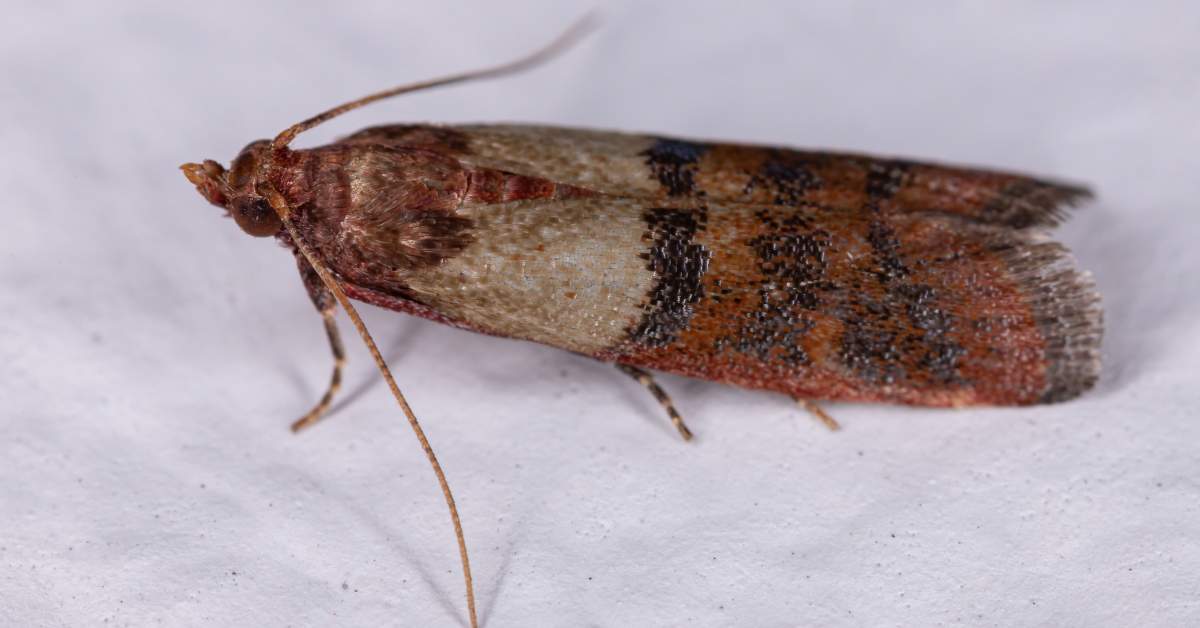
    Meal Moths: Indian meal moth – All damage is done by the larvae, which attack a wide range of products, including cereal and cereal products, flour, cornmeal, rice, dried fruits, dehydrated vegetables, nuts, chocolate, candies, and other confections. When infestations are heavy, mature larvae can often be found in parts of the house far from the original food source because they move quite a distance to pupate. The Indian meal moth is a fairly distinct small moth with reddish brown forewings that have a coppery luster on the outer two-thirds and are whitish gray on the inner or body portion. The female moth lays its eggs singly or in groups on food material. Eggs hatch within a few days into small whitish caterpillars. Larva of the Indian meal moth spin a web as they grow and leave behind silken threads wherever they crawl. When fully grown, the larva is about ½ inch long and white with a greenish or pinkish hue. This larva spins a silken cocoon and transforms into a light brown pupa, from which the moth emerges. The Indian meal moth takes about 6-8 weeks to complete egg, larval and pupal stages during warm weather.  These are a cousin of the plaster bagworm moth which can infest your closet by living off of wool and cobwebs.  

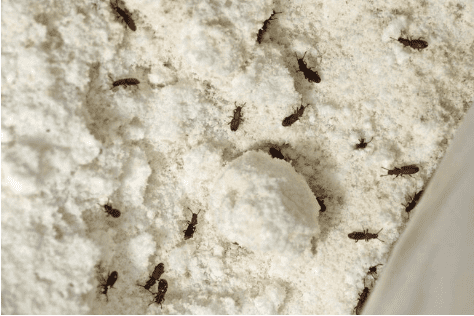
    Pantry Beetles (Weevils) in flour

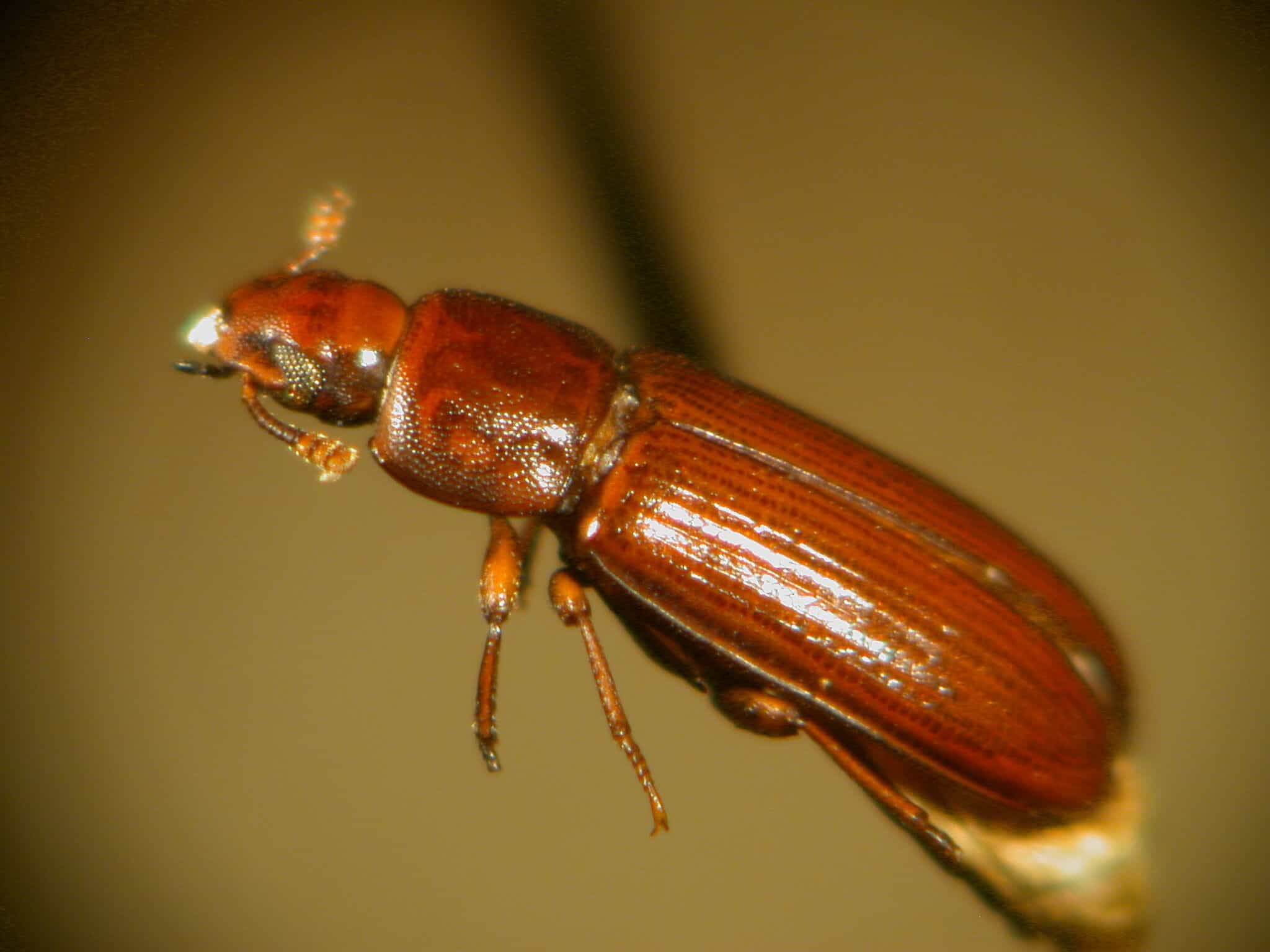
    Pantry Beetles (Weevils): Adult beetles have oval bodies that are about 1/8 inch long with a brown and yellowish pattern on the wind covers. Female beetles lay up to 90 eggs within the infested food. Larvae emerge and feed on the food. Larvae are about ¼ inch when fully grown and have numerous stiff setae, or hairs, that emerge from dark-colored plates on the last few segments of their abdomen, as well as a tail of long thin hairs that extend from the tip of the abdomen. They are very active and seek out new food sources to infest. In warm temperatures, the entire life cycle from egg to adult can be completed in 45 days. The setae of this beetle are shed within the infested food product and can be irritating to the mouth, esophagus, and digestive tract if they are ingested. Food found infested with this beetle should be discarded.

    Identification and Life Cycles: Adult moths and beetles are easy to distinguish from each other, but their larvae are a little more difficult to identify. Use a hand lens to examine the legs of the larvae. Beetle larvae are grub-like and legless or have only 3 pairs of legs, all located close to the head. Moth larvae have 3 pairs of true legs, plus additional leg-like structures further down the abdomen. Both larvae and adults of beetles feed on foodstuff, whereas only the larvae stage of moths consumes stored products.

    Damage: Pantry pests damage food by contaminating it with their bodies and their by-products. The larval stage of the Indian meal moth produces frass (excrement) and webbing, and some beetle larvae produce secretions that give food a disagreeable odor or taste. Hairs from the warehouse beetle can irritate the mouth, throat, and stomach of people who eat infested products. In addition, pantry pests might introduce microbes into the food that could produce mycotoxins, especially if the food is stored in warm, humid conditions.

    Management: Getting rid of food-infesting moths or beetles takes continuous, persistent effort if the infestation has been present for a while. Some pests are capable of living for many weeks without food, thus the threat of re-infestation exists until they die off or are killed. Follow the guidelines for removing and cleaning up an infestation. It is best, at least for several months after eliminating the infested products, to store any susceptible food in airtight containers, in a refrigerator or freezer. Also, as a general practice, storing infrequently used food items. (e.g., pancakes, flour, grains, spices) in the freezer prevents infestation from developing.

    Detection: If you see small moths or beetles crawling or flying around your kitchen, look for the food source of these pests and remove them e immediately. If you locate the food source before it spreads to other packages, control may be easy. The source is commonly a package damaged at the store or an opened one that is little used or forgotten. The best thing to do with the package is to seal it up and dispose of it, removing it from the house immediately.

    Cleaning up an infestation: Most commonly, by the time the insects are noticed they have already spread to other food packages. Carefully inspect all packages, especially those that have been opened or exposed. Destroy any that gives the slightest indication of an infestation. Other than the insects themselves, telltale signs include webbing in tight places of a package or tiny holes in the container. Insects are less likely to invade packages that have their original seal but more commonly infest those that have been opened or have been on the shelf for a long time. Before replacing non-infested packages, wash shelves with soap and water, scrub corners and crevices or vacuum them with a crevice attachment to remove eggs and pupae.

    Prevention and Sanitation: Most home infestations of pantry pests maintain themselves on spills in the crevices of cupboards and drawers or opened packages of food stored for long periods.

    Following a few general guidelines when storing food products will help you avoid many potential problems.

    • Do not put exposed food on shelves. Place it in containers with tight-fitting lids. Plastic bags are not adequate.
    • Regularly clean shelves, bins, and other locations where there is any possibility of flour or other food particles accumulating. Certain pests need only small amounts of food to live and breed. Soap and water are great for cleaning flat areas, and vacuuming with a crevice attachment will help clean cracks, edges, and corners.
    • Do not mix old and new lots of foodstuff. If the old material is infested, the pest will quickly invade the new.
    • Clean old containers before filling them with fresh food. They may be contaminated and cause a new infestation.
    • Do not purchase broken or damaged packages of food materials. They are more likely to become infected.
    • Construct storage containers so they are tight and can be cleaned easily.
    • Store bulk materials, such as pet food, in containers with tight-fitting lids.
    • Keep storage units dry. This is important because moisture favors the development of pantry pests; dryness discourages them.
    • Some pantry pests breed in the nests of rodents and insects and may migrate from these into homes. Eliminate any nests found in or near the home.
    • Pantry pests can also breed in rodent baits. Be sure to quickly check and discard infested baits.