Dave's Pest Control

Category: Termites

  • Subterranean Termites in Florida

    Subterranean Termites in Florida

    Florida, with its warm and humid climate, is home to a variety of pests, and among them, subterranean termites stand out as a particularly insidious threat to both residential and commercial structures. These tiny but destructive insects have perfected the art of infiltrating and weakening buildings, causing damage that often goes unnoticed until it becomes a significant problem.

    One of the defining features of subterranean termites is their reliance on moisture for survival. To protect themselves from the dry environment above ground, these termites construct intricate pathways known as “mud tubes.” These tubes, made from a mixture of soil, saliva, and feces, serve as bridges between their underground nests and their food sources, often connecting the moist soil to the wooden structures above. Mud tubes are a key indicator of termite activity and provide experts with a means of detection during property inspections.

    The need for moisture is a critical aspect of subterranean termite biology. Termites themselves are delicate creatures, vulnerable to dehydration in arid conditions. Additionally, they require moisture to help digest the cellulose present in wood, their primary source of sustenance. As a result, they seek out environments that provide both wood and moisture, making Florida’s warm and damp climate a paradise for their proliferation.

    The life Cycle of Subterranean Termites

    The life cycle of subterranean termites follows a complex process that involves different castes and stages of development.

    Here is an overview of their life cycle:

    1. Egg Stage: The termite life cycle begins with the egg stage. A termite queen, the primary reproductive in the colony, lays eggs in specially constructed chambers within the nest. These eggs are tended to by worker termites and eventually hatch into nymphs.
    2. Nymph Stage: The nymphs that hatch from the eggs resemble miniature versions of adult termites. They go through several molts, shedding their exoskeletons as they grow. Nymphs are responsible for performing various tasks within the colony, such as caring for eggs, foraging for food, and maintaining the nest.
    3. Worker Stage: Nymphs that have matured become workers. Workers are responsible for tasks such as gathering food (often wood and cellulose materials), building and maintaining the nest, and taking care of the other members of the colony. They are the most numerous caste and are typically pale and soft-bodied, as they do not need to venture outside of the nest.
    4. Soldier Stage: Some nymphs develop into soldiers. Soldiers have larger heads and powerful jaws that they use to defend the colony from predators, primarily ants. Their role is to protect the colony by guarding the entrances and exits of the nest and attacking any threats that may breach their defenses.
    5. Reproductive Stage: In mature colonies, certain nymphs develop into supplementary reproductive and alates (winged termites) as they continue to mature. These are future kings and queens that will leave the nest to start new colonies. They have wings and are often seen swarming in large numbers during specific times of the year, usually after a rainstorm.
    6. Swarming: The swarming phase is a crucial part of the termite life cycle. During swarming, alates from different colonies fly in search of mates from other colonies. Once paired, they shed their wings and find a suitable nesting site together. This stage marks the beginning of a new colony’s life cycle.
    7. Nuptial Flight: The process of alates leaving their original colonies to establish new ones is known as nuptial flight. This usually occurs in warm, humid conditions after a rainstorm. The swarming termites are highly vulnerable during this phase, as they are exposed to predators and environmental factors.
    8. Colony Establishment: Once the mated pair lands, they work together to excavate a chamber in the soil and seal themselves inside. The female becomes the queen, and the male becomes the king. The queen begins laying eggs, and the king helps tend to them. As the colony grows, it develops various castes, including workers, soldiers, and supplementary reproductive.

    This complex life cycle ensures the survival and propagation of subterranean termites in Florida. Understanding these stages can help homeowners and pest control professionals in effectively managing and mitigating termite infestations

    History of Termites

    The oldest recorded writings specifically about subterranean termites are difficult to pinpoint due to the scarcity of historical records and the fact that early civilizations may not have focused on such insects in their writings. However, termites and their behavior have been observed and documented in various cultures over time.

    Here are a few examples:

    1. Ancient Egyptian Hieroglyphs: Some experts suggest that ancient Egyptians were familiar with termites, as they depicted insects in their hieroglyphs and artwork. While the specific species might not be mentioned, these depictions could include termites.
    2. Ancient Indian and Chinese Texts: Traditional Indian and Chinese literature sometimes includes references to insects and wood-damaging organisms. While the exact species might not be identified, there could be descriptions of behaviors and damages that could relate to subterranean termites.
    3. Greek and Roman References: Ancient Greek and Roman texts occasionally mention insects that could potentially be termites. For instance, the Greek philosopher Aristotle wrote about “woodworms” that damaged wood, which could have included termites.
    4. Medieval Manuscripts: Some medieval manuscripts, especially those related to natural history and agriculture, might contain observations about insects that could be interpreted as termites. These references might not be specific to subterranean termites but could still offer insights into wood-damaging insects.

    It’s important to note that the ancient and medieval observations might not always accurately refer to subterranean termites as we understand them today. The understanding and identification of insects were not as precise in the past as they are now. Additionally, records from ancient times are often fragmentary, and the terminology used might not align perfectly with modern entomological classifications.

    Overall, while there might not be direct and specific references to subterranean termites in the earliest recorded writings, there are scattered mentions of wood-damaging insects in various cultures throughout history. These references provide glimpses into the historical interactions between humans and these pests.

    What we do to Prevent Subterranean Termite Infestations?

    As a professional pest control company, we can employ various strategies for preventing, detecting, and treating subterranean termite infestations.

    Here are some common approaches we might take:

    Preventive Measures:

    1. Soil Treatment: Professionals can apply liquid termiticides to the soil around a building’s foundation. This creates a barrier that termites cannot pass through, preventing them from accessing the structure.
    2. Wood Treatment: Wood treatments involve applying termiticides directly to wooden elements of a building during construction or renovation. This helps protect the wood from termite infestation.
    3. Sentricon Bait Systems: Sentricon Termite bait stations are strategically placed in the ground around a structure. These stations contain cellulose material treated with slow-acting termiticide. When termites feed on the bait, they carry the termiticide back to the colony, gradually eliminating it.

    Detection and Monitoring:

    1. Regular Inspections: Dave’s Pest control professionals perform routine inspections to detect early signs of termite activity. These inspections help identify infestations before they cause significant damage.
    2. Termite Detection Tools: Our professionals may use specialized tools such as moisture meters, infrared cameras, and acoustic devices to detect hidden termite activity.

    Treatment Methods:

    1. Liquid Termiticides: These are applied to the soil around a structure’s perimeter to create a barrier that termites cannot cross. They can also be used for localized treatments in areas of active termite infestation.
    2. Sentricon Bait Systems: In addition to preventive use, bait systems can be used to target active termite colonies. Once termites feed on the bait, it disrupts the colony’s growth and eventually eliminates it.
    3. Foam and Dust Treatments: Foam or dust formulations of termiticides can be injected directly into galleries and voids where termites are active.
    4. Wood Replacement: Severely damaged wood may need to be replaced. Pest control professionals can recommend suitable materials and treatments to prevent future infestations

    Education and Recommendations:

    1. Moisture Control: Professionals often provide recommendations for moisture control around the property, as termites are attracted to damp environments.
    2. Structural Modifications: Suggestions for structural modifications, such as fixing leaky roofs and improving ventilation, can reduce termite-friendly conditions.
    3. Landscaping Adjustments: Professionals may recommend changes to landscaping that can deter termites from approaching the building.

    It’s important to note that the specific methods used can vary based on factors such as the severity of the infestation, the type of property, and local regulations. Working with a licensed and experienced pest control company is essential to ensure effective and safe termite prevention and treatment.

    Call us today for a free estimate for your home, business or condominium.

  • Drywood Termites in Florida: A History of Destruction and a Glimpse into Their Mysterious World

    Drywood Termites in Florida: A History of Destruction and a Glimpse into Their Mysterious World

    Nestled between the Atlantic Ocean and the Gulf of Mexico, Florida boasts a subtropical climate that has lured generations of people seeking warm temperatures and picturesque landscapes. However, this paradise comes with a price – an ongoing battle against pests that threaten to consume one of the state’s most abundant resources: wood. Among these relentless wood-devouring insects, none is as notorious as the drywood termite. In this blog, we delve into the history of drywood termites in Florida, exploring their intricate life cycle and shedding light on the annual spectacle of alate swarming.

    A History of Termites and Wood

    Humans have been building with wood for centuries, harnessing its natural beauty and versatility to create structures that stand the test of time. However, this affinity for wood has not gone unnoticed by certain insects, such as termites, which have evolved to exploit this abundant resource. The history of termites’ interactions with human structures in Florida traces back to the state’s early days.

    Native Americans were the first to experience the destructive power of drywood termites. Building their homes from locally sourced materials, they often came into contact with these stealthy invaders. As European settlers arrived, their use of wood in constructing homes and businesses created a feast for termites. Over time, termites adapted to these new opportunities, establishing their colonies within the very structures humans had created.

    The Life Cycle of Drywood Termites

    Understanding the life cycle of drywood termites is crucial in comprehending their impact on the ecosystem and human infrastructure. Unlike subterranean termites that thrive in moist environments, drywood termites have evolved to survive in wood with low moisture content. Their life cycle can be divided into three main stages: the swarming phase, the establishment of a colony, and the ongoing growth and reproduction phase.

    • Swarming Phase and Alates

    One of the most intriguing aspects of drywood termites is their annual swarming behavior, where reproductive individuals known as alates emerge from established colonies to mate and establish new colonies. Alates are equipped with wings and venture outside their nests to embark on a nuptial flight. This phenomenon typically occurs during warm, humid evenings, often following rainfall.

    • Establishing a Colony

    Once the alates find suitable mates, they shed their wings and form pairs, beginning the process of establishing a new colony. They bore into wood, where the female termite becomes the primary egg-layer. These initial stages are critical, as they determine the success of the colony’s growth and survival.

    • Growth and Reproduction Phase

    As the colony grows, workers, soldiers, and reproductives are produced. Workers are responsible for foraging for food and maintaining the nest, while soldiers defend the colony against predators. Reproductive individuals, or primary reproductives, produce eggs that sustain the colony’s growth. Over time, supplementary reproductives may also develop to further bolster the population.

    • Damage to Homes and Businesses

    The rate at which drywood termites can cause damage to homes and businesses in Florida varies depending on factors such as the size of the termite colony, the condition of the wood, and environmental conditions. In some cases, significant damage can occur over the course of a few months to a few years. Regular inspections and prompt treatment are essential to prevent extensive destruction. If you suspect a termite infestation, it’s recommended to consult with a pest control professional, like Dave’s Pest Control for accurate assessment and appropriate action.

    The Mystery of Alate Swarming

    The annual phenomenon of alate swarming is a spectacle that captures the attention of Floridians and researchers alike. But why do these insects engage in this synchronized behavior? Alate swarming serves two main purposes: dispersion and reproduction.

    • Dispersion

    The act of swarming enables young reproductive termites to disperse and establish new colonies. Since drywood termites prefer isolated environments with limited competition, swarming provides the opportunity for these young termites to find unoccupied wood structures where they can establish their nests.

    • Reproduction

    Alates from different colonies come together to mate, promoting genetic diversity within the termite population. This diversity can be advantageous for the survival of the species, as it enhances the colony’s ability to adapt to changing environmental conditions and resist potential threats.

    Drywood Termite Frass

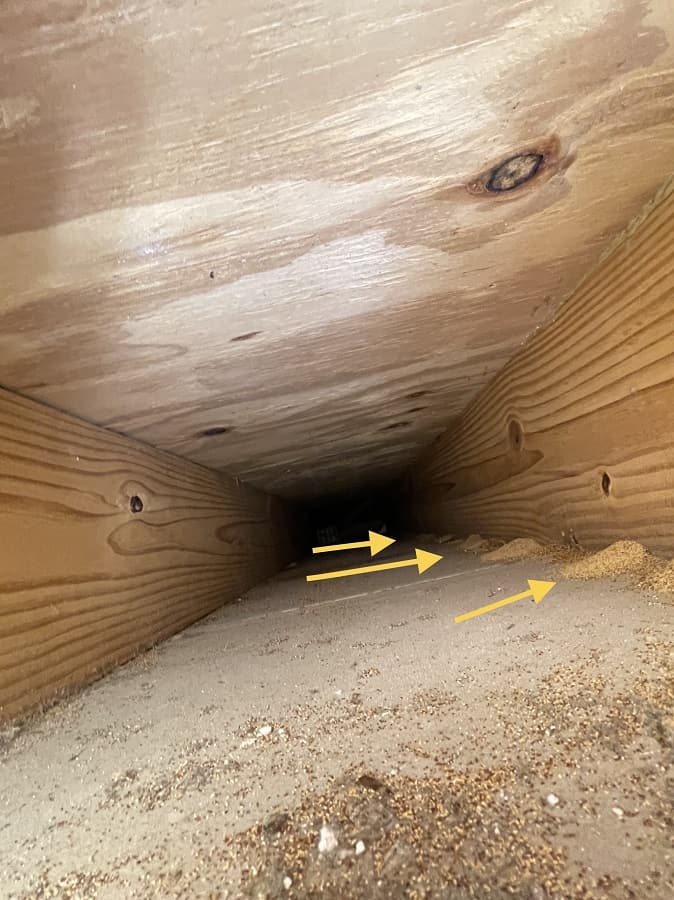
    Drywood frass is a term commonly used to describe the excrement or waste produced by drywood termites as they feed on wood. This distinctive termite byproduct plays a crucial role in identifying the presence of these destructive insects within wooden structures. The appearance of drywood frass can vary in color, shape, and size, providing important clues about the activity of the termite colony.

    Characteristics of Drywood Frass:

    1. Colors: Drywood frass can exhibit a wide range of colors, including light brown, reddish-brown, beige, and even darker shades. The color variation is primarily influenced by the type of wood the termites are consuming and their digestive processes. For instance, frass from termites feeding on lighter-colored wood might appear lighter in color, while frass from termites consuming darker wood could be darker.
    2. Shape and Size: Drywood frass typically resembles tiny, elongated pellets or granules. These pellets can vary in size but are generally quite small, with lengths usually ranging from 1/25 to 1/50 of an inch. The shape is elongated and can resemble rice grains or small strips.

    Kick-Out Holes and Drywood Frass:

    The formation of kick-out holes is closely associated with the presence of drywood termites and their frass. Kick-out holes are small openings that termites create on the surface of the infested wood to expel their frass from the galleries or tunnels they have excavated. These holes are strategically positioned to allow termites to discard their waste material, preventing it from accumulating within their nest and obstructing their activities.

    As termites consume wood, they digest cellulose and extract nutrients from it. The remaining waste material, including undigested wood fibers and fecal matter, is then compacted into pellet-like frass. Termites will push these frass pellets out of the galleries through the kick-out holes, effectively clearing space within their nest and reducing the risk of detection by predators or other threats.

    The presence of kick-out holes and drywood frass near or on wooden surfaces is a telltale sign of an active termite infestation. Observing these indicators should prompt homeowners or property owners to take immediate action, as untreated infestations can lead to significant damage to the structural integrity of the wood.

    What can we do?

    Dave’s Pest Control has the expertise and resources to effectively address the issue of drywood termites, ensuring the protection of homes and structures from their destructive behavior. Here’s an overview of what a licensed pest control company can do to manage and mitigate drywood termite infestations:

    1. Inspection:

    The first step is a thorough inspection of the property to identify the extent of the infestation and locate termite activity. Pest control professionals use their knowledge to pinpoint the locations of termite colonies, nests, and entry points.

    1. Treatment Options:

    Licensed pest control companies offer a range of treatment options tailored to the specific situation. These may include:

    Localized Treatment: For smaller infestations, spot treatments with termiticides or foams may be applied directly to infested areas.

    Tenting and Fumigation: For more extensive infestations, a process called tenting or fumigation may be necessary. The structure is covered with a tent-like enclosure, and a fumigant gas is introduced to eliminate termites throughout the entire building.

    1. Preventive Measures:

    A licensed pest control company, like Dave’s Pest Control, doesn’t just eliminate existing infestations; we also provide preventive measures to minimize the risk of future termite problems. This may include:

    Wood Treatment: Treating wood with termiticides or other protective coatings can create a barrier that discourages termite infestations.

    Bait Stations: Strategically placed bait stations can monitor termite activity and provide an ongoing solution by attracting termites to consume bait laced with slow-acting toxins that are carried back to the colony.

    1. Ongoing Monitoring:

    Effective termite management involves ongoing monitoring to ensure that new infestations do not occur. Licensed pest control companies offer routine inspections and maintenance to detect any signs of reinfestation early on.

    1. Professional Expertise:

    Dave’s Pest Control professionals have the training and knowledge to identify different termite species, understand their behavior, and choose the most appropriate treatment methods. We are up-to-date with the latest technologies and strategies for effective termite control.

    1. Legal Compliance:

    We are regulated by state authorities and must follow specific guidelines and regulations. This ensures that the treatments used are safe for occupants and the environment.

    1. Warranty:

    We provide warranties for our services. This means that if termites reappear within a specified period after treatment, Dave’s Pest Control will return to address the issue at no additional cost.

    Choose Dave’s!

    By enlisting the help of a licensed pest control company like Dave’s Pest Control, property owners can effectively safeguard their structures from the destructive impact of drywood termites.

    Call us today for a free estimate for your home, business or condominium.

  • Drywood Termites in Florida: How to Protect Your Home

    Drywood Termites in Florida: How to Protect Your Home

    Drywood termites are a common problem in Florida, causing significant damage to homes and structures. Unlike subterranean termites, drywood termites do not require contact with soil and can infest any wooden structure, including ceiling trusses.

    In this blog post, we will discuss how drywood termites can invade your home, the signs to look out for, and how pest control companies can help you protect your property.

    Drywood Termites Get Into Ceiling Trusses

    Drywood termites can enter your home through small cracks, gaps, or openings in the exterior of your house. They can also be brought in through infested furniture or wood. Once inside, they can easily make their way to the wooden ceiling trusses, where they can establish colonies and cause significant damage over time.

    Signs Homeowners Should Look Out For

    Frass (termite droppings): Drywood termites produce small, pellet-like droppings called frass. If you notice piles of frass near your walls or in your attic, it could be a sign of a drywood termite infestation.

    Hollow-sounding wood: As drywood termites consume wood from the inside out, the wood may sound hollow when tapped. If you notice this in your ceiling trusses or other wooden structures, it could indicate termite damage.

    Swarming termites: Drywood termites swarm to establish new colonies. If you see swarming termites around your home, it could be a sign of an infestation.

    Discarded wings: After swarming, drywood termites shed their wings. If you find piles of discarded wings near your home, it could indicate a nearby termite colony.

    Pest Control Solutions for Drywood Termites

    A professional pest control company can help you identify and treat drywood termite infestations. They may use a combination of methods, including:

    Spot treatments: Pest control technicians can apply localized treatments to specific areas of your home where termites are present. This can include injecting termiticides directly into the wood or applying surface treatments to kill the termites.

    Fumigation: In severe cases, a pest control company may recommend fumigating your entire home. This involves sealing your home and filling it with a gas that kills the termites. While this method is highly effective, it can be costly and requires you to vacate your home for several days.

    Heat treatments: Another option for treating drywood termites is heat treatment. Pest control technicians can raise the temperature in your home to a level that is lethal to termites, effectively killing them without the use of chemicals.

    By being vigilant and looking out for signs of infestation, you can catch the problem early and prevent further damage. If you suspect you have a drywood termite infestation, contact the professionals at Dave’s Pest Control to assess the situation and recommend the best course of action to protect your home.

    It’s difficult to provide an exact number of homes in Florida that have damage from drywood termites as this number can vary greatly depending on factors such as location, climate, and the age of the homes. However, it’s important to note that Florida is a high-risk area for termite infestations due to its warm and humid climate, which is conducive to termite activity.

    Drywood termites swarm to reproduce and establish new colonies. Swarming typically occurs during the warmer months, usually between May and September, although the exact timing can vary depending on the local climate and weather conditions. Swarms often happen on warm, sunny days with high humidity, usually in the late morning or early afternoon when temperatures are at their peak.

    The life cycle of a drywood termite colony in Florida typically begins with a mating flight, during which winged reproductive termites, also known as alates, leave the colony to mate and establish new colonies. After mating, the alates shed their wings and the females begin to lay eggs.

    The eggs hatch into larvae, which are fed by the worker termites. The larvae molt several times and eventually develop into adult workers, soldiers, or reproductive, depending on their role in the colony.

    The worker termites are responsible for feeding the colony and maintaining the nest, while the soldiers defend the colony against predators. The reproductive, also known as swarmer, are responsible for establishing new colonies.

    Drywood termite colonies can take several years to mature, and the size of the colony can vary depending on factors such as the availability of food and the size of the nest. A mature colony can contain several thousand termites.

    Drywood termites do not require contact with soil and can live entirely within the wood they infest. They create small holes in the wood to expel their fecal pellets, which can be a sign of infestation.

    Overall, the life cycle of a drywood termite colony in Florida can take several years and involves the development of different castes of termites with specialized roles in the colony. It’s important to work with a professional termite company to detect and treat any infestations before they cause significant damage to your home.

    There are several areas of a home that are most susceptible to damage from drywood termites:

    Wooden structures: Drywood termites feed on wood, so any wooden structures in a home, such as framing, flooring, and furniture, are at risk of damage.

    Attics and crawl spaces: These areas often have exposed wooden beams and limited human activity, making them ideal locations for drywood termites to establish colonies.

    Exterior wood: Wooden siding, eaves, and trim are also susceptible to drywood termite damage, especially if they are not properly maintained or treated with termite-resistant materials.

    Window and door frames: Termites can enter homes through small gaps in window and door frames, and these areas can also provide a food source for the insects.

    To protect your home from drywood termites, it’s essential to regularly inspect for signs of infestation, maintain proper ventilation and moisture control, and treat any exposed wood with termite-resistant materials or coatings.

    What’s the difference between drywood termites and subterranean termites?

    Subterranean termites and drywood termites are two different types of termites found in Florida, and they differ in their behavior, habitat, and the damage they cause.

    Subterranean termites:

    These termites live in large colonies underground and require contact with soil to maintain their moisture levels.

    They build mud tubes to travel between their colony and their food source, which is typically wood in contact with the ground.

    Subterranean termites are more widespread and are considered more destructive than drywood termites due to their larger colony sizes and their ability to cause extensive damage in a shorter period.

    They primarily feed on cellulose found in wood, but they can also damage other materials such as insulation and plastic pipes.

    Drywood termites:

    These termites do not require contact with soil and can live entirely within the wood they infest. They do not build mud tubes and instead create small holes in the wood to expel their fecal pellets, which can be a sign of infestation.

    Drywood termites are less widespread than subterranean termites, but they can still cause significant damage to wooden structures.

    They primarily feed on wood and can infest furniture, wooden beams, and other wooden structures within a home.

    While it’s difficult to provide an exact figure for the millions of dollars in damage caused by termites in Florida each year, it’s estimated that termites cause over $5 billion in damage annually across the United States. Subterranean termites are responsible for the majority of this damage due to their more aggressive nature and larger colony sizes.

    As for homeowners insurance, termite damage is typically not covered under standard policies. This is because termite infestations are considered preventable through proper home maintenance and regular inspections. Homeowners are encouraged to invest in termite prevention measures and work with professional pest control companies to protect their homes from these destructive pests.

    Dave’s Pest Control uses a variety of methods to inspect for termites, even when they are not visible behind the walls of a home. Here are some of the most common methods:

    Visual inspection: A trained termite inspector will conduct a thorough visual inspection of the interior and exterior of the home, looking for signs of termite activity such as mud tubes, termite wings, and fecal pellets. They will also inspect areas where termites are known to be active, such as crawl spaces and attics.

    Moisture meters: Termites are attracted to moisture, so a moisture meter can be used to detect areas of high moisture content in the wood, which can indicate the presence of termites.

    Infrared cameras: Infrared cameras can detect changes in temperature, which can indicate the presence of termites. For example, termite activity can cause a slight increase in temperature in the wood they are infesting.

    Acoustic detectors: Some termite companies use acoustic detectors to listen for the sounds of termites chewing on wood. This method is most effective in areas where termite activity is suspected but not yet visible.

    Bait stations: Termite bait stations can be placed around the perimeter of the home to attract termites and monitor their activity. This method can help detect termites before they cause significant damage.

    Overall, Dave’s Pest Control uses a combination of these methods to inspect for termites and determine the extent of any infestation. It’s important to work with a professional termite company like Dave’s to ensure that your home is properly inspected and treated for termites. We offer pest control in Lakeland, Port Orange, Boca Raton, Fort Lauderdale, Orlando and other areas of Florida so if you reside in any of the areas of South or Central Florida, Call us today for a free estimate.


  • Termites in Florida: Why Florida Homeowners Need to Inspect Their Homes Annually

    Termites in Florida: Why Florida Homeowners Need to Inspect Their Homes Annually

    Termites are a common problem in Florida, where the warm and humid climate provides the perfect environment for these destructive pests to thrive. If left unchecked, termites can cause significant damage to homes and other structures, leading to costly repairs and potential safety hazards. That’s why it’s essential for homeowners to have their homes inspected annually to prevent termites from taking hold. We find major termite infestations in Volusia, Flagler, Seminole, Orange, and Lake counties on a regular basis.

    According to a report by the National Pest Management Association (NPMA), termites cause an estimated $5 billion in property damage each year in the United States.

    This includes damage to homes, businesses, and other structures.
    In the housing market specifically, termites can cause significant damage to homes, leading to costly repairs and potential safety hazards. The cost of termite damage in the housing market can vary depending on the severity of the infestation and the extent of the damage.

    In Florida, where termites are a common problem, the cost of termite damage in the housing market is estimated to be in the hundreds of millions of dollars each year. This includes the cost of repairs and the loss of property value due to termite damage.

    Overall, the cost of termite damage in the housing market is significant and underscores the importance of regular inspections and preventative measures to protect homes from termite infestations.

    Why are Termites such a Problem in Florida?

    Termites are a type of insect that feed on wood and other cellulose-based materials. In Florida, there are several species of termites that are common, including subterranean termites, drywood termites, and Formosan termites. These pests can cause significant damage to homes and other structures, including wooden decks, fences, and even trees.

    Subterranean termites are the most common type of termite in Florida. They live in underground colonies and build mud tubes to travel from their nests to their food sources. These termites can enter homes through cracks in the foundation or other openings, such as gaps around pipes or electrical wires.

    Drywood termites, on the other hand, live inside the wood they infest. They don’t require contact with the soil and can enter homes through small cracks or openings in the wood. These termites can be difficult to detect, as they often infest hidden areas such as attics, crawl spaces, and wall voids.

    Formosan termites are a particularly aggressive species of termite that can cause significant damage in a short amount of time. They are known for their large colonies and ability to build mud tubes up the sides of buildings to reach their food sources.

    Why Annual Inspections are Necessary

    Termites can cause significant damage to homes and other structures, often without being detected until it’s too late. That’s why it’s essential for homeowners to have their homes inspected annually by a licensed pest control professional. An annual inspection can help detect termite activity early before it has a chance to cause significant damage.

    During an inspection, the pest control professional will look for signs of termite activity, such as mud tubes, termite droppings, and damaged wood. They will also inspect the crawl space, attic, and other hidden areas of the home where termites are known to infest.

    If termites are detected, the pest control professional will recommend a treatment plan to eliminate the infestation. Treatment options may include liquid termiticides, baits, or fumigation, depending on the severity of the infestation and the type of termite involved.

    Preventing Termite Infestations

    In addition to annual inspections, there are several steps homeowners can take to prevent termite infestations. These include:

    1. Remove wood debris around the home: Termites are attracted to wood, so it’s important to remove any wood debris, such as fallen trees or branches, from around the home.
    2. Keep firewood away from the home: If you store firewood outside, keep it at least 20 feet away from the home to reduce the risk of termites.
    3. Fix leaks and moisture problems: Termites are attracted to moisture, so it’s important to fix any leaks or moisture problems in and around the home.
    4. Seal cracks and openings: Termites can enter the home through small cracks and openings, so it’s important to seal these up to prevent entry.
    5. Install termite barriers: Termite barriers, such as metal mesh or sand barriers, can be installed around the foundation of the home to prevent termites from entering.

    How Termites Find Wood in Homes

    Termites are attracted to wood and other cellulose-based materials, such as paper and cardboard. They are able to find wood in homes by following moisture and scent trails. Termites are able to detect moisture in wood and other materials, which is why they are often found in areas of the home that are damp or have water damage.

    Termites are also able to detect the scent of wood and other cellulose-based materials. They are able to follow scent trails to find their food source, which is why they are often found in areas of the home where wood is present, such as in the walls, floors, and ceilings.

    Once termites have found a food source, they will begin to feed on the wood and other materials. They will create tunnels and galleries in the wood, which can weaken the structure of the home and cause significant damage over time.

    Destructive Effects of Termites on Homes in Florida

    Termites can cause significant damage to homes in Florida, often without being detected until it’s too late. Termites are known for their ability to weaken the structure of the home, which can lead to safety hazards and costly repairs.

    Subterranean termites are the most common type of termite in Florida. They live in underground colonies and build mud tubes to travel from their nests to their food sources. These termites can enter homes through cracks in the foundation or other openings, such as gaps around pipes or electrical wires.

    Drywood termites, on the other hand, live inside the wood they infest. They don’t require contact with the soil and can enter homes through small cracks or openings in the wood. These termites can be difficult to detect, as they often infest hidden areas such as attics, crawl spaces, and wall voids.

    Formosan termites are a particularly aggressive species of termite that can cause significant damage in a short amount of time. They are known for their large colonies and ability to build mud tubes up the sides of buildings to reach their food sources. Termites can cause significant damage to the structure of the home, including the foundation, walls, floors, and ceilings. They can weaken the structure of the home, which can lead to safety hazards and costly repairs. In some cases, termites can cause so much damage that the home is no longer safe to live in and must be demolished.

    Water leaks and your Home

    Water leaks are a common problem in homes and can cause significant damage if left unchecked. There are several reasons why homeowners may experience water leaks in their homes. In this response, we will list some of the reasons and describe the damage that leaking water can cause.

    Reasons for Water Leaks in Homes

    Aging Pipes: Over time, pipes can become corroded and weakened, leading to leaks. This is especially true for older homes with outdated plumbing systems.

    High Water Pressure: High water pressure can cause stress on pipes and fittings, leading to leaks.

    Clogged Drains: Clogged drains can cause water to back up and overflow, leading to leaks.

    Damaged Seals: Seals around faucets, toilets, and other fixtures can become damaged over time, leading to leaks.

    Extreme Temperatures: Extreme temperatures, such as freezing temperatures, can cause pipes to burst and leak.

    Damage Caused by Leaking Water

    Structural Damage: Leaking water can cause significant damage to the structure of the home, including walls, floors, and ceilings. Over time, water can weaken the structure of the home, leading to safety hazards and costly repairs.

    Mold and Mildew: Leaking water can create a damp environment that is ideal for mold and mildew growth. This can lead to health problems for the occupants of the home, especially those with allergies or respiratory issues.

    Electrical Damage: Water can damage electrical systems and appliances, leading to safety hazards and costly repairs.

    Increased Water Bills: Leaking water can cause an increase in water bills, as water is being wasted and not being used efficiently.

    Pest Infestations: Leaking water can attract pests, such as termites, rodents, and many other insects which can cause additional damage to the home.

    As you see, termites are a common problem in many counties in Florida, and homeowners need to take steps to prevent infestations and detect termite activity early. Annual inspections by a licensed pest control professional like Dave’s Pest Control are essential for detecting termite activity early and preventing significant damage to the home.

    Call us today for a free estimate for your home, business, or condominium.

  • Protecting Your Florida Home from Subterranean Termites

    Protecting Your Florida Home from Subterranean Termites

    In Florida, Subterranean Termites are a common problem, especially during the warm and humid months of spring and summer. During this time, termite colonies may swarm and produce new reproductive members, which can lead to a higher risk of infestation in and around your home.

    These pests have caused significant damage to homes and buildings in our local neighborhoods making it essential for homeowners to take preventative measures to protect their properties. We have seen damage throughout Volusia, Seminole, Orange and Lake counties.

    In this blog, we will explore subterranean termites, their behavior, and effective ways to safeguard your home from their destructive impact.

    Florida is our home, and it also happens to have the most significant amount of termite problems compared to other states. In fact, Florida is home to three of the most destructive termite species in the world. Subterranean termites are the most common type found in Florida, and they thrive in the moist soil found throughout the state.

    They are known to cause significant damage to homes, decks, and other wooden structures. These termites typically enter a structure through the foundation or through small cracks and crevices in the wood. They then build underground tunnels and colonies, which can cause extensive damage to the structure over time.

    Subterranean termites are a type of termite that lives underground and feeds on wood and other cellulose materials. They are social insects that live in colonies, with each colony consisting of a queen, king, soldiers, and workers.

    The workers are responsible for foraging for food and constructing tunnels and nests, while soldiers protect the colony from predators. These termites are particularly destructive because they can remain hidden for a long time, making it difficult to detect an infestation until significant damage has been done.

    If left untreated, subterranean termites can cause significant damage and even lead to the collapse of a home.

    Subterranean termites are highly organized and efficient in their behavior. They communicate with each other through pheromones, which help them to locate food sources and warn of danger. When a food source is found, the workers will create tunnels to it, and then bring the food back to the colony to be shared with the rest of the members.

    These termites are also known for their ability to construct mud tubes, which they use to protect themselves from the air and to maintain the humidity levels necessary for their survival. Mud tubes are made of soil, saliva, and excrement and can often be found on the walls of homes, near the foundation.

    How to Prevent Subterranean Termite Infestation in your Home

    There are several things homeowners can do to prevent a subterranean termite infestation:

    • Remove wood piles, debris, and other cellulose materials from around the home’s foundation: Subterranean termites are attracted to wood and other cellulose materials, so removing these items from around the home can help reduce the risk of an infestation.
    • Ensure proper ventilation and reduce humidity levels: Termites thrive in humid environments, so it’s important to keep the home well-ventilated and reduce humidity levels. This can be achieved through the use of dehumidifiers and fans.
    • Seal cracks and crevices in the home’s foundation: Subterranean termites can enter the home through even the smallest cracks and crevices in the foundation, so it’s essential to seal these entry points.
    • Install physical barriers: Physical barriers, such as metal mesh and sand barriers, can be installed around the home’s foundation to prevent termites from entering.
    • Call Dave’s Pest Control for regular inspections

    At Dave’s Pest Control, we provide complimentary inspections for termite infestations to help you determine the most effective course of action. By being proactive, you can help ensure that your home remains protected from the damaging effects of these pesky pests. At Dave’s Pest Control, we understand the importance of detecting and treating termite infestations early on. We use the latest technology and products to ensure that your home is safe from pests. But our service doesn’t stop there.

    We also provide ongoing prevention and maintenance to keep pests away for good. Our team will work with you to implement measures such as sealing entry points, removing food sources, and providing regular inspections.

    Protecting your investment is crucial, and termites pose a significant threat to your home. These pests are notorious for causing expensive damage by feeding on wood, causing headaches for homeowners. If you’re worried about termite infestations, it’s important to act quickly and seek professional help.

    Dave’s Pest Control offers expert services to help safeguard your home. To begin the process of securing your home and well-being, schedule a complimentary termite inspection with Dave’s Pest Control today. Our team of skilled professionals is dedicated to providing effective pest solutions and protecting your property from future termite damage. We cover all areas of central and south Florida including Port Orange, Lakeland, Longwood, Sunrise and Davie.

    Take the first step in safeguarding your home and health by scheduling a free estimate with Dave’s Pest Control today.

  • Termite Swarming Season in Florida

    Termite Swarming Season in Florida

    In many parts of the country, termites are most active during the spring and summer months, when the weather is warm and humid. During this time, termite colonies may swarm and produce new reproductive members, which can lead to a higher risk of infestation in and around your home. Therefore, it’s essential to take preventative measures during termite swarming season, such as scheduling regular inspections, monitoring your property for signs of termite activity, and eliminating potential entry points.

    In this blog, we will examine these pests, their behavior, and the measures you can take to safeguard your property from their destructive tendencies. So, if you are a homeowner who is worried about termites, read on to discover how you can keep your home safe.

    Florida is one of the states in the United States with the most significant termite problems. The warm and humid climate of the state provides the perfect conditions for termite colonies to thrive and grow rapidly. In fact, Florida is home to three of the most destructive termite species in the world: the Eastern subterranean termite, the Formosan termite, and the drywood termite.

    These species can cause severe structural damage to buildings, making regular inspections and preventative measures crucial for homeowners in Florida. It’s essential for Floridians to stay informed about the risks and take steps to protect their homes from these destructive pests.

    Here are some of the ways that you can stay protected from a Termite Problem in Florida:

    1. Chemical Treatment
    2. Bait Systems
    3. Physical Removal
    4. Fumigation
    5. Heat Treatment

    It’s important to keep in mind that termite infestations may require different treatments depending on the type of termite species involved, and some methods may be more suitable for specific types of infestations. Therefore, before selecting a treatment plan, it’s essential to have a professional inspection conducted to assess the extent of the infestation and identify the type of termites present.

    At Dave’s Pest Control, we provide complimentary inspections for termite infestations to help you determine the most effective course of action. By being proactive, you can help ensure that your home remains protected from the damaging effects of these pesky pests. The damage caused by termites can be costly to repair if left untreated.

    The Sentricon Termite Bait System is among the most effective methods for addressing termite infestations and is widely regarded as one of the top products available. By utilizing advanced technology, the Sentricon system can rapidly and effectively eradicate termites from your property, offering you the assurance you need. If you’re seeking a trustworthy solution to safeguard your home from termite damage, the Sentricon system is a superb choice. Unlike traditional methods that rely on liquid pesticides, Sentricon uses bait stations to attract and eliminate termites, making it a more environmentally friendly and targeted approach.

    Regular inspections by professional pest control companies can help identify any potential infestations and provide appropriate treatments to eliminate the problem. At Dave’s Pest Control, we understand the importance of detecting and treating termite infestations early on. We use the latest technology and products to ensure that your home is safe from pests. But our service doesn’t stop there. We also provide ongoing prevention and maintenance to keep pests away for good.

    Our team will work with you to implement measures such as sealing entry points, removing food sources, and providing regular inspections to ensure that your home remains pest-free.

    Ensuring the protection of your investment is vital, and termites are among the main threats to your home. They have a reputation for chewing through wood, leading to expensive repairs and causing headaches for homeowners. If you’re concerned about termite infestations, don’t hesitate to contact Dave’s Pest Control. To begin the process of securing your home and well-being, schedule a complimentary termite inspection with Dave’s Pest Control today.

    Our team of skilled professionals is dedicated to providing effective pest solutions and protecting your property from future termite damage. Take the first step in safeguarding your home and health by scheduling a free estimate with Dave’s Pest Control today.

  • Sentricon Bait Stations: Best in business

    Sentricon Bait Stations: Best in business

    “Protect Your Home from Termites with Sentricon: The Proven, Non-Invasive Solution”

    Protecting your investment is crucial, and one of the most significant threats to your property is termites. These small but destructive pests can cause extensive damage to your home, resulting in costly repairs and headaches. However, with Sentricon, you can rest assured that you’re getting the best in the business for termite solutions. Sentricon’s innovative technology is specifically designed to eliminate termites quickly and efficiently, providing you with the peace of mind you deserve. These tiny pests can cause major damage to your home, costing you thousands of dollars in repairs.

    Termites destroy homes by eating away at the wood that makes up the structure of the building. They are particularly drawn to moist, soft, or rotting wood, which they can easily chew through. They also tunnel through the wood, creating galleries and weakening the structure. They can damage the walls, floors, and foundations of a home, making it unsafe to live in. Additionally, termites can also damage other materials in the home such as insulation and drywall. The damage caused by termites can be costly to repair if left untreated.

    There are several methods to get rid of these pests:

    • Chemical Treatment: This involves using a liquid pesticide, such as a termiticide, to kill termites. This method is often used to treat the soil around the foundation of a building and create a barrier to prevent termites from entering.
    • Bait Systems: This method uses bait stations placed in the ground around the perimeter of a building to attract and kill termites. The Sentricon Termite Bait System is a well-known and widely used bait system.
    • Physical Removal: This method involves physically removing the termites from the building. This can be done by cutting out and replacing infested wood.
    • Fumigation: This method involves sealing the building in a tent and filling it with a gas to kill termites. This method is often used for severe infestations and for the treatment of drywood termites.
    • Heat Treatment: This method involves raising the temperature inside the infested structure to a level that will kill the termites.

    When it comes to termite infestations, it’s important to note that different termite species may require different treatments, and some methods may be more appropriate for certain types of infestations. Before deciding on a treatment plan, it’s crucial to have a professional inspection done to determine the extent of the infestation and the type of termites involved. Here at Dave’s Pest Control, we offer free inspections for termite infestations.

    One of the most efficient ways of dealing with termites is by using the Sentricon Termite Bait System, which is considered one of the best products on the market. With its innovative technology, Sentricon can quickly and efficiently eliminate termites from your property, giving you the peace of mind you need. So if you want a reliable solution to protect your home from termites, look no further than Sentricon. The Sentricon Termite Bait System is considered one of the best products on the market for several reasons:

    • Proven Effectiveness: Sentricon has been scientifically tested and proven to effectively eliminate entire termite colonies, including the queen.
    • Non-Invasive: Sentricon is a non-invasive option, as it does not require drilling or digging into the structure of the building.
    • Continuous Protection: Sentricon provides continuous protection by constantly monitoring for termite activity and automatically adjusting the bait to target the specific species of termites present.
    • Environmentally Friendly: Sentricon is an environmentally friendly option, as it uses a low-toxicity bait that poses minimal risk to non-target organisms.
    • Easy to use: Sentricon is an easy system to use and maintain, it does not require any special tools or equipment.
    • Long-lasting: Sentricon provides long-lasting protection, as it targets the entire colony and not just individual termites.

    Overall, the Sentricon Termite Bait System is an effective, non-invasive, environmentally friendly, and long-lasting solution for termite control, which is why it is considered one of the best products on the market. Sentricon works by using a unique baiting system that targets the termite colony at its source. First, small bait stations are installed in strategic locations around your property, which are then monitored for termite activity. When termites are detected in the bait stations, the termites will carry the bait back to the colony where it is shared with the rest of the colony, including the queen. This innovative system not only eliminates the current infestation but also helps prevent future infestations by constantly monitoring for termite activity. Sentricon is a reliable and effective solution for protecting your home from the damaging effects of termites.

    At Dave’s Pest Control, we understand the importance of detecting and treating termite infestations early on.. We use the latest technology and products to ensure that your home is safe from pests. But our service doesn’t stop there. We also provide ongoing prevention and maintenance to keep pests away for good. Our team will work with you to implement measures such as sealing entry points, removing food sources, and providing regular inspections to ensure that your home remains protected from pests.

    If you’re concerned about termite infestations, don’t hesitate to contact Dave’s Pest Control. We offer a complimentary inspection service to our customers to help identify entry points, eliminate existing infestations, and implement preventative measures to keep your home and family safe. We operate in Volusia, Orange, Lake, and Seminole counties. Our team of skilled professionals is dedicated to providing effective pest solutions and protecting your property from future termite damage. Take the first step in safeguarding your home and health by scheduling a free estimate with Dave’s Pest Control today.

  • The Silent Destroyer: Understanding Termites and How to Stop Them

    The Silent Destroyer: Understanding Termites and How to Stop Them

    Termites are a homeowner’s worst nightmare. These tiny insects can cause extensive damage to your home, and the worst part is, you might not even know it until it’s too late. Termites are known as the “silent destroyer” because they can go undetected for years, quietly feasting on the wooden structures that hold your home together. Before you know it, you could be facing expensive repairs, compromised safety, and even the risk of collapse. Termites cause billions of dollars in property damage each year, and unfortunately, most home insurance policies do not cover termite damage.

    If you’re a homeowner, protecting your investment from termites is essential. Prevention and early detection are key when it comes to battling the termite menace. In this blog, we’ll also explore the steps you can take to protect your home from termites, including identifying the signs of an infestation, implementing preventive measures, and seeking professional help when necessary. By taking action to defend your home against termites, you can avoid costly damage and ensure that your home remains a safe and secure place for you and your family.

    Here is how these tiny menaces damage your home

    Structural Damage: Termites can cause extensive damage to the structural components of your home, such as beams, joists, and studs. As they tunnel through the wood, they weaken its integrity, which can compromise the safety and stability of your home.

    Aesthetic Damage: Termites can also damage the aesthetic components of your home, such as wooden floors, baseboards, and window sills. This can lead to unsightly cracks, holes, and other damage that can diminish the value and appearance of your home.

    Insulation Damage: Termites can also target your home’s insulation, which can lead to increased energy costs and reduced energy efficiency. This is because they feed on cellulose-based insulation, leaving it compromised and less effective at regulating temperature and reducing noise.

    Foundation Damage: In severe cases, termite damage can even compromise the foundation of your home, which can require extensive and expensive repairs.

    Termites are incredibly destructive pests that can cause extensive damage to your home if left unchecked. Fortunately, there are many steps that homeowners can take to protect their homes from termite damage. By being proactive and vigilant, you can take the necessary steps to defend your home against these silent destroyers and avoid costly damage.

    Some steps you can take to protect your home from termites

    1. Keep Wood Away from Your Home’s Foundation

    Termites are notorious for their love of wood, and it’s important to take steps to keep wooden materials away from the foundation of your home. This includes things like firewood, lumber, and other wooden debris that can attract termites to your property.

    If you must store wood near your home, there are some precautions you can take to reduce the risk of termite damage. First, make sure that the wood is elevated off the ground to reduce the chances of termites making their way into the woodpile. Additionally, it’s recommended to store wood at least 20 feet away from the foundation of your home. This distance can help to discourage termites from making their way into your home and causing damage.

    1. Eliminate Moisture Around Your Home

    Termites are one of the most dreaded pests for homeowners, and they love moisture. In fact, moisture is one of the key factors that can contribute to a termite infestation in your home. It’s essential to eliminate any areas of excess moisture around your property. This includes taking steps to fix leaky pipes, repair roof leaks, and ensure proper drainage away from your home’s foundation. If you notice any signs of water damage or excess moisture in your home, it’s important to take action quickly to prevent a potential termite infestation. This might include repairing any leaks or addressing drainage issues, as well as drying out any areas that have been affected by water damage.

    1. Seal Cracks and Crevices

    These pests are masters at finding their way into your home, and they can easily fit through tiny cracks and crevices. Seal up any potential entry points, this might include sealing gaps around windows and doors. By sealing these areas, you can create a more effective barrier against termites and help to keep them from infiltrating your home. In addition to sealing gaps and cracks, it’s also important to ensure that your home’s foundation is properly sealed and that there are no entry points around the perimeter of your home.

    1. Use Termite-Resistant Materials

    When building or renovating your home, use termite-resistant materials whenever possible. This includes materials like concrete, steel, and pressure-treated wood that are less susceptible to termite damage. Concrete is a particularly effective material for termite prevention, as termites cannot eat through it. Steel is also a great option, as it is not a food source for termites and is incredibly strong and durable. Pressure-treated wood is another excellent choice, as it has been chemically treated to resist termite damage.

    1. Get Regular Inspections

    Finally, regular termite inspections are essential in preventing termite damage. A professional pest control company, like Dave’s Pest Control, can perform these inspections and provide treatment options if necessary. By detecting early signs of an infestation before it’s too late, you can prevent costly damage to your home and avoid the hassle of dealing with a full-blown termite infestation. At Dave’s Pest Control, we understand just how important it is to quickly identify and remove termites from your home. We offer premium termite control services that we proudly guarantee our services. Contact us today!

    Conclusion

    Protecting your home from termites requires a combination of preventative measures and regular inspections. By being proactive and vigilant, you can take the necessary steps to defend your home against these silent destroyers and avoid costly damage. By following these steps, you can help ensure that your home remains termite-free for years to come. Call Dave’s Pest Control today to schedule a termite inspection and learn about our effective termite control solutions. Our trained professionals will help you identify entry points, remove existing infestations, and implement preventative measures to protect your home and your family. 

  • Protecting Your Home From Termites

    With spring upon us, and summer just around the corner, there has never been a better time to protect your home against damaging subterranean termites. Subterranean termites are highly active at this time of year. Swarming termites are a sign that these wood eating monsters are close by.

    Many homeowners and business owners may not be aware that they have a termite problem until see them swarming. When termites swarm, they are trying to establish a new colony. This swarming is called nuptial flight. A typical swarm of termites lasts about 30 to 60 minutes. They fly toward light and are often found along windowsills.

    Termite workers are responsible for the damage we often find. The workers are also responsible for feeding the king and queen, and the soldier termites. They also care for the larvae. In fact, they do just about everything needed for a healthy, thriving, reproductive eusocial colony.

    We see many homes with termites every year. Both subterranean and drywood termites are especially problematic in our coastal towns of New Smyrna Beach, Edgewater, Oak Hill, Palm Coast, Ormond by-the-Sea, Ponce Inlet, Daytona Beach, and Flagler Beach.

    Subterranean termites exist in nearly every state of the USA. The heaviest areas of termite population are all the southern states; however, they are also found as far north as Wisconsin and Minnesota.

    Widespread destruction of homes and businesses cost millions every year. Termites live almost their entire lives deep inside wood, slowly meandering through tunnels and galleries that they have carved out, never seeing the light of day.

    Drywood Termites

    Drywood termites inhabit a narrow strip of territory stretching from northern California, eastward along the Gulf of Mexico, toward the Florida keys, and northward toward Cape Henry, Virginia.

    Many homes that have active drywood termites can have a spot treatment done, or in some cases, have the affected wood removed.

    In structures that have had a long history of drywood termites, or if an inspection has revealed that drywood termites are deeply embedded in the structure with many colonies, a tent fumigation will be needed to fully eliminate the colonies.

    When fumigating for drywood termites, a gas called Vikane is used. It is odorless and tasteless; therefore, to alert us to the presence of Vikane, teargas is added to it. If you were to enter a structure that is being fumigated, your eyes would instantly tear up and water, and you would choke and cough, running to get outdoors.

    Fumigation for drywood termites is considered safe. Like Helium, Vikane is lighter than air. It penetrates walls, doors, and other household objects like wooden wall studs, sheet rock and metal.

    In fumigation, the home or place of business is encased in a large tent so that the gas cannot escape. Large rubber tubes of water are placed on the ground to seal the tent in place, which necessitates the removal of rocks and the cutting back of trees and shrubs around the home to make room for the tubes.

    Fumigation takes about three days, and before you will be allowed to re-occupy the structure, the house must be aired out using fans. Measuring devices are then used to assure that no residual gas is trapped anywhere in the structure.

    Although the costs of fumigating your house or business can be high, the cost of having termite damage can be much greater. Additionally, if termites are not dealt with, reproductive swarms will enter any surrounding homes or businesses through open windows, doors, or attic vents.

    Drywood termites are notorious for causing extensive damage to houses and places of business alike. They do not travel in mud tubes like subterranean termites do.

    Sheltered in darkness, drywood termites leave piles of frass when actively feeding on wood. Drywood termite frass is a combination of wood they have digested and their feces. Upon close inspection you’ll see that drywood termite pellets are uniform in size, shape, and color.

    Drywood termites consume the cellulose in wood as all termites do. Specialized protozoa in the termite’s gut breakdown the wood for energy. Without protozoa, termites would not be able to obtain the needed energy from the cellulose, and they would die.

    This symbiotic relationship is called mutualism, wherein both the termite and the gut microbes benefit each other. Other mutually beneficial organisms include sharks and pilot fish, bees and flowering plants, and certain bacteria that live in our own intestinal tract.

    Both subterranean and drywood termites communicate using pheromones. Termites can not only recognize the termites in their own colony, they also can distinguish between their own and termites from another colony.

    When foraging, termites that find an old tree stump or other food source, (like your home!), use pheromones to communicate to their colony, signaling, “I found food!”

    Ants also use pheromones to find food and water. That is why you see ants marching in line. Pheromones are also used for insect population suppression. By delaying the mating between male and female insects, it is possible to reduce the numbers in an insect colony.

    Termites are remarkably successful in reproduction. A queen can lay up to one thousand eggs a day and live for many, many years producing millions of eggs in her lifetime.

    Typically, termites swarm twice a year. This happens when colonies mature and become very large. The amount of time between an initial infestation and when that colony swarms depends on many factors: sunlight, heat, humidity, and time of year.

    When two of the reproductive swarmers mate, they will become the new king and queen. Termites undergo an incomplete metamorphosis consisting of egg, nymph, and adult. After a few molts, nymphs separate into different castes, which are king, queen, worker, and soldier.

    When a queen termite lays her eggs, the castes of the new termites are not predetermined. Rather, it’s dependent on the colony and what it needs to survive. Nymphs can become either workers or soldiers, or even a new queen if the current queen is getting old and not as fertile as she once was.

    Termite soldiers defend the colony from attack. Ants are the most common enemy of termites. When a threat is detected to the termite colony, the soldiers come to its defense. They bang their heads against the wall in the nest to create a vibration, alerting the colony to the danger. Using their large mandibles, they strive to eliminate the enemy.


    Subterranean Termites

    Both subterranean termites and Formosan termites cause millions of dollars in damage every year. Subterranean termites by far do the most damage out of all the termite groups. Mud tubes from subterranean termites can be as small as the diameter of a pencil, or up to one foot or greater in diameter. Unlike drywood termites, subterranean termites are always in the ground looking for a food source.

    After hundreds of acres of heavily forested land are cleared for housing developments, termites seek out and find the wood they need for food in the new homes that have been built.

    Sentricon Bait Stations

    Dave’s Pest Control now uses Sentricon bait stations with Recruit HD. Having a line of defense around your home gives you peace of mind in knowing for sure that your investment is protected.

    Sentricon bait stations can be installed around the perimeter of your home. The bait stations are placed eight to ten feet apart; the linear feet of your home will dictate how many stations are needed.

    Each bait station is installed 12 -18 inches away from the foundation and placed about 10-12 inches deep in the ground. Before installing each bait station, we check for underground irrigation water lines and other obstructions.

    The bait stations should also be placed in any area conducive to termites such as high moisture around the house’s foundation from air conditioning units, irrigation systems, and gutter downspouts. Other conducive areas are found near tree stumps, woodpiles, or any other area with a lot of wood or fallen tree branches and limbs.

    Inside each bait station is a large circular block of a highly dense formulation of cellulose and an insecticide called noviflumuron. Noviflumuron is an insect growth regulator (IGR) that prevents successful molting and development of subterranean termites.

    This disruption in the termite’s development leads to a decline and the death of the entire colony. In scientific studies, Recruit HD bait was placed beside normal wood. Termites chose the Recruit HD bait matrix over the wood. Interestingly, the bait becomes more favorable the longer it is in the soil. The bait formulation remains effective for up to eight years.

    The Sentricon baiting system is supported by Dow AgroSciences, a pioneering expert in the elimination of subterranean termites.

    Liquid treatments can be used in conjunction with bait stations to provide a superior barrier of protection.

    Liquid Termiticides are fast acting and can kill up to six feet from the treatment area. They can also kill by a secondary repellency and the transfer of the chemical to other foragers. Having both methods of protection ensures that there is a backup system in case one system fails.

    Call us today for a free estimate for your home or business using Sentricon with Recruit HD.

  • Termite Inspections

    Termite Inspections

    Having your house inspected for termites is an important step every homeowner should take to protect their home. Preventing termites before they invade is much easier and less costly than waiting until there’s a major termite problem and you must call for immediate help.

    A termite inspection is required when taking out a home loan. Lenders require documented proof that your house was inspected and free from termites and other wood destroying organisms.

    This official inspection is called a wood destroying organism report, sometimes referred to as a termite letter.

    When you call Dave’s Pest Control for a termite inspection, you are getting the best technicians in the pest control business. Our specialists will perform a thorough inspection of your house or business. During the inspection, we will answer any questions and explain our inspection process.

    The main things we will look for are areas conducive to termites and wood destroying organisms, and if there is an active termite colony present.

    Starting at the front door, we examine its frame, the header, and the bottom of the door sweep. By lightly tapping around these areas, we can determine if there are any anomalies. If any are found, we will document that area for a more in-depth inspection later.

    Continuing through the house, we will examine the baseboards and walls. Following along the baseboards, we will open closets for inspection. If the closet is full of household items and cannot be inspected, it will be noted on the inspection report.

    Entering a bathroom space, we will look at the door frame and under sinks. A close inspection of the plumbing lines will help determine if there are any water leaks that could contribute to an infestation of termites.

    In living rooms and bedrooms, we pay special attention to baseboards, walls, and windows for cracks or gaps which would allow termites to enter.

    In the garage, we look along the walls and the garage door jam. The garage door sweep should also be checked for any gaps.

    Next, the attic is inspected. We will carefully walk along the trusses to inspect the wood joists and framing boards. Overhead, we inspect the roof decking for any signs of leaking or other damage. Gable vents and attic exhaust vents are checked for any holes or openings.

    Outdoors, an inspection of the exterior is carried out. The house’s foundation can have small cracks or gaps allowing termites to crawl inside. We look around windows and examine soffits. Air conditioning units are typically installed right next to the home’s foundation. A subterranean termite colony can survive for years with the moisture produced from the runoff down into the soil. The same is true for rainwater runoff from roofs and gutter spouts.

    Decaying tree stumps, stored firewood, and mulch all invite termites. Wooden storage sheds can draw termites especially when they are located near water such as small streams or ponds.

    Subterranean termites can go unnoticed for years living under the ground right near your home. While termites play an important role recycling dead wood from trees and branches, when they start feeding on our homes and businesses, they need to be stopped quickly to avoid costly damage.

    You can take steps to keep termites out of your homes and businesses. Fix leaking gutters, replace wet damaged wood, and clean up debris. Removing these conducive conditions around your house will go a long way in keeping your home termite free.

    Crawl Spaces

    Crawl spaces are an important area to be inspected for termites. Underneath a home’s crawl space, termites can go unnoticed for many years, along with unnoticed plumbing leaks that bring termites.

    Many crawl spaces have a plastic vapor barrier that was installed when the house was built. If a leak develops from the plumbing lines, water and moisture can accumulate on top of the plastic vapor barrier. This causes an excessive amount of humidity to build up, eventually turning the crawl space into a perfect habitat for not only termites but cockroaches, flies, and fleas, too.

    In addition to termites, there are a few other wood destroying organisms that we need to look for.

    Powder Post Beetles

    Powder post beetles tunnel into wood and feed on the cellulose in much the same way termites do. The damage powder post beetles do can be seen in small, shaped holes tunneled into the wood. Like termites, they leave behind frass, which is a mixture of wood and feces, except that the powder post beetle frass is exceptionally fine and powdery. This is how the powder post beetle got its name.

    Powder post beetles undergo a complete metamorphosis consisting of an egg, larvae, pupa, and adult. They damage wood in the larval stage. Small grub-like larvae tunnel deep into wood and can remain hidden for years. Infestations are usually noticed only when their frass is discovered.

    Other wood destroying organisms include carpenter bees, wood decaying fungi and drywood termites.

    Termites For Dinner

    Termites have inhabited the earth for billions and billions of years. Fossils of termites have been found preserved in amber, a tree sap that has hardened and solidified over millions of years.

    In some parts of the world, termites are eaten as a source of protein. In Africa, Asia, and South America in places where food is scarce, termites can provide a quick meal. Some termite mounds in these areas can grow from three to six feet high.

    Ants are the biggest enemy of termites. They are much larger than termites and can decimate a termite colony in a few hours.

    Termites In Florida

    Subterranean termites including Formosan and drywood termites, cause billions of dollars of damage every year in Volusia and Flagler Counties. We see infestations in the towns of New Smyrna Beach, Edgewater, Oak Hill, Flagler Beach, Palm Coast, Ormond by the Sea, and further inland in cities like Fort Lauderdale, Boca Raton, Winter Park, and Deland.

    When termites feed on wood, specialized enzymes in their saliva break down the wood. In addition, they have hundreds to thousands of microbes, further breaking down the wood-pulp. These gut bacteria are called protozoa and without it, termites would die of starvation. The symbiotic relationship between termites and protozoa is called mutualism. Protozoa can also be found in cockroaches and bedbugs.

    Both subterranean and drywood termites, if not exterminated quickly, will grow into several different colonies attacking all areas of your home or business.

    At Dave’s Pest Control, our termite customers receive yearly inspections to ensure that their homes are termite free. We also document outdoor areas that are conducive to termites.

    Drywood Termites

    While drywood termites tunnel into wood, they do not use mud tubes to travel back-and-forth. Instead, they get the moisture they need from the wood itself.

    When drywood termites feed on wood, they leave behind frass which falls out of little holes in the wood. It looks very much like coffee grounds and is uniform in size, shape, and color.

    Drywood termites do not leave any mud in their galleries. They leave smooth clean galleries peppered with many holes, called kick-out holes.

    To treat drywood termites, we drill into the kick-out hole and apply an expanding termiticide that gets into all the tunnels and galleries the termites have made. We try to drill and treat as many kick-out holes as possible.
    After we apply the termiticide, we fill the holes in.

    We take special care to ensure that we do not devalue your home by drilling a bunch of needless holes in the walls, and when we patch up a hole, we use drywall patch to match white drywall or wood putty to match wood.

    Termatrac Termite Detection Device

    Many homeowners find termites when they are remodeling their home. It is not uncommon to find termites feeding on wall studs after removing the drywall.

    Let’s say we found a suspicious area during our inspection. To get a better understanding of what may be going on behind the walls, we can employ a few different techniques to discover what we cannot see behind the walls.

    Because we don’t have x-ray vision like Superman, it is extremely hard to know if a termite colony is hiding behind the walls unless they swarm or cause some other type of visible cue.

    Dave’s Pest Control technicians have a device called Termatrac. This device allows us to detect movement behind a wall using microwaves. The waves reflect off moving objects but are absorbed by non-moving objects like wiring, wall studs, and insulation.

    After the inspection, we draw a graph and plot areas of concern, as well as other areas that need to be treated.

    We attach an inspection sticker to the home’s electrical panel, water heater or other visible location.

    At Dave’s Pest Control, we offer both Sentricon bait stations with Recruit HD, and liquid termiticide treatments using Fipronil, the active ingredient in Termidor and Taurus SC.

    Are you buying a new home? Applying for equity financing? Or do you need your current home inspected?

    Call us for a free estimate and schedule your appointment.