Dave's Pest Control

Category: Pest Control

  • Understanding the fascinating Snakes of Florida: Rat Snakes, Black Racers, and Banded Water Snakes

    Understanding the fascinating Snakes of Florida: Rat Snakes, Black Racers, and Banded Water Snakes

    Florida is home to a remarkable variety of snake species. Among the many fascinating reptiles that inhabit the Sunshine State, rat snakes, black racers, and banded water snakes stand out for their distinct characteristics and widespread presence. In this essay, we will delve into the identification features of each species, discuss their habitats, feeding habits, and explain why these snakes pose no significant threat to humans. These snakes are the most common snakes we find in Volusia, Seminole, Lake, Orange and Flagler counties. Our technicians at Dave’s Pest Control can safely remove snakes from your home or business should you find one.

    Rat Snakes:

    Rat snakes, also known as corn snakes, are non-venomous constrictors that exhibit remarkable color variations. They can be identified by their slender bodies, keeled scales, and large, round eyes. Their colors range from vibrant yellows and oranges to browns, blacks, and even gray.

    Rat snakes are commonly found in both rural and urban areas throughout Florida. Homeowners are most likely to encounter these snakes near overgrown vegetation, in barns or sheds, or near human settlements where rodents are prevalent. Rat snakes are excellent climbers and may be observed in trees, fences, or even attics.

    As opportunistic hunters, rat snakes primarily feed on small mammals such as rats, mice, and occasionally birds. This diet makes them valuable allies to homeowners by helping to control rodent populations naturally.

    Rat snakes play an essential role in controlling rodent populations, which helps maintain ecological balance. By preying on rats and mice, they can help reduce damage to crops and prevent the spread of diseases carried by rodents.

    Rat snakes are constrictors, meaning they capture and kill their prey by coiling their bodies around them to suffocate them. Their diet primarily consists of small mammals, such as rats, mice, and squirrels. They are also known to consume birds, eggs, and occasionally reptiles.  Rat snakes are adaptable and can thrive in a variety of habitats. In Florida, they can be found in forests, woodlands, marshes, swamps, and even residential areas. They often seek out areas near a water source, as they are excellent swimmers.

    Black Racer Snakes:

    Black racer snakes, also referred to as eastern racers, are sleek and fast-moving snakes known for their jet-black coloration. However, it’s important to note that juvenile black racers often have gray or brown hues, which gradually darken as they mature. They have smooth scales and a slender, elongated body.

    These snakes are widespread throughout Florida, making them a common sight in various habitats such as forests, grasslands, swamps, and even suburban areas. Homeowners are likely to encounter black racers in yards, gardens, or open fields, where they actively hunt for prey.

    Black racers are diurnal hunters and primarily consume small vertebrates like lizards, frogs, birds, and rodents. Their speed and agility aid them in catching their quarry, contributing to a healthy balance in the ecosystem.

    Black racers are known for their remarkable speed and agility. They are excellent climbers and swimmers, but they are most famous for their quickness on land. They can swiftly reach speeds of 4 to 8 miles per hour (6.4 to 12.9 kilometers per hour) when fleeing from potential threats.

    Black racer snakes are known to be alert and highly aware of their surroundings. When approached or threatened, they often exhibit aggressive behavior, including rapid tail vibrations and striking with their mouth closed.

    While black racers are skilled predators, they also face predation themselves. Several animals, including birds of prey, larger snakes like kingsnakes or indigo snakes, raccoons, and even domestic cats and dogs, can prey upon them.

    When threatened, black racer snakes have a few defense mechanisms. Besides their speed and agility, they can also flatten their bodies, hiss loudly, and release a foul-smelling musk to deter potential predators.

    Juvenile black racers have a different color pattern compared to adults. While adult black racers are typically solid black, juveniles have a pattern of dark blotches or spots on a gray or brown background. The blotches may be more prominent towards the head and neck and become less distinct towards the tail.

    Like adult black racers, juveniles have smooth scales. These scales give them a sleek appearance and allow for easy movement through various habitats.

    Juvenile black racers are smaller than adults. They typically measure between 6 to 12 inches in length when they hatch and continue to grow as they age.

    Juvenile black racers have a slender and elongated body shape, which enables them to move quickly. Their bodies are designed for agile movements and effective navigation through vegetation.

    Similar to adult black racers, juveniles are known for their speed and agility. They are active during the day, quick to flee when threatened, and can move swiftly on the ground or even climb low vegetation or trees.

    As the juvenile black racers mature, their coloration gradually changes to a solid black as they lose their juvenile patterning. This transformation usually occurs within the first year or two of their lives.

    Banded Water Snakes:

    Banded water snakes, sometimes mistaken for venomous water moccasins, are non-venomous snakes that inhabit aquatic environments. They can be identified by their dark-colored bodies with distinct bands on their jaws, which venomous cotton-mouths do not have.

    While banded water snakes are generally non-aggressive and harmless to humans, they may bite if they feel threatened or cornered. However, their bite is non-venomous and typically harmless, causing only minor injuries. When disturbed, they may release a pungent musk as a defensive mechanism.

    Banded water snakes often mimic the appearance of venomous water moccasins (Agkistrodon piscivorus), which helps protect them from potential predators. This mimicry involves displaying similar coloration and patterns, as well as adopting similar defensive postures when threatened.

    These snakes are commonly found near bodies of water, such as lakes, ponds, marshes, and slow-moving streams, making Florida’s wetlands their preferred habitats. Homeowners living near these environments may encounter banded water snakes when engaging in outdoor activities like gardening or fishing.

    Feeding predominantly on fish, amphibians, and small aquatic creatures, banded water snakes play a crucial role in maintaining the ecological balance of Florida’s aquatic ecosystems. By keeping populations of fish and amphibians in check, they contribute to the health and stability of the wetland ecosystems they call home.

    Non-harmful Nature of Florida Snakes:

    While encountering snakes can often evoke fear or concern, it’s important to note that rat snakes, black racers, and banded water snakes pose little to no threat to humans. These species are non-venomous and generally shy in nature, preferring to retreat from potential threats rather than confront them.

    Their diets, as mentioned earlier, mainly consist of small vertebrates such as rodents, amphibians, and fish. Snakes play a crucial role in maintaining balanced ecosystems by controlling the populations of these animals, reducing the spread of diseases they may carry, and preventing ecological imbalances.

    Snakes in Florida, like snakes in other parts of the world, reproduce sexually. They exhibit a variety of reproductive strategies, but the most common method among snakes is internal fertilization. Let me explain the general process of snake reproduction.

    Courtship: During the breeding season, male snakes actively search for receptive females. They use a combination of chemical signals (pheromones), visual cues, and behavioral displays to attract females and establish courtship. These displays can involve body movements, rubbing against the female’s body, or even combat with other males to win the opportunity to mate.

    Mating: Once a male successfully courts a female, mating takes place. Snakes have a pair of reproductive organs called hemipenes, which are located inside the base of the tail. During mating, the male inserts one of his hemipenes into the female’s cloaca, a common opening used for reproduction and waste elimination.

    Fertilization: After mating, internal fertilization occurs within the female snake’s body. The male’s sperm is transferred to the female and travels to the oviducts, where fertilization of the eggs takes place. Fertilized eggs develop into embryos.

    Egg Development: Most snake species are oviparous, meaning they lay eggs. The female snake carries the fertilized eggs within her body for a certain period, allowing the embryos to develop. The duration of gestation can vary depending on the species.

    Egg Laying: When the embryos have fully developed, the female snake lays the eggs. The number of eggs laid can vary significantly between snake species, ranging from a few to several dozen. Some snake species may deposit their eggs in protected locations, such as underground burrows or decaying vegetation, while others may lay them in open areas.

    Incubation: Once the eggs are laid, the environmental conditions, particularly temperature and humidity, play a crucial role in the development of the embryos. The eggs are typically left unattended by the female. The time it takes for the eggs to hatch can vary depending on the species and environmental conditions.

    Hatching: When the conditions are suitable, the snake embryos inside the eggs undergo development, eventually leading to hatching. The hatchlings emerge from the eggs, and they are usually self-sufficient from the moment they hatch.

    Florida’s snake population is rich and diverse, with rat snakes, black racers, and banded water snakes standing out as notable examples. By understanding their identification features, preferred habitats, and diets, homeowners can coexist peacefully with these non-venomous snakes. Appreciating the role these reptiles play in controlling pest populations and maintaining ecological balance is essential for fostering a harmonious relationship with Florida’s captivating wildlife.

  • The Dog Days of Summer: A Historical Perspective on Summer Heat.

    The Dog Days of Summer: A Historical Perspective on Summer Heat.

    As the scorching sun casts its relentless rays upon the earth during the peak of summer, a familiar phrase emerges: “The dog days of summer.” It evokes images of lazy afternoons, sultry evenings, and a pervasive sense of heat and humidity. But what exactly are the dog days of summer, and how did people cope with the sweltering temperatures before the invention of air conditioning? Let us delve into the historical origins of this phrase and explore the innovative ways in which our ancestors sought relief from the oppressive summer heat.

    The phrase “dog days of summer” refers to a period of hot and sultry weather that occurs during the summer months. It originated from the ancient Greeks and Romans, who associated this time of year with the rising of Sirius, the brightest star in the constellation Canis Major (often referred to as the “Dog Star”). Sirius’s appearance on the horizon coincided with the hottest and most uncomfortable days of summer, typically occurring in late July and early August.

    Before the advent of air conditioning, people relied on various strategies to stay cool and endure the dog days. One of the primary techniques was architectural design that maximized natural ventilation and shade. For example, ancient civilizations in Greece and Rome designed their homes with central courtyards, allowing air to circulate and providing relief from the heat. They also utilized high ceilings, thick walls, and small windows to minimize the entry of direct sunlight.

    In addition to architectural considerations, people employed ingenious methods to keep themselves cool. The use of shade, whether through trees, canopies, or awnings, was commonplace. This simple yet effective approach shielded individuals from the sun’s rays and reduced the heat absorbed by buildings. Water played a significant role as well. People would often take advantage of natural water sources, such as rivers, lakes, and fountains, to cool off. They would swim, bathe, or simply immerse their feet in water to lower their body temperature.

    Evaporative cooling was another technique employed before air conditioning. Wet cloths or towels were draped over windows and doorways to create a cooling effect as the air passed through. Similarly, people used handheld fans made of palm leaves or feathers to create a breeze and aid in perspiration evaporation. These methods were effective in providing temporary relief from the oppressive heat, though they could not match the comfort and convenience of modern air conditioning.

    Furthermore, people adjusted their daily routines to avoid the peak heat of the day. They would rise early to accomplish tasks before the sun’s intensity became overwhelming. Afternoons were often dedicated to rest and relaxation, with many retreating to shaded areas or taking siestas. Evenings, when the temperature dropped, became a time for socializing and outdoor activities, providing respite from the daytime heat.

    While we now have the luxury of air conditioning to keep us cool, it is fascinating to reflect on the resourcefulness and resilience of our ancestors as they navigated the sweltering summers of summer. Especially our ancestors who populated Florida in the early part of the last century.

    The Buzzing Invasion: Exploring the Link Between Summer Heat and Increased Bug Activity

    As the summer sun blazes across the sky, bringing warmth and joy to the season, it also ushers in a less welcome phenomenon: the proliferation of bugs and insects around our homes. The connection between the heat of summer and the surge in bug activity is an intriguing topic worthy of exploration. This essay delves into the factors that contribute to this increase in bug populations during the summer months and the ways in which we can mitigate their presence.

    The rise in bug activity during summer can be attributed to a combination of environmental and biological factors. First and foremost, the heat itself plays a significant role. Insects are ectothermic creatures, meaning they rely on external sources to regulate their body temperature. The warm summer temperatures accelerate their metabolic rates, increasing their activity levels and reproductive capabilities. This leads to higher breeding rates and faster growth cycles, resulting in larger insect populations.

    Moreover, the availability of food and water during the summer months contributes to bug proliferation. Insects thrive on various food sources, including plant matter, decaying organic material, and even other insects. With the summer season comes abundant vegetation, providing ample nourishment for plant-eating bugs. Additionally, the humid conditions of summer foster the decomposition of organic matter, creating a fertile environment for decomposer insects, such as flies and beetles. These conditions, combined with an abundance of stagnant water from summer showers or inadequate drainage, create ideal breeding grounds for mosquitoes and other water-dependent insects.

    The increased bug activity during summer poses various challenges for homeowners. Insects can infiltrate our living spaces, disturb our outdoor activities, and pose health risks. However, there are several effective strategies to minimize their presence and impact. Firstly, it is essential to maintain a clean and tidy home environment. Regular cleaning helps eliminate potential food sources for insects, such as crumbs and spills, reducing their attraction to your living spaces. Proper waste management, including the use of sealed bins and prompt disposal of trash, prevents insects from finding sustenance and breeding grounds.

    Furthermore, implementing preventive measures, such as sealing cracks and crevices in doors, windows, and walls, can significantly reduce the entry points for insects. Installing window screens and door sweeps also serves as a physical barrier, preventing bugs from infiltrating your home while allowing for proper ventilation. Additionally, reducing standing water sources, such as unclogging gutters and eliminating water accumulation in flower pots or birdbaths, curtails the breeding opportunities for mosquitoes and other water-loving insects.

    In outdoor areas, creating a less enticing environment for bugs can help mitigate their presence. This can be achieved by regularly trimming vegetation, clearing away debris, and properly maintaining lawns and gardens. Consider utilizing natural deterrents, such as citronella candles or essential oils, to repel insects during outdoor gatherings. Furthermore, using mesh or netting over outdoor dining areas or investing in bug zappers can provide an additional layer of protection from bothersome bugs.

    The summer heat serves as a catalyst for the increased activity and presence of bugs and insects around our homes. The combination of elevated temperatures, ample food sources, and water availability creates a favorable environment for bug proliferation. However, through proper sanitation, preventive measures, and proactive outdoor maintenance, we can mitigate their intrusion and enjoy the summer season with minimal disruption. By understanding the factors influencing bug populations and adopting effective strategies, we can create a more pleasant and bug-free environment for ourselves and our families.

    Unveiling the Fascinating World of Summer Paper Wasps in Florida

    As the summer sun casts its warm glow over the picturesque state of Florida, a bustling ecosystem comes to life, featuring an array of captivating creatures. Among them, the summer paper wasps stand out as remarkable inhabitants, with their intricate nests and distinctive behavior. In this blog, we delve into the enchanting world of summer paper wasps, exploring their fascinating characteristics, nesting habits, and the role they play in Florida’s ecosystem.

    The Basics of Summer Paper Wasps:

    Summer paper wasps, scientifically known as Polistes spp., are a common species of wasps found in Florida. They belong to the family Vespidae and are known for their slender bodies, narrow waists, and striking black and yellow coloration. While their appearance may evoke fear in some, these wasps play an essential role in maintaining ecological balance.

    Nest Construction and Architecture:

    One of the most intriguing aspects of summer paper wasps is their remarkable nest construction. Unlike other wasp species that build enclosed nests, paper wasps construct open, umbrella-shaped nests. These nests are typically attached to protected areas such as tree branches, eaves, or even man-made structures like buildings or fences.

    Paper wasps construct their nests using plant fibers mixed with saliva, which creates a papery material. Each nest consists of a series of hexagonal cells arranged in a circular pattern, with a central stalk connecting it to the attachment surface. The wasps meticulously build and expand their nests throughout the summer, with the size varying depending on the colony’s population.

    Social Structure and Behavior:

    Summer paper wasps are social insects, and their colonies typically comprise a queen, workers, and males. The queen is responsible for starting the colony, laying eggs, and producing pheromones to maintain order within the group. The workers, mostly sterile females, handle nest construction, foraging for food, and taking care of the developing larvae.

    Paper wasps are generally non-aggressive unless they feel threatened or their nest is disturbed. When disturbed, they may sting in self-defense, so it’s important to maintain a safe distance and avoid sudden movements around their nests.

    Ecological Importance:

    Despite their reputation as pests, summer paper wasps are beneficial to the ecosystem. They are efficient pollinators, visiting flowers in search of nectar, and inadvertently transferring pollen from plant to plant. Their foraging behavior helps facilitate the reproduction and genetic diversity of many plant species.

    Additionally, paper wasps are valuable biological pest controllers. They actively hunt and feed on a variety of garden pests such as caterpillars, aphids, and spiders, helping to regulate their populations naturally. This makes them a valuable ally in maintaining a balanced ecosystem without the need for excessive pesticide use.

    Encouraging Coexistence:

    Living alongside summer paper wasps can be achieved through respectful coexistence. If you discover a paper wasp nest on your property, it is generally recommended to leave it undisturbed unless it poses a direct threat to human safety.

    These insects contribute positively to the environment and can help control other pest populations around your home.

    However, if a paper wasp nest needs to be removed due to safety concerns, it is advisable to contact a professional pest control like Dave’s Pest Control who are familiar with wasps.

    Call us today for a free estimate for your home, business, or condominium.

  • Flies in Florida: A Pesky Predicament and Homeowner Prevention

    Flies in Florida: A Pesky Predicament and Homeowner Prevention

    Florida, known for its abundant sunshine, pristine beaches, and diverse wildlife, is also home to a notorious insect: the fly. While flies are commonly found worldwide, the warm and humid climate of Florida creates a breeding ground that fosters the proliferation of various fly species, including the biting horse fly. In this essay, we will explore the prevalence of flies in Florida, with a focus on the biting horse fly, and discuss effective measures homeowners can take to prevent these bothersome insects from invading their living spaces.

    The Prevalence of Flies in Florida

    Florida’s unique geographical location and favorable climate provide an ideal environment for flies to thrive. The state’s wetlands, marshes, and numerous bodies of water act as breeding grounds for various fly species. Flies are attracted to moist and decaying organic matter, making Florida’s humid conditions particularly inviting. While numerous fly species can be found in the region, one that frequently troubles both humans and animals is the biting horse fly.

    The Biting Horse Fly:

    The biting horse fly (Tabanidae) is a prevalent species in Florida and is known for its painful bite. These flies are attracted to warm-blooded animals, including humans, and feed on their blood. Horse flies are most active during the day and are prevalent in rural areas, near bodies of water, and areas with lush vegetation. Their bites can be painful and can cause localized skin reactions, leading to itchiness, redness, and swelling.

    Prevention Strategies for Homeowners:

    While complete eradication of flies in Florida is virtually impossible, homeowners can adopt several proactive measures to minimize their presence and mitigate the risk of fly-related nuisances. Here are some effective prevention strategies:

    Eliminate Breeding Sites: Flies reproduce in moist and decaying matter. Homeowners should regularly inspect their properties for standing water, wet organic debris, and garbage that could serve as breeding grounds. Promptly remove any such materials and ensure proper drainage to discourage fly reproduction.

    Screen Windows and Doors: Installing fine mesh screens on windows, doors, and other openings helps create a barrier, preventing flies from entering the living spaces. Ensure that the screens are free from holes or tears and are properly fitted to provide maximum protection.

    Maintain Cleanliness: Regular cleaning and sanitation practices play a crucial role in fly prevention. Clear away food scraps, crumbs, and spills promptly, keeping countertops, floors, and dining areas clean. Dispose of trash in tightly sealed containers and clean pet waste regularly to discourage fly attraction.

    Employ Fly Traps: Utilize non-toxic fly traps in outdoor areas, particularly near patios, decks, and recreational spaces. These traps effectively attract and capture flies, reducing their population and minimizing their presence around the home.

    Natural Repellents: Consider using natural fly repellents, such as essential oils like eucalyptus, lavender, or citronella, to deter flies from entering your living spaces. Apply these repellents to exposed skin or use diffusers or candles infused with these oils for indoor and outdoor spaces.

    Professional Pest Control: In severe infestation cases, homeowners may opt to seek professional pest control services. These experts can assess the situation, implement targeted treatments, and provide guidance on long-term prevention strategies.

    Common Myths and Facts Regarding Flies in Florida

    Flies are a common occurrence in many regions around the world, and Florida is no exception. Due to its warm and humid climate, the Sunshine State is home to a variety of fly species. Unfortunately, misinformation and myths often surround these pests, leading to misconceptions and unnecessary concerns. This essay aims to debunk some common myths and provide accurate information about flies in Florida.

    Myth 1: All flies bite.

    Fact: While it is true that some fly species have mouthparts designed for biting, not all flies in Florida are biters. The most notorious biting fly in the region is the sand fly or “no-see-um.” However, the majority of flies found in Florida, such as house flies and fruit flies, do not bite humans. They are more interested in scavenging for food and are attracted to decaying organic matter.

    Myth 2: Flies are carriers of diseases.

    Fact: Flies have earned a reputation as disease vectors, and it is true that they can transmit certain pathogens. However, not all flies carry diseases, and the risk of contracting an illness from a fly in Florida is relatively low. The main concern arises when flies come into contact with unsanitary conditions or fecal matter and then land on food or surfaces. By practicing good hygiene, such as proper food handling and waste management, the risk of disease transmission can be minimized.

    Myth 3: Flies are only a problem in rural areas.

    Fact: Flies can be found in both rural and urban areas. While rural regions with livestock or agriculture may have higher fly populations, urban areas in Florida are not immune to these pests. Flies are opportunistic and can thrive in urban environments due to factors such as improperly maintained garbage bins, open dumpsters, and uncleaned pet waste. Regular sanitation practices and proper waste management are essential in urban settings to control fly populations.

    Myth 4: All flies are attracted to light.

    Fact: Many people assume that all flies are attracted to light sources like moths. However, this is not true for most fly species. While some flies are attracted to light, others are not. House flies, for example, are not particularly attracted to light sources and tend to prefer food-related scents. It is important to remember that each fly species may have different behavioral patterns and preferences.

    Myth 5: Flies cannot be controlled effectively.

    Fact: Although flies are a persistent nuisance, effective control measures can significantly reduce their populations. Integrated Pest Management (IPM) techniques are commonly employed to manage flies in Florida. These techniques involve a combination of preventive measures, such as proper waste management, maintaining clean environments, and sealing entry points, along with targeted treatments like traps and insecticides when necessary. By implementing these strategies consistently, fly populations can be controlled effectively.

    Understanding the realities and dispelling the myths surrounding flies in Florida is crucial for proper management and prevention. While flies can be a nuisance and, in some cases, a health concern, it is important to distinguish between fact and fiction. By following appropriate hygiene practices, implementing preventive measures, and seeking professional assistance if needed, Floridians can minimize the impact of flies and create a more comfortable living environment for themselves and their communities.

    What are Fruit flies?

    Fruit flies, scientifically known as Drosophila melanogaster, are small insects belonging to the family Drosophilidae. They are a common species of flies found worldwide and are often associated with ripe and decaying fruits, hence their name. Here are some key features and characteristics of fruit flies:

    Appearance: Adult fruit flies are small, measuring around 2-4 millimeters in length. They have a tan or brownish-yellow body with red eyes. The body is segmented, and they have transparent wings that allow them to fly.

    Habitat: Fruit flies are primarily found in areas where there is decaying organic matter, such as overripe fruits, vegetables, and fermenting substances. They are commonly encountered in kitchens, grocery stores, and fruit markets.

    Life Cycle: The life cycle of a fruit fly consists of four stages: egg, larva, pupa, and adult. Female fruit flies lay their eggs on the surface of moist fruits or other suitable food sources. The eggs hatch into small larvae or maggots, which feed on the decaying material. The larvae then enter the pupal stage, where they undergo metamorphosis inside a pupal case. Finally, adult fruit flies emerge from the pupal case and become sexually mature.

    Reproduction: Fruit flies have a rapid reproductive cycle. A single female fruit fly can lay hundreds of eggs during her lifetime, and the entire life cycle from egg to adult can be completed in as little as 8-10 days, depending on environmental conditions.

    Behavior and Diet: Fruit flies are attracted to sweet and fermenting substances. They feed on overripe or decaying fruits, vegetables, and other organic matter. They are also drawn to sugary liquids, such as juices, soft drinks, and alcoholic beverages.

    Research Significance: Fruit flies have been extensively studied and are considered important model organisms in scientific research. Their short lifespan, rapid reproduction, and genetic similarities to humans make them valuable for studying genetics, developmental biology, and various aspects of human health and disease.

    While fruit flies can be considered pests when they infest homes or food establishments, they play ecological roles in nature by assisting in the decomposition of organic matter. Controlling their populations can be achieved through proper sanitation, sealing food containers, and removing potential breeding sites.

    Flies, like other insects, undergo a process called metamorphosis, which involves distinct stages of development. The metamorphosis of flies can be divided into four main stages: egg, larva (maggot), pupa, and adult.

    Egg: The life cycle of a fly begins when an adult female fly lays eggs. Flies typically lay their eggs on organic materials such as decaying matter, garbage, or fruits. The eggs are tiny and often laid in clusters or batches. The exact number of eggs and the time it takes for them to hatch depend on the fly species and environmental conditions.

    Larva (Maggot): After a certain period, the eggs hatch, and small, legless larvae called maggots emerge. Maggots have a soft, cylindrical body and are usually creamy white or pale in color. They have a voracious appetite and primarily feed on organic matter, including decomposing substances. The larval stage is the period of rapid growth for flies, and they molt several times to accommodate their increasing size. Maggots actively feed and move during this stage to acquire nutrients and energy for their development.

    Pupa: Once the maggots reach a certain size, they enter the pupal stage. The larva undergoes a dramatic transformation inside a protective casing called the puparium. During this stage, the maggot’s body undergoes extensive changes, and its tissues reorganize to form the adult fly’s body. Inside the puparium, the larval structures break down, and new adult structures, such as wings, legs, and compound eyes, develop. This process is facilitated by various physiological and hormonal changes occurring within the pupa. The duration of the pupal stage can vary depending on the species and environmental conditions.

    Adult: After the completion of metamorphosis, an adult fly emerges from the puparium. The newly emerged adult, commonly known as an imago, is now fully developed and sexually mature. It has wings for flight, compound eyes for vision, and mouthparts for feeding. The adult fly seeks out food sources, mates with other flies, and continues the life cycle by laying eggs to start the process anew.

    It’s important to note that the duration of each stage in the fly’s metamorphosis can vary significantly depending on factors like temperature, humidity, and species. Flies are known for their rapid life cycles, and under favorable conditions, they can complete their entire metamorphosis within a matter of weeks or even days.

    Dave’s Pest Control can help control pesky bugs like flies. Our expert pest management specialist will devise a plan suitable for your home and your needs.

    Call us today for a free estimate.

  • Top 10 Common Pests Found in Homes

    Top 10 Common Pests Found in Homes

    When it comes to keeping your home clean and comfortable, one of the biggest challenges can be dealing with pests. Whether you’re dealing with ants, cockroaches, or any other type of pest, it’s important to take action to keep them at bay. Not only can pests be a nuisance, but they can also carry diseases and cause damage to your home.

    In this blog, we’ll be discussing the top 10 common pests found in homes, their behaviors, and how to prevent or get rid of them. By understanding the pests that may be lurking in your home, you’ll be better equipped to keep your living space pest-free and comfortable.

    In states like Florida, where warm temperatures and humidity are the norm, pests can be a particularly big problem. With an abundance of moisture and food sources, pests like cockroaches, ants, and mosquitoes can thrive year-round. In addition, the state’s proximity to tropical regions means that exotic pests can easily make their way into homes and gardens. For homeowners in Florida, dealing with pests can be an ongoing battle that requires a comprehensive approach.

    From sealing up entry points to using pest-repelling plants, there are many steps that homeowners can take to keep their living spaces pest-free. By being proactive and staying vigilant, Florida residents can protect their homes and families from the harmful effects of pests.

    Now, let’s take a closer look at the top 10 common pests found in homes. These pests can range from tiny insects to larger rodents, and each has its own unique characteristics and behaviors. Some pests are attracted to food, while others seek shelter from the elements. Some pests are known for their ability to spread diseases, while others can cause damage to your property. By understanding the habits and behaviors of these pests, you can take steps to prevent or control infestations in your home. 

    10 Common Pests Found in Homes:

    Let’s dive in and learn more about the top 10 common pests found in homes:

    1. Ants: Ants are social insects that can form large colonies in and around homes. They are attracted to sweet and sugary foods and can enter homes through even the tiniest cracks and crevices. While they are not usually dangerous, they can be a nuisance and difficult to get rid of.
    2. Cockroaches: Cockroaches are notorious for their ability to survive in almost any environment. They can carry diseases and trigger allergies and asthma attacks in some people. They are attracted to warm, moist environments and can be found in kitchens, bathrooms, and basements.
    3. Spiders: Spiders are usually harmless to humans and can actually help to control other pests like flies and mosquitoes. However, some species of spiders can be venomous and dangerous to humans. They are often found in dark, quiet corners of homes.
    4. Termites: Termites are known for their ability to cause extensive damage to homes and other wooden structures. They feed on cellulose material and can go undetected for years, causing thousands of dollars in damage.
    5. Bed Bugs: Bed bugs are small, reddish-brown insects that feed on human blood. They are usually found in bedding, mattresses, and upholstered furniture. Bed bug bites can cause itchy, red welts and can be difficult to get rid of.
    6. Mosquitoes: Mosquitoes are flying insects that feed on blood and can transmit diseases like West Nile virus, Zika virus, and dengue fever. They are attracted to standing water and can breed quickly in warm, humid environments.
    7. Fleas: Fleas are small, wingless insects that feed on the blood of mammals and birds. They are often brought into homes by pets and can infest carpets, bedding, and upholstery. Flea bites can cause itchy, red bumps and can transmit diseases.
    8. Mice: Mice are small rodents that can cause damage to homes by chewing on wires, insulation, and other materials. They can also contaminate food and spread diseases like salmonella.
    9. Rats: Rats are larger than mice and can cause similar types of damage. They can also spread diseases like leptospirosis and hantavirus.
    10. Wasps: Wasps are flying insects that can build nests in and around homes. Some species of wasps can be aggressive and sting multiple times, causing pain and swelling.

    At Dave’s Pest Control, we offer complimentary inspections and evaluations to assist you in determining the best solution for your pest control needs. By taking proactive measures, you can help safeguard your home from the destructive effects of these troublesome pests.

    We recognize the significance of detecting and addressing termite infestations at the earliest stage possible. In addition, we provide continual prevention and maintenance services to keep pests from returning. Our team collaborates with you to implement strategies such as sealing up potential entry points, eliminating food sources, and conducting routine inspections.

    Conclusion

    Dealing with pests in your home can be a frustrating and time-consuming task. However, by understanding the habits and behaviors of common pests, you can take steps to prevent and control infestations. If you find that you have a pest problem in your home, it’s crucial to act quickly before the infestation becomes more severe.

    We have the knowledge and expertise to effectively treat and prevent pest infestations in your home. Our team of experienced professionals is dedicated to providing high-quality pest control services tailored to your specific needs. Take the first step in safeguarding your home.

  • Clean and Sanitary Living: Protect Your Home from Pantry Pests

    Clean and Sanitary Living: Protect Your Home from Pantry Pests

    Imagine going about your day-to-day activities, unaware that tiny creatures are lurking around, spreading germs and diseases that can harm you and your loved ones. From food contamination to airborne illnesses, these creepy crawlies can create a breeding ground for microorganisms that put your family at risk. Bugs are a common problem in many homes, but did you know that they can also make your home unsanitary? That’s right, pests such as cockroaches, ants, and even rodents can carry diseases and bacteria.

    Think about it: These pests are crawling around in your kitchen, in your pantry, and even in your bedrooms. It’s easy to underestimate the impact of bugs on your home’s overall cleanliness. These tiny creatures may seem insignificant, but their presence can lead to a host of unsanitary conditions. From tiny droplets of saliva and excrement to disease-ridden body parts, pests can contaminate every corner of your living space. And with the ability to reproduce quickly, a few pests can quickly turn into a full-blown infestation, making your home an even more unsanitary environment.

    Some of the bigger problems are created by Pantry Bugs. Pantry bugs, also known as stored product pests or pantry pests, are insects that infest and feed on stored food items such as grains, flour, cereal, spices, and dried fruits. Some common types of pantry bugs include:

    Types of Pantry Bugs

    • Indian meal moths: These moths lay eggs in food products, and their larvae can cause damage to stored grains, nuts, and dried fruits.
    • Flour beetles: Flour beetles feed on flour, cereal, and other grain products.
    • Weevils: Weevils are small beetles that infest grains, beans, and nuts.
    • Drugstore beetles: Drugstore beetles feed on a wide range of stored foods, including spices, grains, and dried fruits.

    These pests can be a nuisance in households, grocery stores, and food processing facilities. They can contaminate your food, spread germs, and cause allergic reactions. And once they’ve infested your home, it can be difficult to get rid of them. Bugs can make your home unsanitary in several ways:

    Why Should Pantry Bugs be Eliminated

    • Contamination of food: The thought of bugs infiltrating your pantry is enough to make anyone shudder. However, this is not just an unpleasant thought but a real risk. Pests such as cockroaches, ants, and rodents can easily access your food storage areas, leaving behind a trail of droppings, saliva, and even dead bodies. This can cause food poisoning and other health issues.
    • Spread of germs: With their six spiny legs and sticky pads, bugs like cockroaches can scuttle across contaminated surfaces and then deposit germs onto other objects and surfaces that they come in contact with. Similarly, house flies carry bacteria and pathogens on their hairy bodies and legs and transfer them to food and other surfaces as they land on them.
    • Allergic reactions: The microscopic particles and proteins that bugs leave behind as they move through your living space can trigger a range of unpleasant reactions, from sneezing and coughing to itchy eyes and runny noses. This is particularly true when it comes to dust mites, which are commonly found in bedding, carpeting, and other soft surfaces. These tiny creatures feed on dead skin cells shed by humans and pets, and their waste can contain potent allergens that can cause significant discomfort.
    • Unpleasant odors: Bugs like cockroaches and some beetles can produce unpleasant odors that can affect the air quality in your home.

    Fortunately, there are many ways to combat the unsanitary conditions that pests can bring into your home. And with our professional pest control services, we can help you take action to protect your living space and your health. Alongside our expert assistance, there are also several simple steps that homeowners can take to rid their homes of bugs.

    Steps to Get Rid of Bugs

    • Keep a clean home: Regularly cleaning and vacuuming can help reduce the number of bugs in your home. Be sure to focus on areas where bugs are commonly found, such as the kitchen and bathrooms.
    • Seal entry points: Bugs can enter your home through small cracks and crevices. Seal any gaps or holes around windows, doors, and pipes to prevent bugs from entering.
    • Eliminate food sources: Bugs are attracted to food, so be sure to keep your kitchen clean and store food in sealed containers. Also, take out the trash regularly and keep the garbage area clean.
    • Maintain your garden: Keep your garden and lawn clean, trim the bushes, and remove any standing water. This will help to reduce the number of bugs in your yard.
    • Use natural remedies: There are a variety of natural remedies that can help repel or kill bugs, such as essential oils, diatomaceous earth, and boric acid.
    • Professional pest control: If you have a significant bug infestation, it may be best to call Dave’s Pest Control. We can identify the specific type of bugs and develop a treatment plan to eliminate them.
    • Regular Inspection: Get your house regularly inspected, and if you find any signs of bugs, don’t wait, act promptly.

    Here at Dave’s Pest Control, our treatments are safe for your family and pets, and are effective in eliminating pests. We use the latest technology and products to ensure that your home is safe from pests. But our service doesn’t stop there. We also provide ongoing prevention and maintenance to keep pests away for good. Our team will work with you to implement measures such as sealing entry points, removing food sources, and providing regular inspections to ensure that your home remains pest-free.

    Call Dave’s Pest Control today to schedule an inspection and learn more about our pest solutions. Our trained professionals will help you identify entry points, remove existing infestations, and implement preventative measures to protect your home and your family. Protect your home and your health by taking action today.

  • 10 Ways Rodents Can Damage Your Home

    10 Ways Rodents Can Damage Your Home

    Rodents are a common sight in many homes, but few homeowners are aware of the extensive damage they can cause. These furry creatures may look cute and harmless, but make no mistake – they are skilled home wreckers that can wreak havoc on your property. From chewing through electrical wires to carrying deadly diseases, rodents can cause serious problems for homeowners. In this blog, we’ll explore 10 ways rodents can destroy your home and offer some tips on how to prevent them from doing so.

    Rodents can be some of the most destructive pests to invade your home, and the damage they can cause can be costly and time-consuming to repair. Their small size and agility make them difficult to catch, and they can multiply rapidly, making it even more challenging to get rid of them once they’ve taken up residence in your home. Whether you’re a homeowner, a renter, or a landlord, it’s important to be aware of the various ways that rodents can damage your property so that you can take action to prevent and address any potential infestations.

    How Rodents Can Damage Your Home

    Let’s dive in and explore how these pesky rodents can destroy your home

    Chewing on Wires

    Inspect your home for any potential entry points and seal them off. This can include gaps around pipes, vents, and utility lines, as well as cracks in walls andfoundations. Rodents have a natural urge to gnaw on things, and they often target electrical wires. One of the most obvious ways that rodents can destroy your home is through their incessant chewing. Their front teeth never stop growing, which means they have a constant need to gnaw on something to keep them in check. Unfortunately, this means that anything made of wood, plastic, or even metal is fair game for them. From furniture to electrical wires, rodents will chew through just about anything in their quest to keep their teeth trimmed. This can lead to costly damage, electrical malfunctions, and even house fires. In fact, electrical wiring is one of the most common things rodents chew on, and this can be incredibly dangerous if left unchecked.

    Damaging Insulation

    Check your insulation regularly for signs of damage or nesting activity, and replace any damaged insulation promptly. Rodents can tear through insulation in walls and attics, leaving your home poorly insulated and increasing your energy bills. Insulation is designed to help regulate the temperature inside your home and keep you comfortable. However, rodents will often use it for nesting material, which can quickly lead to significant damage. As they burrow and nest in the insulation, they can compress it, making it less effective at keeping your home warm in the winter and cool in the summer. Additionally, their urine and feces can accumulate in the insulation, leading to foul odors and potential health hazards for you and your family. If left unaddressed, this damage can lead to higher energy bills and even the need to replace your insulation altogether.

    Contaminating Food

    Store your food in sealed, airtight containers, such as plastic or glass containers, to prevent rodents from accessing it. Rodents are notorious for their love of food, and unfortunately, your kitchen can provide them with a veritable smorgasbord. They will eat just about anything, from pantry staples like cereal and pasta to fresh fruits and vegetables. However, their love of food can quickly turn into a nightmare for homeowners. Rodents can easily contaminate food by leaving behind droppings, urine, and hair. This can not only ruin your food but can also lead to serious health risks for you and your family. Rodents are known carriers of numerous diseases, including salmonella, hantavirus, and leptospirosis, which can be transmitted through contact with contaminated food or surfaces.

    Damaging Structural Integrity

    Rodents can also cause significant damage to the structural integrity of your home. As they burrow through walls, ceilings, and floors, they can weaken the structure, making it less stable and potentially dangerous. This can be especially problematic in older homes with wooden frames, where even a small amount of damage can lead to costly repairs. In addition to burrowing, rodents can also cause damage by gnawing on support beams and load-bearing walls, which can compromise the safety of your home.

    Spreading Diseases

    Keep your kitchen and food storage areas clean and free of clutter. This can help to eliminate hiding places and reduce the likelihood of a rodent infestation. Rodents can carry and spread diseases such as Hantavirus, Salmonella, and Leptospirosis. These diseases can be transmitted to humans in a number of ways, including through direct contact with rodents, their droppings, urine, or saliva, or through contact with contaminated surfaces or food. Some of the diseases associated with rodents include hantavirus, leptospirosis, rat-bite fever, and salmonella. These diseases can cause a range of symptoms, from mild to severe, and in some cases, can even be fatal.

    Damaging Personal Property

    Store personal belongings, such as clothing and paper products, in plastic containers with lids, to prevent rodents from accessing them. Rodents also cause damage to personal property, including clothing, furniture, and other household items. As rodents move through your home, they can leave behind droppings, urine, and hair on your belongings, which can not only be unsanitary but can also cause stains and odors that are difficult to remove. In addition to soiling personal property, rodents may also chew on and shred items, such as clothing or furniture, to use as nesting material. This can result in costly replacements or repairs and can be especially frustrating for homeowners who may have sentimental attachments to their belongings.

    Attracting Other Pests

    When rodents take up residence in your home, they can attract other pests, creating an even bigger problem for homeowners. This is because rodents are a primary food source for many other pests, including insects and larger predators, such as snakes and birds of prey. As a result, if you have rodents in your home, you may also start to see an increase in other pests. For example, cockroaches and flies are often found in areas where rodents are present, as they are attracted to the same types of food and waste. In addition to insects, rodents can also attract larger predators, such as snakes, which may be drawn to your property in search of a meal.

    Causing Allergies

    Regularly vacuum and dust, as well as seal any potential entry points to your home to prevent rodents from entering in the first place. Rodents can be a common cause of allergies for some individuals. Rodents can carry allergens in their urine, saliva, and dander, which can become airborne and trigger allergy symptoms such as sneezing, coughing, and itchy eyes. In addition, the feces of rodents can contain bacteria and viruses that may exacerbate existing allergies or cause new ones.

    Causing Unpleasant Odors

    Thoroughly clean and sanitize any areas that may have been contaminated. Rodents can leave behind a strong, unpleasant odor in your home. These odors can be particularly strong and difficult to eliminate, even after the rodents have been removed. In addition to being unpleasant, these odors can also be a sign of potential health hazards, as the buildup of urine and feces can create an environment that is conducive to the growth of bacteria and mold. It’s also a good idea to use air fresheners or other odor-neutralizing products to help eliminate any lingering odors.

    Lowering Property Value

    Routinely inspect your property for signs of rodent activity and address any potential entry points to prevent rodents from entering in the first place by contacting a pest control professional. A rodent infestation can be a major turnoff to potential buyers, who may view the property as unsanitary and unsafe. In addition to the damage that rodents can cause to a home’s structure and personal property, the presence of rodents can also be an indicator of other issues, such as poor maintenance or neglect. As a result, a property that has experienced a rodent infestation may be more difficult to sell and may ultimately sell for less than a similar property that has not experienced a rodent problem.

    Conclusion

    Rodent infestations can cause significant damage to your property and personal belongings, in addition to spreading disease and triggering allergies. Keeping your home clean and free from potential sources of rodent infestations is key to preventing these issues. Regularly inspecting your property for signs of rodent activity and addressing potential entry points can help keep your home rodent-free. If you do identify a rodent infestation, take action as soon as possible to prevent the problem from getting worse. Thoroughly cleaning and sanitizing contaminated areas and trapping and removing rodents can help protect your home and family from the negative effects of rodent infestations.

    To prevent rodents from destroying your home and compromising your health, call Dave’s today to schedule a rodent inspection and learn about effective rodent control solutions. Our trained professionals can help identify entry points, remove existing infestations, and implement preventative measures. Don’t wait to take action, protect your home and health today.

  • Pantry Pests

    Pantry Pests

    Stored-product pests are usually brought into the home in an infested package of food. Initially, infestations are easy to overlook because the insects involved are quite small, especially in the egg and larval stages. Often the first indication of the infestation is the appearance of small moths flying about or the presence of beetles in or near the found package.

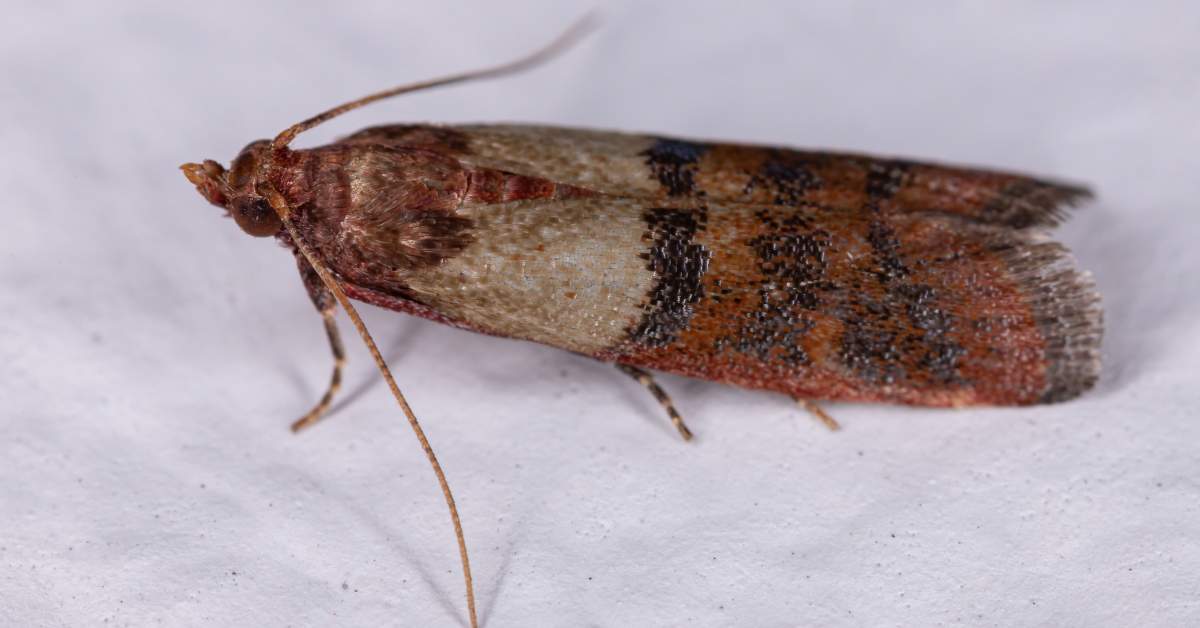
    Meal Moths: Indian meal moth – All damage is done by the larvae, which attack a wide range of products, including cereal and cereal products, flour, cornmeal, rice, dried fruits, dehydrated vegetables, nuts, chocolate, candies, and other confections. When infestations are heavy, mature larvae can often be found in parts of the house far from the original food source because they move quite a distance to pupate. The Indian meal moth is a fairly distinct small moth with reddish brown forewings that have a coppery luster on the outer two-thirds and are whitish gray on the inner or body portion. The female moth lays its eggs singly or in groups on food material. Eggs hatch within a few days into small whitish caterpillars. Larva of the Indian meal moth spin a web as they grow and leave behind silken threads wherever they crawl. When fully grown, the larva is about ½ inch long and white with a greenish or pinkish hue. This larva spins a silken cocoon and transforms into a light brown pupa, from which the moth emerges. The Indian meal moth takes about 6-8 weeks to complete egg, larval and pupal stages during warm weather.  These are a cousin of the plaster bagworm moth which can infest your closet by living off of wool and cobwebs.  

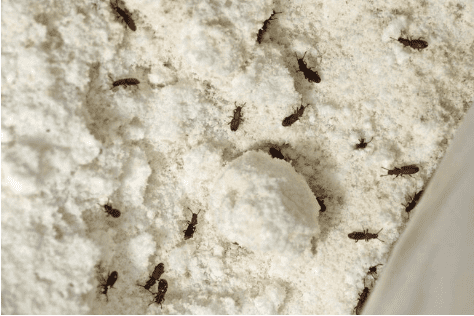
    Pantry Beetles (Weevils) in flour

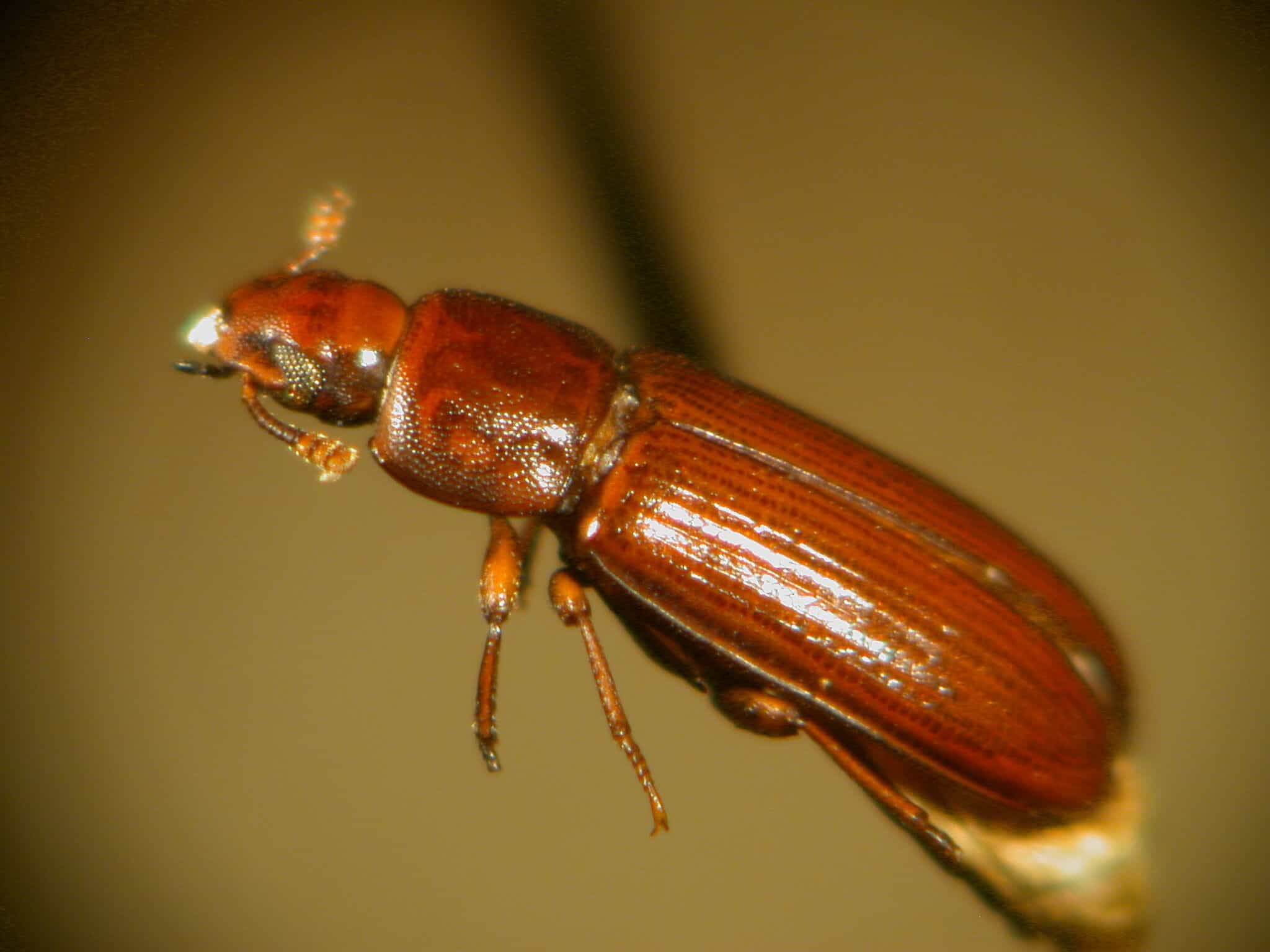
    Pantry Beetles (Weevils): Adult beetles have oval bodies that are about 1/8 inch long with a brown and yellowish pattern on the wind covers. Female beetles lay up to 90 eggs within the infested food. Larvae emerge and feed on the food. Larvae are about ¼ inch when fully grown and have numerous stiff setae, or hairs, that emerge from dark-colored plates on the last few segments of their abdomen, as well as a tail of long thin hairs that extend from the tip of the abdomen. They are very active and seek out new food sources to infest. In warm temperatures, the entire life cycle from egg to adult can be completed in 45 days. The setae of this beetle are shed within the infested food product and can be irritating to the mouth, esophagus, and digestive tract if they are ingested. Food found infested with this beetle should be discarded.

    Identification and Life Cycles: Adult moths and beetles are easy to distinguish from each other, but their larvae are a little more difficult to identify. Use a hand lens to examine the legs of the larvae. Beetle larvae are grub-like and legless or have only 3 pairs of legs, all located close to the head. Moth larvae have 3 pairs of true legs, plus additional leg-like structures further down the abdomen. Both larvae and adults of beetles feed on foodstuff, whereas only the larvae stage of moths consumes stored products.

    Damage: Pantry pests damage food by contaminating it with their bodies and their by-products. The larval stage of the Indian meal moth produces frass (excrement) and webbing, and some beetle larvae produce secretions that give food a disagreeable odor or taste. Hairs from the warehouse beetle can irritate the mouth, throat, and stomach of people who eat infested products. In addition, pantry pests might introduce microbes into the food that could produce mycotoxins, especially if the food is stored in warm, humid conditions.

    Management: Getting rid of food-infesting moths or beetles takes continuous, persistent effort if the infestation has been present for a while. Some pests are capable of living for many weeks without food, thus the threat of re-infestation exists until they die off or are killed. Follow the guidelines for removing and cleaning up an infestation. It is best, at least for several months after eliminating the infested products, to store any susceptible food in airtight containers, in a refrigerator or freezer. Also, as a general practice, storing infrequently used food items. (e.g., pancakes, flour, grains, spices) in the freezer prevents infestation from developing.

    Detection: If you see small moths or beetles crawling or flying around your kitchen, look for the food source of these pests and remove them e immediately. If you locate the food source before it spreads to other packages, control may be easy. The source is commonly a package damaged at the store or an opened one that is little used or forgotten. The best thing to do with the package is to seal it up and dispose of it, removing it from the house immediately.

    Cleaning up an infestation: Most commonly, by the time the insects are noticed they have already spread to other food packages. Carefully inspect all packages, especially those that have been opened or exposed. Destroy any that gives the slightest indication of an infestation. Other than the insects themselves, telltale signs include webbing in tight places of a package or tiny holes in the container. Insects are less likely to invade packages that have their original seal but more commonly infest those that have been opened or have been on the shelf for a long time. Before replacing non-infested packages, wash shelves with soap and water, scrub corners and crevices or vacuum them with a crevice attachment to remove eggs and pupae.

    Prevention and Sanitation: Most home infestations of pantry pests maintain themselves on spills in the crevices of cupboards and drawers or opened packages of food stored for long periods.

    Following a few general guidelines when storing food products will help you avoid many potential problems.

    • Do not put exposed food on shelves. Place it in containers with tight-fitting lids. Plastic bags are not adequate.
    • Regularly clean shelves, bins, and other locations where there is any possibility of flour or other food particles accumulating. Certain pests need only small amounts of food to live and breed. Soap and water are great for cleaning flat areas, and vacuuming with a crevice attachment will help clean cracks, edges, and corners.
    • Do not mix old and new lots of foodstuff. If the old material is infested, the pest will quickly invade the new.
    • Clean old containers before filling them with fresh food. They may be contaminated and cause a new infestation.
    • Do not purchase broken or damaged packages of food materials. They are more likely to become infected.
    • Construct storage containers so they are tight and can be cleaned easily.
    • Store bulk materials, such as pet food, in containers with tight-fitting lids.
    • Keep storage units dry. This is important because moisture favors the development of pantry pests; dryness discourages them.
    • Some pantry pests breed in the nests of rodents and insects and may migrate from these into homes. Eliminate any nests found in or near the home.
    • Pantry pests can also breed in rodent baits. Be sure to quickly check and discard infested baits.
  • Yellow Banded Millipedes

    Yellow Banded Millipedes

    First Yellow Banded millipede was found in Monroe County in 2001 originated from the Caribbean.

    Current Infestation: Primarily located in Broward, Miami-Dade, and Monroe Counties, but is spreading throughout South Florida.

    Description: Millipedes are not insects but are myriapods. The Word “millipede” refers to the appearance of having a thousand legs. Millipedes are elongate, cylindrical with many body segments and legs. Most of the segments have two pairs of legs. Female millipedes lay their eggs in soil and moist organic matter. The young millipedes resemble the adults.

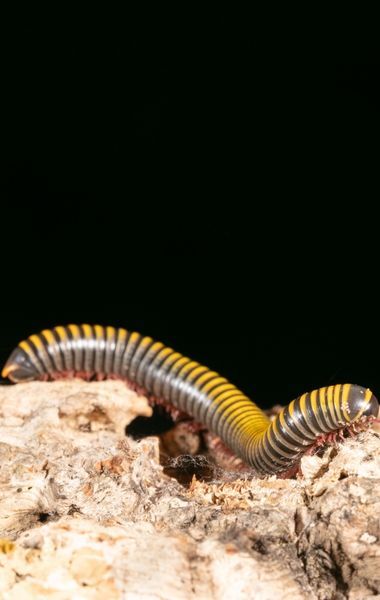
    The yellow–banded millipede is brown with yellow bands, and has red legs. Body length is 1-4 inches. Little is know about the yellow-banded millipede. These species may be attracted to lights.

    Hosts: Millipedes feed on decaying material and organic matter. They are commonly found in mulch however, they do not have specific nests where they live and breed. Millipedes are considered a beneficial organism.

    Importance: This harmless creature can be an indoor nuisance but not a plant pest. They can occur in large numbers, and have a habit of crawling up walls and accidentally coming indoors which may be somewhat unsettling. They do NOT bite.

    Damage: None

    Management: These millipedes can enter buildings and houses through wall holes, around service lines, around loose fittings windows and doors, or through damaged roof vents. Once they enter the building, they will soon die (usually within 24 hours) due to the dry conditions of most buildings and houses. They are not able to breed indoors. There may be some odor associated with these animals when they are disturbed so avoid vacuuming them up.

    Homeowner: Weather strip around doorways, especially over the threshold. Seal around windows. Turn off outdoor lights when not in use. Replace damages roof and vent screens, and caulk cracks and holes in walls.  If possible remove all organic material away from the building. Sometimes these millipedes will reside in potted plants near buildings.

    There are insecticides labeled for use against millipedes around the outside foundation walls which are successful at killing millipedes, however, this success is very short lived because more millipedes will have returned within 24 to 48 hours. This is one of those situations that what nature has created nature will have to cure. Once the population in an area has reached a balance the movement will cease.

    Follow our tips to prevent these intruders from getting inside your home or business and if you need help please don’t hesitate to reach out to Dave’s Pest Control for more info.

  • Plaster Bagworms

    Plaster Bagworms

    Have you seen these? These are Plaster Bag Worms and they feed on your wool and silk!

    The plaster bagworm is a small larva that creates a case from silk and debris, like soil, lint and paint fragments to help camouflage the case. This protects it from predators as it matures inside. Plaster bagworms are also known by the name household casebearer.

    Plaster bagworms are household pests as they feed on wool and silk. They will eat the webs of spiders as well. The plaster bagworms can be identified by the cases they build. They resemble pumpkin seeds in that they are wide in the middle and tapered on the ends. This allows the larva to turn around inside the case.

    These cases are easily seen on light-colored walls and can be found mainly in closets. Plaster bagworms may also be found near baseboards, under chairs and on the edges of rugs. These pests are typically found in the southeastern region of the US.

    Plaster bagworm moths are small and gray, with distinct dark spots and long, gray hairs on their hind wings. The adult moths of the species do not appear to feed. The female moths will deposit up to 200 tiny, light-blue eggs in a hidden area to keep them safe while they mature. Once the larvae hatch, they spin a case of silk and coat it with debris to protect them. The plaster bagworms will travel with the case dragging behind them as they seek out food. These insects will pupate inside the case.

    Keeping your home free of spider webs and cobwebs can help control plaster bagworms. Store your clothing only after it has been cleaned and inspect your closet regularly, especially where items are stored for long periods of time. Plaster bagworms will only feed on the fibers of silk and wool. They do not eat cotton fibers.

    If you have questions about plaster bagworms or other pest control issues, please give Dave’s a call.

  • Bed Bugs: What are the first signs of Bed Bugs?

    Bed Bugs: What are the first signs of Bed Bugs?

    Bed Bugs! Two words that most people don’t want to hear or even think about finding in their residence whether temporary or permanent. The very thought sends chills down the spine.

    Unfortunately, these pests and difficult to spot and even harder to get rid of without the help of a licensed & experienced professional.

    That’s why we are here to educate you on the most common signs of Bed Bugs and help you eradicate these pests if found.

    Bed Bugs are tiny reddish-brown wingless insects, about the size of an apple seed or flaxseed, that most commonly live in the crevices or seams of your mattress or box spring but come out when you are sleeping to feast on human blood. Bed Bugs’ favorite and main food source is human blood but there have been known to feed on other vertebrates.

    Bed bugs can also be found almost anywhere humans inhabit such as single-family homes, condos, apartments, hotel rooms, motels, and RVs. There have also been reports of bed bugs infesting businesses such as retail stores, movie theaters, cruise ships, retirement homes, public transportation, and restaurants.

    Where do Bed Bugs come from?

    These little blood-sucking hitchhikers have been around for thousands of years. It is a common belief that these insects were the first cave dwellers that fed on Bat blood but switched over to their human blood diet as we exited from cave dwellings long ago.

    But how did they get on you? Bed Bugs, though tiny, are deceptively fast, crawling about 5 ft in 1 min. They can crawl into your luggage or laundry to hitch a ride or they may crawl in to just lay eggs before returning to their hiding spot.

    Bed bugs can live about 10 months and can go weeks or months without food. They can also travel behind walls and loose wallpaper.

    What are the most common early signs of Bed Bugs?

    The first sign of a Bed Bug problem is often bed bug bites. If this is the case you will need to search for live bed bugs. They can be difficult to find so you will need to examine their favorite hiding places first. The tight cracks, seams, and crevices of the mattress and box spring, bed frames, headboard, pillowcases and bed sheets. It is also a good idea to search couches and all upholstered furniture as well as baseboards.

    The next most common sign of bed bugs is shell casing from the molting process. These casings will be yellowish-brown and a translucent shed of their exoskeleton. There may be various sizes of shed exoskeletons due to the fact that bed bugs will molt 5 times during their life from nymph to adult bed bugs.

    Yet another telltale sign of the pests is bed bug eggs. These tiny eggs and egg shells are only around 1mm long and the width of a pinhead. A female bed bug can lay up to 7 eggs a day and these usually hatch within 10 days.

    A few more signs that you have these insects are bed bug excrement, bloodstains, or a musty odor. Fecal spots or droppings will be dark spots that almost look like ink pen dots. Similarly, Blood stains will be random tiny specks of blood. Both may appear on the mattress, box spring, linens, and pillowcases. Some people can detect a musty odor that may smell a little like cilantro or coriander and in severe cases, it will smell like rust, wet towels, or moldy laundry.

    While most people may show no signs of an allergic reaction to bed bugs, 20% of the US population are allergic and may show symptoms of bed bug bites. This 20% could suffer possible severe itchy welts, hives, and even blisters.

    Can Bed Bugs hide on your body?

    The easy answer here is No, they can not. Bed bugs may attach themselves to clothing in order to transport to a new location or to lay eggs but they will only feed while their host is sleeping so that their presence isn’t detected before going back into hiding. Bed Bugs also can not fly. They are wingless insects but bothersome nonetheless. For more common myths around Bed Bugs

    How to Get Rid of Bed Bugs

    If you have or suspect a bed bug infestation or have any of the numerous signs of bed bugs, your best bet is to call a licensed exterminator who will know the proper pesticides to use.

    Many chemicals and strong pesticides were banned or weakened decades ago due to their toxicity and proximity of use to our families and pets. For a history of this, here is another blog post with more info.

    Dave’s Pest Control has over 40 years of experience exterminating bed bugs. We are your #1 exterminator for not only Bed Bugs but all manners of Pest Control. Get to know other common pests in your area by checking out this Scary bugs and Bites Post.

    With services in Lakeland, Port Orange, Orlando, Sanford, Palm Coast, New Smyrna, Ormund Beach, Deland, and Daytona Beach, we cover the greater Polk, Seminole, and Volusia, Florida Counties.

    Give Dave’s a call today for a free inspection!