Dave's Pest Control

Category: Bed Bugs

  • Can Bed Bugs Live in Your Hair?

    Can Bed Bugs Live in Your Hair?

    Can bed bugs live in your hair? When I first came across this question, I thought it was just another one of those weird internet queries. But then I did a little digging and found real people online sharing stories about seeing bed bugs on someone’s scalp or even watching them fall off while brushing their hair.

    So, how does that even happen, and how do they end up on someone’s head again? It’s definitely unsettling… but let’s break it down.

    Can you feel bed bugs crawling on your hair?

    Yes, you can but its very rare. Bed bugs don’t usually hang out in your hair like lice do. They go for hiding spots such as mattresses, furniture, or baseboards. That’s why you’ll find them under beds, behind headboards, or in the seams of your sheets. But in extreme infestations, when things are severely out of control, they end up crawling on your scalp. That’s usually when you’re already seeing all the signs: bite marks, shed skins, droppings, spots on your sheets, and that unpleasant “bed bug” smell.

    Now, if we look at the more scientific side of things, studies show that bed bugs don’t actually live in human hair. They can infest clothes and bedding, but hair just isn’t their thing. If someone spots bugs in their hair, there’s a good chance they’re confusing bed bugs with lice or other pests. Bed bugs prefer tight spaces where they can hide, and the scalp isn’t one of them. During the night, while you’re asleep, they come out of hiding to feed. It’s quick and barely noticeable. It’s like blink-and-they’re-gone kind of stealth.

    Rare Cases: Bed Bugs in Hair

    Here’s where a little contradiction comes in. While it’s widely accepted that bed bugs don’t live in hair, there have been a few rare exceptions reported through personal stories. These involve people living in extreme conditions with severely compromised hygiene. In such cases, bed bugs have been seen clinging to the scalp or even dropping off from hair. Some stories mention individuals who haven’t bathed in days. They live in homes that are fully infested, and baby bed bugs have been spotted crawling on their scalp.

    Therefore, our recommendation is to take any signs seriously. If you suspect the presence of bed bugs, trust your instincts and seek professional treatment promptly. Early intervention is key to effectively managing and eliminating infestation.

    How do bed bugs get to your hair or scalp?

    As mentioned earlier, this is a very rare occurrence, truly a once-in-a-blue-moon kind of thing. But yes, it can happen in extreme situations. The explanation is straightforward: in severe infestations, bed bugs gradually spread from bedding to clothing, then to the skin, and, in the worst cases, even to the hair.

    Where do bed bugs actually live?

    Bed bugs are attracted to warm, hidden, and undisturbed places. They emerge at night when the host is asleep. Common hiding spots include mattresses, furniture crevices, behind baseboards, and other small, concealed spaces.

    When bed bugs start living in the scalp, they do not remain there for long. Eventually, they either fall off or cause irritation and other signs that alert the host to their presence.

    Some of the places where you might see them: 

    • Inside the joints of sofas and chairs
    • Between cushion pads
    • In the folds of curtains
    • In the cracks and joints of drawers
    • Behind wallpaper or picture frames
    • Even where the wall meets the ceiling

    Prevention- Stop the Damage Before It Starts

    If you start noticing any signs, no matter how small, the smartest move is not to ignore them. Pay attention to what your body and surroundings are telling you. That could be blood spots on your sheets, itching on your scalp, an unpleasant musty smell, or even specks falling or sticking under your nails when you run your fingers through your hair. There are plenty of simple precautions you can take to keep bed bugs from spreading and causing more trouble:

    • Wash clothes, luggage, sheets, and pillowcases in hot water.
    • Vacuum mattresses, baseboards, and around windows thoroughly.
    • Inspect secondhand furniture and especially around crevices, under cushions, and behind seams.
    • Seal pipe and wire openings to block any potential entry points.
    • For severe infestations, contact a professional bed bug pest control service.

    Preventing Bed Bugs in Your Hair

    • Use hair products containing oils; bed bugs avoid strong, sticky, or oily smells.
    • Apply anti-itch cream along with medicated shampoo to soothe irritation and discourage pests.
    • Use a hot comb; the heat can kill or at least weaken any bed bugs hiding in your hair.

    Conclusion

    Studies say bed bugs don’t live in hair, and that’s mostly true. But there are real stories out there from people who’ve seen bed bugs clinging to someone’s head. So, we’ll give it the benefit of the doubt and say: technically, yes, it can happen in extreme cases. When infestation gets completely out of control, it makes sense that bed bugs could spread from beds to clothes, skin, and eventually, even hair. But whether they live there or just pass through, one thing remains the same: don’t ignore the early signs.

    Keep your space clean, stay alert, and act early. If DIY efforts don’t cut it, it’s time to call in the pros. Pest control services know exactly how to handle it before it gets worse.

  • Do Bed Bugs Jump?

    Do Bed Bugs Jump?

    Remember those old bedtime stories where tiny creatures lived under our beds and we were terrified they might crawl into our legs while we slept? They had huge antennae in our dreams and only came out at night. I remember being half fascinated, half scared out of my mind. Fast forward to adulthood, and sorry to break it to you, but the fear just got real. The only difference is that these little guys don’t wear hats, they’re not friendly, and they definitely come out at night. And if you’ve felt that sudden shiver while reading this, you’ve probably already asked yourself: Wait… do these things actually fly like fleas? Or is it another bedtime story myth, too?

    Let’s talk about Bed Bugs, the truth, the myths, and what you really need to know about them!

    How do bed bugs get into home?

    Bed bugs don’t just show up, we bring them home ourselves. Yep, that’s right. Most of the time, we are the ones carrying them around (without even knowing it). Let’s break it down in simple terms:

    Your home doesn’t have bed bugs. You travel somewhere, maybe to a hotel, a friend’s place, or a guesthouse. You set your bag down in a cupboard, on a wooden table, or near a bed. Everything seems fine. A week later, you’re back home… and suddenly, you notice small red insects crawling around your bag. Then come the itchy, swollen, red marks on your hands and legs. That’s how bed bugs hitch a ride right into your space. The luggage with its warmth and used clothes attracts bed bugs.  

    Can bed bugs jump from person to person?

    The simple answer is no; they don’t jump! They prefer crawling from place to place in search of their next meal (yes, that means us). They are actually little hitchhikers. They travel with luggage, clothing, or furniture. Wherever they find the right environment (warm, dark, and close to a food source), they settle in and make themselves at home… until something forces them out.

    Do bed bugs fly like fleas?

    Nope, they don’t do that either. Bed bugs aren’t like fleas or lice, they crawl, plain and simple!

    Over time, as bed bugs adapted to their environment and lifestyle, they lost the need for wings. That evolutionary shift led them to become what they are today, completely wingless. Now, some people are surprised to learn that bed bugs do have something called vestigial wing pads (or hemelytra pads), which develop as they mature from the 5th instar nymph stage into adulthood. While they can move these tiny pads, they can’t use them for flight, not even close.

    You might wonder: If they have wing pads, why not just use them instead of crawling everywhere?
    Well, those pads are located right behind their head, in a spot that makes them completely useless for flight. (good for us!) Over thousands of years, as bed bugs adapted to living in beds, cracks, and furniture, and feeding off humans at night, wings just became unnecessary baggage. So, while they can crawl quickly (yes, they’re fast on those six legs), they can’t fly or jump. They might move from one person to another over time, but not by jumping or soaring through the air.

    If bed bugs could fly like fleas jump, we’d all be in serious trouble. But they can’t. And that’s at least one thing we can be grateful for!

    Where do bed bugs live?

    Bed bugs usually hide in furniture, especially in and around beds.

    They can spread from one space to another, often without being noticed. The reason we overlook them so easily is the fact that they hide in places we’d never expect.

    Some of the places where you might see them: 

    • Inside the joints of sofas and chairs
    • Between cushion pads
    • In the folds of curtains
    • In the cracks and joints of drawers
    • Behind wallpaper or picture frames
    • Even where the wall meets the ceiling

    They’ve even been found in appliances and electronics, and believe it or not, they can fit inside the head of a screw. That’s how small and sneaky they are.

    How to get rid of bed bugs?

    Bed bugs really only fear one thing: extreme temperatures, either way. That’s right. They can’t handle temperatures that are very hot or freezing cold. You can use this to your advantage. Tools like a hair dryer, cold spray, or any device that generates high or low temperatures can help drive them out of hiding.

    Below are some of the ways that you can follow:  

    1. Wash your clothes, luggage, sheets, and pillowcases in hot water. Soak them in hot water for at least 30 minutes to kill any unwanted hitchhikers hiding in your laundry.
    2. Declutter and vacuum your home thoroughly, especially around the edges of mattresses, along baseboards, and near windows. Bed bugs love dark, tight spaces.
    3. Be extra cautious when you buy secondhand furniture. Check inside crevices, under cushions, behind seams, and in all those small, easy-to-miss spots.
    4. Seal off any pipe or wire openings, too; they can be sneaky entry points.

    If the problem gets out of hand or home remedies just aren’t cutting it, it might be time to call a trusted pest control service. At Dave’s Pest Control, we offer topnotch effective Bed Bug Removal Services. Our trained technicians use safe, proven methods to detect and eliminate bed bugs, right down to the hidden roots of the infestation. We don’t just treat the surface; we get to the source!

    Conclusion

    Bed bugs can’t fly. And they don’t jump from one person to another like fleas do. They take the slow and sneaky route: crawling. Instead of being afraid of how bed bugs move around, the better move would be to put your energy where it counts: into prevention. Check your luggage, bags, and purses after traveling. Inspect secondhand furniture carefully before bringing it home. Bed bugs don’t magically appear; they hitch a ride with you. So, unless you’re carrying them in from the outside, your home is safe.

    Bed bugs may be annoying, but with a little awareness and a few smart habits, you can keep them far away from your bed (and your bedtime stories).

  • Bed Bug Droppings

    Bed Bug Droppings

    Bed bugs can hide but their dropping cannot! Have you ever noticed tiny dark stains on your mattress or furniture and are confused about where they have come from? These marks could be a sign of bed bugs. Specifically, they could be bed bug droppings, one of the most common signs of a bed bug infestation.

    What Are Bed Bug Droppings?

    Bed bug droppings are basically the waste material excreted by bed bugs after they consume blood. These droppings consist mainly of digested blood, which gives them their dark color. Unlike solid waste from larger pests, bed bug poop is semi-liquid and can stain surfaces such as mattresses, sheets, walls, and furniture.

    What Do Bed Bug Droppings Look Like?

    Lets see how bed bug poop looks like in shape, color and size so that we can have a better idea to identify their infestation.

    Color

    Typically, dark brown or black

    Shape

    Small dots or smudges, often compared to ink spots from a marker

    Consistency

    Semi-liquid; they soak into fabrics or leave crusty residues on hard surfaces

    Size

    Tiny, about 1 mm in diameter

    How to find and Identify Bed Bug Droppings

    Let’s find out where the bed bugs mostly hide themselves and how we can identify if they are the bed bugs or not.

    1. Look in Common Hiding Spots

    Bed bugs prefer to hide in cracks, crevices, and near their feeding grounds. It can be any of the spots below:

    • Mattresses and Box Springs
    • Sheets and Pillowcases
    • Furniture
    • Walls and Baseboards

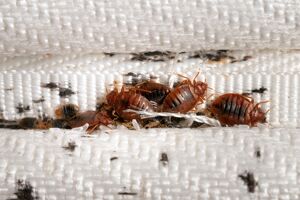
    bed bug infestation that needs to be removed by professional pest control service

    1. Perform the Smudge Test

    Rub the stain gently with a wet cloth. If it spreads and makes a dark mark, it is most probably the bed bug droppings.

    Health Risks of Bed Bug Feces

    Bed bug feces don’t carry diseases, but they can still pose some health concerns:

    1. Allergic Reactions

    Bed bug droppings may trigger some allergic reactions such as:

    • Skin rashes
    • Eye irritation
    1. Psychological Stress

    The presence of bed bug poop can cause insomnia and stress.

    1. Bacterial Exposure

    Although rare, bed bug droppings can harbor bacteria, which may pose a risk if inhaled or encounter the open wound.

    bites of bed bugs

    How to Clean Bed Bug Droppings

    Once you’ve identified bed bug feces, it is very important to clean the infected area. Let’s explore how you can sanitize the area perfectly.

    Materials Needed

    • Vacuum cleaner with a HEPA filter
    • Mild detergent or cleaner
    • Warm water and soft cloths
    • Gloves

    Cleaning Process

    1. Vacuum the Area

    Use a vacuum cleaner to remove droppings, eggs, and other materials. Focus on gaps, crevices, mattress seams, and furniture joints. Dispose of the vacuum bag immediately to prevent spreading.

    1. Pre-Treat Stains

    For surfaces like sheets or mattresses, apply a light detergent or stain remover and leave it for 15 – 20 mins so that it can sit and adjust properly.

    1. Wipe or Scrub

    For hard surfaces, dampen a cloth with warm water and detergent, then wipe the droppings gently.

    1. Wash Fabric Items

    Wash the sheets or pillowcases that have been infested, in hot water and then dry them on high heat.

    1. Sanitize

    After cleaning, use a disinfectant spray to kill lingering bacteria.

    1. Inspect Again

    Double check the infected area to see if there are any signs of bed bugs or droppings still left or not.

    Conclusion

    Bed bug poop is an early warning sign of an infestation. By knowing how to identify, clean, and prevent them, you can take proactive steps to keep your homes protected from bed bugs.

    Calling a professional bed bug exterminator should always be considered as soon as you see the bed bug droppings in a large quantity as it is the sign of infestation. They come up with the advanced tools and techniques to cater the bed bug infestations and apply the preventive measures to stop them from coming back.

    Dave’s pest control is one of the best companies in Florida, providing pest control service in Port Orange, Daytona, Sanford, Lakeland, Orlando, Fort Lauderdale, Boca Raton and other areas of central and south Florida so you can reach out anytime to protect your homes from bed bugs.

    Related Articles

    1. Dealing with Bed Bugs! How to Eliminate Them
    2. Baby Bed bugs
    3. Signs of Bed Bug Infestation
  • What Attracts Bed Bugs? A Guide For Florida Homeowners

    What Attracts Bed Bugs? A Guide For Florida Homeowners

    No one wants to encounter bed bugs, but unfortunately, they are a very common problem in homes across Florida. They are not just annoying; they don’t even let you sleep, and their bites cannot be ignored. Once they settle in, they can be hardest to get rid of.

    But what attracts bed bugs? Let’s explore the factors and find out what it is that draws bed bugs into your home and what protection measures you should take to safeguard yourself and your family.

    What Are Bed Bugs Attracted To?

    Let’s look into the factors that bring bed bugs to your homes and how you can protect your homes from them.

    Carbon Dioxide and Body Heat

    Bed bugs are attracted to the carbon dioxide we breathe out and the heat our bodies emit. These are the strong signals to let them know a human is nearby, so they come over to get the blood they need to survive.

    Warm, Humid Environments

    Florida has the ideal weather for beg bugs to grow and thrive, and they reproduce more quickly in humid conditions.

    Human Activity and Habitation

    Bed bugs don’t fly or jump; they depend on human activity. Places like hotels, airports, and rental homes where there is high foot traffic are considered perfect places for bedbugs to take a ride and find their new homes.

    Used Furniture

    Used furniture is one of the most common ways for bed bugs to enter homes. Florida’s yard sale culture and thrift stores make it easy for infested furniture to make its way into unsuspecting homes.

    Clutters

    Bed bugs love hiding in dark, cramped spaces, and clutter gives them plenty of hiding spots. While clutter itself doesn’t attract bed bugs, it makes it harder to detect and eliminate them.

    Soft Surfaces

    Bed bugs love soft materials such as mattresses, bedding, or sofas. These things provide them a safe place to hide and wait for their favorite food source, i.e., humans.

    Signs of a Bed Bug Infestation

    Bed bug infestations can only be controlled if we are able to identify their presence in homes. Let’s look into some common signs that hint towards the infestation.

    Bed bugs infestation

    • Bites: small, itchy red welts, often in a line or cluster, on your skin after sleeping.
    • Stains: Tiny blood stains or black spots on sheets, mattresses, or furniture.
    • Odor: A musty, sweet smell in heavily infested areas.
    • Shed Skins: Transparent exoskeletons left behind as bed bugs grow.

    How to Protect Your Florida Home

    Everyone wants to protect their homes from bed bugs but doesn’t know how it can be done! Let’s see what attracts bed bugs and figure out some tips to avoid bed bug infestations and keep your homes protected.

    Inspect Regularly

    You should do a thorough inspection of mattresses, bed frames, and furniture on a daily basis, specifically when you go to sleep.

    Be Vigilant When Traveling

    Always inspect your hotel rooms for bed bugs, as they can reach out in your room through the luggage you carry.

    Declutter Your Space

    By reducing clutter, you eliminate potential hiding spots for bed bugs, making it easier to detect and remove them.

    Use Bed Bug Traps

    Place traps near bed legs and furniture to monitor for bed bugs. These traps help you detect their presence early.

    Contact a Professional Pest Control

    If you are sure that your home is infested by the bed bugs, reach out to us. We have been providing extermination services in Port Orange, New Smyrna, Lakeland, Orlando, Boca Raton and surrounding areas

    Why Are Bed Bugs a Consistent Issue in Florida?

    The humid and warm weather of Florida makes it a perfect place for pests like bed bugs to grow. Unlike colder climates where bed bug activity slows during winter, Florida’s mild winters allow them to thrive year-round.

    Conclusion

    Other than carbon dioxide, body heat, and soft surfaces, bed bugs can also get into your home through the luggage you bring in. As you now know what attracts bed bugs to your home, taking proper preventive measures, such as regular inspections, can protect your homes from these bugs.

    If you suspect an infestation, it’s always the best option to call a professional bed bug control service to eliminate those bugs, as they have expertise, and their treatment would be effective in making your home completely protected from bugs.


  • Baby Bed Bugs

    Baby Bed Bugs

    Bed bugs are a common problem many homeowners come across in Florida. No matter, how clean your home is, these creepy, tiny bed bugs can live anywhere which makes them a common worry. Most of the people know what adult bed bugs look like but not as many are familiar with their young ones: baby bed bugs, or nymphs.

    In this guide, we’ll cover everything you need to know about baby bed bugs; from what they look like and how they behave to the signs that they’re hiding somewhere in your home.

    What Do Baby Bed Bugs Look Like?

    Baby bed bugs are also known as nymphs, and they look exactly same as their adult bed bugs but are smaller in size and their color is light as compared. Let’s look at some of their characteristics to have a better idea of their appearance.

    Size

    As soon as they are hatched, they are almost 1mm in length. But as they start growing through different stages, they reach up to 4-5 mm.

    Color

    When they first emerge, nymphs are almost translucent or whitish-yellow in color. However, after their first blood meal, they turn a reddish-brown color.

    Shape

    Baby bed bugs have a flat oval shaped body, six legs and two antennae like their adult counter parts.

    Once you get to know how baby bed bugs look like, you would be able to find out the infestation in your home before it becomes worse.

    Bed Bug Life Cycle: How baby bed bugs grow!

    The bed bug life cycle consists of three main stages: egg, nymph (baby bed bug), and adult. Unlike many other insects, bed bugs do not go through a larval stage, skipping directly from egg to nymph.

    Eggs

    Bed bug eggs are tiny and white in color. They’re sticky, so they easily stick to hidden spots like mattress seams and bed frames, making them hard to find.

    Nymph (Baby Bed Bug)

    Once the eggs hatch, the baby bed bugs also known as Nymphs, emerge. These nymphs go through five molts, or growth stages, shedding their exoskeleton after each blood meal. This process is necessary for them to reach adulthood.

    Adults

    After their final molt, bed bugs have now become fully mature adults. Now, they are 5-7 mm in length and have a dark reddish-brown color.

    It’s important to note that because bed bugs do not have a true larval stage, nymphs and adults share similar appearances, with size and coloration being the primary differences.

    Do Baby Bed Bugs Bite?

    Yes, they do! In fact, each stage of their life cycle requires a blood meal to progress. Here’s what you should know about baby bed bug bites:

    Feeding Habits

    Baby bed bugs mostly come out at night to feed while you’re asleep. They inject a mild numbing agent, so you don’t feel the bite right away. But once it wears off, the bites can start to itch. Your skin gets red and starts to irritate.

    Appearance of Bites

    Bed bug bites are reddish in color and can cause itching and swelling on infected area. The impact of these bites varies by individual, some people experience more intense symptoms than others.

    Frequency of Bites

    Since baby bed bugs require blood meals more frequently than adults to continue growing, you may notice an increase in bite occurrences during an infestation.

    If you are noticing frequent bites, especially at night, it could be a sign that you have a developing bed bug infestation involving both nymphs and adults.

    Signs of Baby Bed Bugs in Home

    Spotting baby bed bugs early can help you prevent larger infestations. Here are some clear signs to help you identify them.

    Shed Skins

    As baby bed bugs grow, they shed their outer skins, leaving behind small and see-through shells. You’ll often find these skins on mattress seams, around headboards, and other hidden spots in your bed area.

    Bed Bug Droppings

    Bed bug droppings look like tiny black or dark brown spots and are usually found on sheets, mattresses, or furniture. These spots are actually dried blood left behind after they feed so they can be a clear sign of infestation in your home.

    Bed Bug Eggs

    Female bed bugs lay clusters of eggs in hidden places. They are small, white, and sticky, often found along mattress seams, bed frames, and cracks.

    Bites on the Skin

    If you’re waking up with new bites, particularly on exposed areas of skin, it can be a sign of bed bugs.

    These are some signs that can help you identify bed bugs presence in your home. You should call a professional bed bug exterminator as soon as you notice these signs.

    Baby Roaches vs. Baby Bed Bugs: How to Differentiate?

    It’s easy to confuse bed bugs with other pests, particularly baby cockroaches, due to their similar size and shape. Let’s look how can we differentiate baby bed bugs from baby roaches:

    [table id=2 /]

    Before treatment, it is mandatory to identify the type of bug as roaches and bed bugs both are treated differently.

    How to Handle a Baby Bed Bug Infestation

    There are some preventive measures that everyone should take, to prevent baby bugs infestation or to control it.

    Inspect Your Home

    Inspect your home especially the rooms; bed bugs are mostly found on the mattresses, furniture or bedding. Also, checkout out hiding spots where they can be infesting i.e. cracks, windows etc.

    Vacuum Regularly

    Use a vacuum to clean all the areas where bed bugs might hide i.e. floors, bed frames, furniture etc., and make sure to dispose it after cleaning.

    Use Mattress Encasements

    Encase your mattress and box spring in bed bug-proof covers. This step helps to trap bed bugs inside, preventing them from spreading further.

    Contact a Professional Pest Control

    For larger infestations that can’t be handled at your own, it is recommended to contact Dave’s Pest Control. We provide pest control in Lakeland, Lake Wales, Port Orange, Daytona, Sunrise, Davie, Winter Park, Ocoee, Apopka and other areas of Florida. We use advanced techniques and environment friendly products to effectively eliminate bed bugs and prevent them from coming back.

  • Understanding Bed Bugs: Identification, Life Cycle, and Control

    Understanding Bed Bugs: Identification, Life Cycle, and Control

    Bed bugs, Cimex lectularius, are small, parasitic insects that feed on the blood of humans and animals. These pests are a growing concern in homes, hotels, and public spaces, and they have made a significant resurgence over the past 15-20 years. Knowing how to identify bed bugs, understanding their life cycle, and learning how to check for them are essential steps to preventing an infestation and taking timely action.

    How to Spot Bed Bugs

    Bed bugs are notorious for their ability to hide in small crevices, making them difficult to detect until they’ve already established an infestation. Adult bed bugs are reddish-brown, flat, and about the size of an apple seed, usually between 5-7 millimeters long. They swell and turn a darker red after feeding. Nymphs, or juvenile bed bugs, are smaller and lighter in color, while bed bug eggs are white and about the size of a pinhead, making them hard to spot.

    Common signs of a bed bug infestation include:

    signs of bed bug infestation

    • Bite marks: Bed bug bites often appear in clusters or lines and are typically itchy, red welts on exposed skin.
    • Blood stains on sheets: As bed bugs feed, they may leave small blood spots on bedding or mattresses.
    • Dark fecal spots: Bed bugs excrete digested blood, leaving tiny black or dark brown spots on bedding, mattresses, or nearby furniture.
    • Shed skins and eggshells: As bed bugs grow, they shed their exoskeleton, leaving behind these tiny, translucent shells.
    • A musty odor: In large infestations, bed bugs emit a sweet, musty odor.

    How to Check for Bed Bugs in Hotels or Motels

    When staying in a hotel or motel, it’s important to thoroughly inspect the room for bed bugs, especially in the bed and surrounding furniture. Follow these steps:

    bed bug infestation on furniture

    1. Inspect the Mattress and Bed Frame: Pull back the sheets and blankets to examine the mattress, particularly the seams, corners, and edges where bed bugs tend to hide. Check the box spring and bed frame as well.
    2. Look at Nearby Furniture: Bed bugs can hide in other pieces of furniture, especially upholstered chairs and couches. Pay attention to seams, zippers, and creases.
    3. Check Behind the Headboard: In hotel rooms, headboards are common hiding spots for bed bugs. Gently pull the headboard away from the wall and inspect for any signs of infestation.
    4. Examine the Luggage Rack: Bed bugs can hitch a ride on luggage, so inspect the luggage rack before placing your bags there. Be sure to inspect the edges and folds of the fabric.

    Bed Bug Life Cycle

    Bed bugs undergo a simple metamorphosis, consisting of three main stages: egg, nymph, and adult. The time it takes for a bed bug to develop from an egg to a fully mature adult depends on environmental factors such as temperature and access to food (blood).

    1. Egg Stage: A female bed bug can lay 200-500 eggs in her lifetime. The eggs are about 1 millimeter in size, pearly white, and difficult to spot. They hatch in 6-10 days, depending on temperature.
    2. Nymph Stage: After hatching, bed bug nymphs go through five stages of development, molting each time before reaching adulthood. They need a blood meal between each stage. Under favorable conditions, nymphs can mature in about 5-6 weeks.
    3. Adult Stage: Once they reach adulthood, bed bugs can start mating almost immediately after their final molt. An adult bed bug can live for several months, typically between 6-12 months. Adult females can lay eggs throughout their lifetime, contributing to rapid population growth.

    Professional Bed Bug Control by Dave’s Pest Control

    When dealing with bed bugs, professional intervention is often necessary. Here at Dave’s Pest Control, we follow a systematic and thorough approach to eliminate bed bugs. Our process typically includes:

    1. Inspection: A thorough inspection of the infested areas is conducted to identify the extent of the infestation and locate hiding spots.
    2. Chemical Treatments: Professional-grade insecticides are applied to affected areas, including mattresses, furniture, baseboards, and cracks. These treatments target both adult bed bugs and their eggs.
    3. Follow-Up Visits: Bed bug treatments often require multiple visits to ensure complete eradication. Dave’s Pest Control will return to monitor the situation and apply additional treatments if necessary.

    So, if you are based in central or south Florida, feel free to reach us. We have been providing pest control in Orlando, Longwood, Port Orange, Ormond Beach, Lakeland, Winter Haven, Sunrise and other areas of Florida for more than 45 years now.

    The Resurgence of Bed Bugs

    Bed bugs have experienced a resurgence over the last 15-20 years, largely due to several factors:

    1. Increased International Travel: Bed bugs are excellent hitchhikers, and the increase in global travel has allowed them to spread more easily between countries and cities.
    2. Pesticide Resistance: Over time, bed bugs have developed resistance to many common insecticides that were once effective at controlling their populations.
    3. Lack of Awareness: Many people are unaware of the signs of bed bug infestations or how to prevent them, which has allowed infestations to grow and spread before they are detected.

    This resurgence has made it more important than ever for individuals and businesses to stay vigilant in preventing and addressing bed bug infestations. 

    Bed bugs are a challenging pest to deal with, but with knowledge, vigilance, and professional help of our bed bug exterminators, infestations can be effectively managed. Understanding how to spot bed bugs, inspect for signs of an infestation, and know their life cycle can help in early detection and treatment. While rumors about blood type preference are unfounded, bed bugs’ adaptability and resilience continue to make them a persistent issue. Their resurgence is a reminder of the importance of effective pest control in maintaining a healthy and clean environment protected from bed bugs

  • Battling Bed Bugs: A Historical and Modern Perspective on Pest Control

    Battling Bed Bugs: A Historical and Modern Perspective on Pest Control

    Bed bugs (Cimex lectularius) are small, parasitic insects that have plagued human dwellings for centuries. These pests feed on human blood, causing discomfort and potential allergic reactions. Despite modern advancements in pest control, bed bugs have proven to be a resilient adversary. This essay explores the history of bed bug eradication efforts, their decline and resurgence, their life cycle, identification methods, and the common areas they inhabit within homes.

    Historical Context and Eradication Challenges

    Historically, bed bugs have been a persistent problem, with records of infestations dating back to ancient civilizations. The difficulty in eradicating bed bugs is primarily due to their ability to hide in small crevices and their resistance to many traditional pesticides. In the mid-20th century, particularly from the 1940s to the 1960s, there was a significant decline in bed bug populations, largely attributed to the widespread use of DDT (dichlorodiphenyltrichloroethane). DDT was a highly effective pesticide that drastically reduced bed bug infestations alongside other insect populations.

    However, the use of DDT and other similar chemicals posed severe environmental and health risks, leading to its ban in many countries by the 1970s. The decline of bed bugs during this period was also facilitated by improved living standards and the introduction of better household hygiene practices.

    Resurgence in Recent Decades

    Over the past 20 years, bed bugs have made a notable comeback. This resurgence can be attributed to several factors. Increased international travel has facilitated the spread of bed bugs across borders, as these insects can easily hitch a ride in luggage, clothing, and other personal items. Additionally, bed bugs have developed resistance to many of the insecticides used today, making it challenging to control their populations with traditional methods. The reduction in the use of harsh chemicals in pest control, while beneficial for environmental and health reasons, has inadvertently allowed bed bugs to thrive once more.

    Life Cycle and Metamorphosis

    The life cycle of a bed bug involves several stages: egg, nymph, and adult. Female bed bugs lay small, white eggs in hidden areas. These eggs hatch within 6 to 10 days, releasing nymphs that are almost translucent and very small. Nymphs go through five molts before reaching adulthood, requiring a blood meal before each molt. The entire process from egg to adult takes about 5 to 6 weeks under optimal conditions. Adult bed bugs are reddish-brown, wingless, and approximately the size of an apple seed.

    Bed bugs undergo incomplete metamorphosis, meaning they do not have a larval stage and instead progress through nymph stages that increasingly resemble the adult form.

    Identification and Common Hiding Spots

    Identifying a bed bug infestation can be challenging due to their small size and nocturnal habits. Common signs of bed bugs include small, rust-colored stains on bedding or mattresses, tiny white eggs or eggshells, and shed skins from nymphs. Bites on the skin, often in a line or cluster, can also indicate the presence of bed bugs, though they are not definitive proof.

    Bed bugs tend to hide in areas close to their human hosts. The most common places to find bed bugs include mattresses, box springs, bed frames, and headboards. They can also be found in cracks and crevices of walls, floors, and furniture, behind wallpaper, and inside electrical outlets. Their flat bodies allow them to fit into very narrow spaces, making thorough inspection and treatment difficult.

    The Misery of Bed Bugs: Bites and Feeding Process

    The Physical and Psychological Impact

    Living with a bed bug infestation can be a harrowing experience. These pests disrupt sleep, cause physical discomfort, and create significant psychological distress. The knowledge that bed bugs are lurking in your home, waiting to feed while you sleep, can lead to anxiety, insomnia, and a constant sense of unease. The presence of bed bugs often results in a relentless cycle of vigilance and attempts to eradicate them, which can be emotionally and physically exhausting.

    Appearance of Bed Bug Bites

    Bed bug bites can vary in appearance, but they typically manifest as small, red, swollen welts on the skin. These welts often appear in a line or cluster, commonly referred to as “breakfast, lunch, and dinner” bites. The bites are usually intensely itchy, and scratching can lead to secondary infections. Some people may develop larger, more inflamed reactions, while others might have little to no visible reaction at all.

    Bed bug bites are most commonly found on areas of the body that are exposed during sleep, such as the face, neck, arms, and legs. However, they can occur anywhere on the body. The delayed reaction to bed bug bites means that many people do not realize they have been bitten until hours or even days later, making it difficult to pinpoint the exact source of the infestation.

    The Feeding Process of Bed Bugs

    The process by which bed bugs feed on human blood is both fascinating and unsettling. Bed bugs are nocturnal feeders, typically emerging from their hiding places during the night to feed on their sleeping hosts. Here is a detailed breakdown of their feeding process:

    1. Detection: Bed bugs are attracted to the carbon dioxide exhaled by humans and the warmth of our bodies. They can detect these cues from several feet away, guiding them to their sleeping victims.
    2. Piercing the Skin: Once a bed bug locates a suitable feeding spot, it uses its specialized mouthparts to pierce the skin. Bed bugs have two hollow tubes: one injects saliva containing anticoagulants and anesthetics, and the other draws blood. The anesthetic properties of their saliva often prevent the host from feeling the bite, allowing the bed bug to feed undisturbed.
    3. Feeding: A bed bug will feed for 5 to 10 minutes, during which it can ingest up to seven times its body weight in blood. This feeding process usually goes unnoticed by the host due to the numbing effect of the saliva.
    4. Digesting: After feeding, the bed bug retreats to its hiding place to digest the blood meal. Digestion can take several days, during which time the bed bug remains hidden and inactive.
    5. Reproduction: The nourishment from blood meals is essential for bed bugs to grow, molt, and reproduce. Female bed bugs require regular blood meals to produce eggs, contributing to the rapid increase of bed bug populations in an infested area.

    The misery of having bed bugs is not just confined to the physical discomfort of their bites but extends to the psychological toll of living with an infestation. The itchy, red welts left by bed bug bites are often the first visible sign of a problem, but the true extent of an infestation is usually hidden within the crevices of furniture and the walls of a home. Understanding the feeding process of bed bugs highlights their resilience and the challenges involved in eradicating them. Comprehensive, professional pest control measures are often necessary to effectively eliminate bed bugs and restore peace of mind to affected homeowners.

    Bed bugs continue to be a significant pest control challenge due to their resilience and adaptability. Understanding their history, life cycle, and habits is crucial in developing effective strategies to manage and prevent infestations. The resurgence of bed bugs over the past two decades highlights the need for ongoing research and innovation in pest control methods. Awareness and vigilance remain key in identifying and addressing bed bug infestations promptly to minimize their impact on human comfort and health.

    Our Role in Combating Bed Bug Infestations

    Bed bug infestations can be an overwhelming and stressful experience for homeowners. These resilient pests not only cause discomfort but also pose significant challenges in eradication. While some may consider tackling the problem themselves, hiring a professional pest control company is often the more effective and efficient solution.

    Expertise and Knowledge

    A professional bed bug control company like Dave’s Pest Control will bring a wealth of expertise and knowledge to the table. Bed bugs are notorious for their ability to hide in small crevices and their resistance to many over-the-counter pesticides. Our professionals are trained to identify the subtle signs of an infestation and understand the behavior and life cycle of bed bugs. This knowledge allows us to accurately assess the extent of the infestation and devise a comprehensive treatment plan.

    DIY approaches, on the other hand, often lack the depth of understanding necessary to effectively combat bed bugs. Homeowners may misidentify the pests, underestimate the severity of the infestation, or use inadequate treatments that fail to address the problem comprehensively.

    Advanced Tools and Techniques

    Our professionals have access to advanced tools and techniques that are not available to the general public. These may include specialized detection devices, professional-grade pesticides, and innovative treatment methods ensuring thorough eradication.

    DIY treatments typically rely on over-the-counter products that may not be effective against all stages of bed bugs or may require multiple applications. Moreover, improper use of these products can pose health risks to homeowners and their pets.

    Comprehensive and Customized Treatment Plans

    Dave’s Pest Control provides a comprehensive and customized treatment plan tailored to the specific needs of the homeowner. This plan often includes multiple visits to ensure that all bed bugs, including eggs and nymphs, are eradicated. We will conduct a thorough inspection, identify all infested areas, and implement a targeted treatment strategy.

    In contrast, DIY approaches often lack the systematic and thorough methodology required to fully eliminate bed bugs. Homeowners might treat only the most visible areas, leaving hidden colonies intact and leading to recurring infestations.

    Preventive Measures and Education

    In addition to eradication, our professional technicians can educate homeowners on preventive measures to avoid future infestations. This may include guidance on maintaining a clean environment, inspecting second-hand furniture, and identifying early signs of bed bugs. We can also provide ongoing monitoring services to ensure that bed bugs do not return.

    DIY methods typically do not offer the same level of preventive education and ongoing support, leaving homeowners vulnerable to re-infestations.

    Time and Cost Efficiency

    While hiring a professional pest control company, like Dave’s Pest Control, involves an initial investment, it often proves to be more cost-effective in the long run. DIY methods may seem cheaper initially, but repeated failed attempts can add up in cost and frustration. Professional treatments are designed to be thorough and long-lasting, reducing the likelihood of recurring infestations and the associated costs.

    Additionally, our professionals can address the problem more quickly, minimizing the disruption and discomfort caused by a prolonged infestation. Homeowners attempting a DIY approach may spend weeks or even months trying to manage the infestation, during which time bed bugs can spread and worsen the situation.

    As you can see, dealing with a bed bug infestation requires a combination of expertise, advanced tools, and a thorough, systematic approach—all of which are best provided by a professional pest control company like Dave’s Pest Control. While DIY methods may seem appealing due to lower upfront costs, they often fall short in effectively and comprehensively addressing the problem. Hiring a professional company, like Dave’s Pest Control, not only ensures the complete eradication of bed bugs, but also provides homeowners with the education and support needed to prevent future infestations. Therefore, for those suffering from a bed bug infestation in central or south Florida, call Dave’s Pest Control. We provide pest control in Lakeland, Winter Garden, Winter Haven, Apopka, Orlando, Longwood, Davie and other areas of Florida.

  • Ancient Invaders: The Bedbug

    Ancient Invaders: The Bedbug

    Bedbugs, scientifically known as Cimex lectularius, are notorious nocturnal pests that have adapted with remarkable efficiency to cohabitate with humans.

    Most information from ancient writings suggests that humans have been dealing with bedbugs for centuries, emphasizing the enduring nature of this human-bedbug interaction throughout our past.

    While the common perception is that these unwelcome guests confine themselves to beds, the reality is far more unsettling. This essay delves into the intriguing world of bedbugs and explores how they can infest a seemingly secure sanctuary—the living room couch.

    The Bedbug Life Cycle:

    Understanding the life cycle of bedbugs is crucial to comprehend their potential infestation in various household spaces. Bedbugs undergo a gradual metamorphosis, consisting of egg, nymph, and adult stages. The life cycle begins when a fertilized female bedbug lays eggs in discreet harborages, such as seams, folds, or cracks in furniture.

    Nymph Stage:

    Upon hatching, bedbug larvae emerge as nymphs, resembling smaller versions of the adult bedbug. Nymphs undergo several molting stages, shedding their exoskeletons to accommodate their growing bodies. This process, known as ecdysis, requires regular blood meals for successful molting. The living room couch, with its fabric folds and concealed spaces, provides an ideal hiding place for bedbug nymphs during this vulnerable stage.

    Blood Meals and Molting:

    Blood is the bedbug’s primary source of sustenance, and they require it to molt successfully. Molting is a critical aspect of their growth, enabling them to transition from one nymphal stage to the next until reaching adulthood. The living room couch becomes a target for infestation due to its frequent human occupancy, providing easy access to blood meals while remaining inconspicuous.

    Infestation of the Living Room Couch:

    Bedbugs are skilled hitchhikers, often transported unknowingly by humans through luggage, clothing, or second-hand furniture. Once introduced into a living space, they seek refuge in areas close to their host’s resting places, making the living room couch an attractive target. The folds, seams, and cushions of a couch offer ample hiding spots for bedbugs during the day, allowing them to emerge under the cover of darkness for their blood meals.

    Bedbugs are not just in the bed!

    Bedbugs are versatile pests that can infest various household items beyond the bed. Here’s a list of potential hiding spots:

    1. Couches and Upholstered Furniture: Bedbugs often find refuge in the seams, folds, and crevices of couches and other upholstered furniture.
    2. Mattresses and Box Springs: While commonly associated with beds, bedbugs can infest the seams, tufts, and folds of mattresses and box springs.
    3. Bed Frames and Headboards: The joints, cracks, and crevices of bed frames and headboards are attractive hiding spots for bedbugs.
    4. Nightstands and Dressers: Drawers and the joints of wooden furniture can provide hiding places for bedbugs.
    5. Clothing: Bedbugs may hide in the seams and folds of clothing, especially those stored in closets or drawers near the bed.
    6. Curtains and Drapes: Bedbugs can hide in the folds and pleats of curtains, particularly those near sleeping areas.
    7. Electrical Outlets and Wall Switches: In some cases, bedbugs may find shelter in wall outlets and switches.
    8. Carpeting and Rugs: The edges and seams of carpets and rugs, particularly those close to the bed, can harbor bedbugs.
    9. Luggage and Bags: Bedbugs are known to hitchhike on luggage and bags, making them potential carriers to new locations.
    10. Picture Frames and Wall Decor: Bedbugs may hide behind or within picture frames and other wall decorations near the bed.
    11. Baseboards and Molding: Gaps and cracks in baseboards and molding can serve as hiding spots for bedbugs.
    12. Books and Magazines: Bedbugs can hide in the bindings and seams of books and magazines, especially those stored near the bed.
    13. Electronic Devices: Small electronic devices with seams and openings may offer hiding places for bedbugs.
    14. Plush Toys: Stuffed animals and plush toys in bedrooms, particularly those on or near the bed, can be infested by bedbugs.
    15. Ceiling Corners and Light Fixtures: In severe infestations, bedbugs may move to higher areas, including ceiling corners and light fixtures.

    It’s crucial to conduct thorough inspections in and around sleeping areas to detect and address potential bedbug infestations promptly. Professional pest control assistance may be necessary for severe or persistent infestations.

    Prevention and Mitigation:

    Preventing bedbug infestations requires vigilance and proactive measures. Regularly inspecting and cleaning furniture, including the living room couch, can help identify early signs of infestation. Using bedbug-proof covers and practicing good hygiene are additional preventative measures. In the unfortunate event of an infestation, professional pest control services may be necessary to effectively eliminate the resilient pests.

    Bedbugs, with their elusive nature and reliance on blood meals for molting, pose a unique threat to various household spaces, including the living room couch. Understanding their life cycle and the factors contributing to infestation empowers individuals to take proactive measures in safeguarding their homes. Vigilance, cleanliness, and timely intervention are key components in the ongoing battle against these stealthy invaders.

    The Perils of DIY Bed Bug Eradication: A Call for Professional Intervention

    The presence of bed bugs in a home is a distressing situation that prompts homeowners to seek immediate solutions. In an attempt to regain control, some individuals may opt for do-it-yourself (DIY) methods to eliminate these elusive pests. However, this essay explores how a homeowner’s earnest efforts to eradicate bed bugs independently can inadvertently exacerbate the problem, ultimately leading to the necessity of professional intervention.

    Inadequate Knowledge:

    1. One of the primary pitfalls of DIY bed bug eradication is the homeowner’s often limited understanding of these resilient pests. Bed bugs possess a remarkable ability to hide in the smallest crevices, making it challenging for inexperienced individuals to locate and eliminate all infestation points. The lack of comprehensive knowledge about bed bug habits and biology can result in incomplete treatment, leaving behind hidden reservoirs of these pests.

    Ineffective Treatment Methods:

    2. DIY bed bug treatments, often inspired by online advice or over-the-counter solutions, may prove insufficient in addressing the scale of the infestation. Bed bugs have developed resistance to certain pesticides, and their adaptability requires a multifaceted approach to ensure comprehensive extermination. Homeowners, without access to professional-grade products and techniques, may inadvertently contribute to the survival and proliferation of bed bugs.

    Unintentional Spread of Infestation:

    3. In the earnest pursuit of eradicating bed bugs, homeowners might unknowingly facilitate their spread to other areas of the home. DIY methods, such as the improper use of insecticides or the relocation of infested belongings, can lead to the dispersal of bed bugs, creating new infestation sites. This unintentional spread further complicates the eradication process and increases the scope of the problem.

    Delay in Professional Intervention:

    4. Persistent DIY attempts can result in valuable time lost, allowing bed bugs to reproduce and establish more entrenched infestations. As the infestation grows, the challenge of eliminating bed bugs intensifies. Ultimately, frustrated homeowners may find themselves reluctantly acknowledging the need for professional expertise after exhausting time and resources on ineffective DIY measures.

    While the desire to resolve a bed bug infestation independently is understandable, homeowners must recognize the potential pitfalls of DIY methods. Inadequate knowledge, ineffective treatments, unintentional spread, and delayed professional intervention can collectively worsen the problem. The complex nature of bed bug infestations necessitates the involvement of experienced pest control professionals equipped with the knowledge, tools, and techniques required for thorough eradication. By seeking timely professional assistance, homeowners can navigate the challenges posed by bed bugs with greater efficacy and minimize the risk of exacerbating the issue through DIY efforts.

    The Bedbug Resistance

    Bedbugs, like many other pests, can develop resistance to pesticides through a process known as selective pressure. Here’s how it typically happens:

    1. Natural Variation: Within any population of bedbugs, there is a natural genetic variation. Some bedbugs may have genetic traits that make them more resistant to certain pesticides.
    2. Pesticide Exposure: When a pesticide is applied, it kills susceptible bedbugs but might not be as effective against those with natural resistance. The resistant bedbugs survive the pesticide exposure.
    3. Reproduction: The surviving bedbugs with resistance traits pass these traits on to their offspring through genetic inheritance.
    4. Repeat Exposure: If the same pesticide or a similar one is repeatedly used, the population of bedbugs becomes dominated by those with resistance traits. This is because non-resistant bedbugs are eliminated, leaving the resistant ones to reproduce.
    5. Evolution of Resistance: Over time, the bedbug population evolves, with a higher proportion of individuals possessing resistance to the specific pesticides that have been used.

    This process of natural selection and evolution is accelerated when pesticides are overused, misused, or when the same type of pesticide is consistently applied. It highlights the importance of using integrated pest management strategies, which involve a combination of methods, including non-chemical approaches, rotating different classes of pesticides, and regularly reassessing and adjusting control methods to avoid the development of resistance.

    How do our professional technicians combat bedbug resistance?

    Our professional pest control operators employ several strategies to combat pesticide resistance in bedbugs:

    1. Integrated Pest Management (IPM): We utilize IPM, a holistic approach that combines various methods for pest control. This may include non-chemical methods like steam treatments, vacuuming, and sealing cracks, in addition to judicious pesticide use. The goal is to minimize reliance on pesticides alone.
    2. Rotation of Pesticides: To prevent bedbugs from developing resistance to a specific pesticide, our professionals often rotate the use of different classes of insecticides. This reduces the selective pressure on a particular group of bedbugs with resistance to a specific chemical.
    3. Use of Insecticide Mixtures: Pest control operators may use insecticide mixtures with different modes of action. This makes it more challenging for bedbugs to develop resistance since they would need to simultaneously evolve resistance to multiple chemicals.
    4. Regular Monitoring and Assessment: Our professionals regularly assess the effectiveness of pest control measures. If resistance is detected, the strategy can be adjusted promptly. Monitoring involves inspecting treated areas, assessing the level of infestation, and considering the genetic diversity of the bedbug population.
    5. Educating Clients: We educate clients on the importance of following recommended procedures, such as proper preparation before treatment and post-treatment guidelines. Ensuring that clients understand and adhere to these practices enhances the effectiveness of pest control efforts.
    6. Research and Development: At Dave’s Pest Control, we stay abreast of the latest research and developments in bedbug control. This includes keeping an eye on emerging technologies, alternative treatments, and new formulations that may be effective against resistant bedbug populations.
    7. Collaboration with Entomologists: Dave’s Pest Control will collaborate with entomologists and researchers who specialize in insect behavior and resistance. This collaboration helps in developing strategies based on scientific insights and up-to-date knowledge.

    By implementing these comprehensive approaches, the professionals at Dave’s Pest Control aim to minimize the risk of pesticide resistance and maintain effective control over bedbug infestations. Regular assessment, adaptability, and a multifaceted approach are key components of successful bedbug management.

    Call us for a free estimate for your home, business, or condominium.


  • Traveling Safely: Tips to Prevent Bed Bug Infestations

    Traveling Safely: Tips to Prevent Bed Bug Infestations

    Traveling is a wonderful experience that allows us to explore new places, meet diverse people, and create lasting memories. However, one unwelcome souvenir you definitely do not want to bring back from your travels is a bed bug infestation. These tiny pests can hitch a ride on your luggage or clothing and infest your home, causing discomfort and inconvenience.

    To ensure you don’t pick up bed bugs while traveling, it’s crucial to be vigilant and take preventive measures. In this blog, we will discuss some valuable tips to help you avoid bed bugs during your journeys.

    Tips to Avoid Bed Bugs

    • Research Accommodations

    Before booking your accommodation, conduct thorough research. Read reviews and check for any reports of bed bug incidents at the hotel or rental property. Websites like TripAdvisor or BedBugRegistry can be valuable resources for this purpose. Choose lodging options with a reputation for cleanliness and responsive management.

    • Use Luggage Protectors

    Invest in luggage protectors, which are specially designed encasements for your suitcases. These protectors are made of bed bug-proof material and provide an extra layer of defense against bed bugs. Keep your luggage closed and zipped whenever you’re not accessing it.

    • Inspect Your Room

    Once you arrive at your accommodation, take a few minutes to inspect your room. Start with the bed, as this is the most common hiding place for bed bugs. Pull back the sheets, check the seams and crevices of the mattress, and examine the headboard. Look for tiny reddish-brown bugs, small white eggs, or dark brown fecal spots.

    • Store Luggage Wisely

    Rather than placing your luggage on the bed or the floor, use luggage racks or a hard surface for storage. Bed bugs are less likely to crawl onto your luggage if it’s elevated and away from potential hiding spots.

    • Keep Clothing Sealed

    To prevent bed bugs from infiltrating your clothing, consider using sealable plastic bags or packing cubes. This keeps your clothes isolated and minimizes the chances of bugs finding their way into your garments.

    • Be Cautious When Returning Home

    When you return from your trip, avoid bringing your luggage directly into your bedroom. Instead, place it in an isolated area, such as a garage or hallway, and unpack your belongings carefully. Wash and dry your clothes on high heat, as this will kill any potential bed bugs.

    • Regularly Inspect Your Home

    Even after your trip, it’s a good practice to periodically inspect your home for signs of bed bugs. Keep an eye out for any unexplained bites, tiny bugs, or fecal spots on your bedding or furniture. Early detection is key to preventing a full-blown infestation.

    What do bed bug bites look like?

    Bed bug bites can vary in appearance from person to person, but they often share some common characteristics. Here’s what bed bug bites typically look like:

    bed bugs bites

    1. Red, Itchy Bumps: Bed bug bites usually appear as small, red, raised bumps on the skin. They often have a slightly swollen, flat, or oval shape.
    2. Clustered Pattern: Bed bug bites often occur in clusters or a line on the skin, which is a result of the bug’s feeding behavior. They tend to feed in one location for a few minutes, which results in a series of bites close together.
    3. Itchiness: Bed bug bites are typically itchy. The itching can be quite intense and is one of the key symptoms that people notice.
    4. Lack of a Central Puncture: Unlike some insect bites (such as mosquito bites), bed bug bites usually do not have a central puncture point in the middle of the bump. They appear more as flat or slightly raised welts.
    5. Delayed Reactions: It’s important to note that not everyone reacts to bed bug bites in the same way. Some people may have immediate reactions, while others may not notice any symptoms until hours or even days after being bitten.
    6. Nocturnal Biting: Bed bugs are nocturnal pests, so their bites often occur during the night while the person is sleeping. This can make it challenging to identify the culprit.

    It’s worth mentioning that some individuals may not show any noticeable reaction to bed bug bites, which can make it even more difficult to identify an infestation solely based on bite marks. Additionally, the appearance of the bites can be influenced by factors such as the individual’s skin sensitivity and the number of bites received.

    If you suspect you have bed bug bites or notice any unusual skin reactions, it’s essential to consult with a healthcare professional and a pest control expert to confirm the presence of bed bugs and take appropriate action to address the infestation.

    Our experts at Dave’s Pest Control can quickly identify the presence of bed bugs and offer solutions that fit your schedule.

  • Dealing with Bed Bugs in Florida: Identification, Prevention, and Eradication

    Dealing with Bed Bugs in Florida: Identification, Prevention, and Eradication

    Bed bugs are notorious pests that can cause distress and discomfort when they infest our living spaces. Florida, with its warm and humid climate, provides an ideal environment for these tiny insects to thrive. Despite their name, bed bugs are not limited to beds or mattresses; they can be found in various locations, making them a persistent challenge for both residents and travelers. This blog explores the identification of bed bugs, precautions to take while traveling in Florida, and the most effective methods to eradicate these bed bugs from mattresses or anywhere else in your home.

    Identifying Bed Bugs

    Spotting bed bugs early is crucial to prevent a full-blown infestation. These tiny insects are about the size of an apple seed and are reddish-brown in color. Some common signs of their presence include:

    Bite marks: Bed bug bites typically appear as small, red, and itchy welts on the skin, often in a linear or clustered pattern.

    Rusty or dark stains on sheets and mattresses: After feeding, bed bugs can leave behind excrement stains on bedding.

    Tiny white eggs and shed exoskeletons: Look for these signs in crevices, seams, and folds of mattresses and furniture.

    Musty odor: Bed bugs emit a distinct odor that can be noticeable in heavily infested areas.

    Precautions while Traveling

    Inspect accommodations: Before settling into a hotel room or rental property, thoroughly inspect the mattress, headboard, furniture, and other hiding spots for signs of bed bugs.

    Keep luggage elevated: Utilize luggage racks or keep your suitcase elevated on a hard surface rather than on the bed or floor.

    Launder clothing: Upon returning from a trip, immediately wash all clothing, even those unworn, in hot water and dry them on high heat to kill any potential hitchhiking bed bugs.

    Use bed bug-proof encasements: Consider using encasements designed to keep bed bugs out on your mattress and box spring.

    Where can bed bugs be found?

    Bed bugs can be found in various areas inside a home, as they are excellent at hiding and can infest multiple places. Here is a list of common areas where bed bugs may be found:

    Bed Bugs on Mattress: Bed bugs are often found in or around the seams, folds, and tufts of mattresses and box springs.

    Bed Frames and Headboards: They can hide in cracks, crevices, and joints of bed frames and headboards.

    Bedding and Linens: Bed bugs may also be present in pillowcases, sheets, blankets, and duvet covers.

    Furniture: Infestations can extend to other furniture items such as couches, sofas, chairs, and upholstered furniture.

    Carpets and Rugs: Bed bugs may burrow into the fibers of carpets and rugs, especially in areas near the bed.

    Curtains and Drapes: They can hide along curtain folds or in the pleats of drapes.

    Cracks and Crevices: Bed bugs can squeeze into small spaces, including cracks in walls, baseboards, and flooring.

    Electrical Outlets and Switch Plates: These pests can sometimes take shelter in electrical outlets and switch plates.

    Clothing and Personal Items: Bed bugs might be found in clothing, bags, and personal items kept near the bed or infested furniture.

    Nightstands and Dressers: Bed bugs can inhabit drawers and crevices in bedside tables and dressers.

    Picture Frames and Wall Decor: They may also hide behind picture frames and wall-mounted decorations.

    Electronics: In some cases, bed bugs can find their way into electronic devices and appliances.

    Ceiling and Wall Junctions: They may be found in the corners and junctions where ceilings and walls meet.

    Baseboards and Moldings: Bed bugs can hide in the gaps and crevices along baseboards and moldings.

    Luggage and Backpacks: If you’ve traveled recently and encountered bed bugs, they might have hitchhiked on your luggage or backpack.

    Laundry Area: Bed bugs can infest laundry areas, especially if clothing or bedding with bed bugs is stored there.

    It’s essential to remember that while these are common areas, bed bugs are resourceful pests and can spread throughout a home. Vigilance and proper extermination methods are crucial to effectively eliminate an infestation. If you suspect a bed bug infestation in your home, it’s advisable to contact a licensed pest control company, like Dave’s Pest Control for assistance.

    Best Ways to Get Rid of Bed Bugs

    Professional extermination: Engaging a licensed pest control professional, like Dave’s Pest Control, who are experienced in bed bug eradication is often the most effective and efficient method.

    Heat treatment: Bed bugs are highly susceptible to heat. Thermal remediation, using specialized equipment to raise the temperature of the infested area, can effectively eliminate them. It’s important to note that only a few companies offer this method due to the risk involved with using high heat inside a home.

    Pesticides: Chemical treatment, while effective, should only be carried out by professionals, as improper use can be hazardous. Dave’s Pest Control technicians are licensed.

    Vacuuming and cleaning: Regularly vacuuming and cleaning infested areas can help reduce the number of bed bugs but may not eliminate them entirely.

    Avoid DIY remedies: Homemade or over-the-counter solutions may not effectively eradicate bed bugs and can even exacerbate the infestation.

    Bed bugs in Florida pose a persistent challenge for both residents and visitors. Identifying these pests early on is crucial for prompt action. When traveling, taking precautionary measures can prevent bringing bed bugs back home. However, if an infestation does occur, seeking professional assistance is the best course of action. Combining effective eradication methods with preventive measures can help ensure a bed bug-free environment and provide peace of mind in the Sunshine State.

    Life Cycle of Bed Bugs

    The life cycle of bed bugs (Cimex lectularius) consists of several stages, and understanding this cycle is crucial in effectively managing and eradicating infestations. Bed bugs undergo a gradual metamorphosis with three main life stages: egg, nymph, and adult. The entire life cycle typically takes around 4 to 5 weeks, but it can vary depending on environmental conditions such as temperature and availability of food (blood).

    Egg Stage:

    The life cycle begins when an adult female bed bug lays eggs. After a blood meal, the female bed bug can lay 1 to 5 eggs per day and up to 200 to 500 eggs throughout her lifetime. These eggs are small, about 1 mm in length, and are usually white in color, making them hard to spot without magnification.

    Bed bug eggs are typically laid in cracks and crevices near their hiding places, such as in mattress seams, furniture joints, baseboards, or behind wallpaper. The female uses a special adhesive to attach the eggs to these surfaces, ensuring they remain in place.

    Nymph Stage:

    Once the eggs hatch, nymphs emerge. Nymphs are immature bed bugs that resemble adult bed bugs but are much smaller and lighter in color. They go through five instars or developmental stages, during which they must feed on blood to molt and grow to the next stage.

    After hatching, the nymphs search for a blood meal, and they need to feed at least once before each molt. The time it takes for each nymph to molt varies depending on environmental factors and the availability of food. Generally, it can take anywhere from 1 to 2 weeks to reach adulthood.

    Adult Stage:

    After the fifth and final molt, the nymphs mature into adult bed bugs. Adult bed bugs are approximately 4 to 5 mm in length and have a reddish-brown color. They have a flat, oval-shaped body with well-developed antennae and are visible to the naked eye.

    Adult bed bugs are now capable of reproducing and seeking blood meals for their sustenance. They can live for several months to a year or more, depending on environmental conditions and access to blood.

    Bed bugs are “obligate” blood-feeders, meaning they require a blood meal to progress through each life stage and reproduce. They are primarily nocturnal and prefer to feed on human or animal hosts while they sleep, attracted by the carbon dioxide and body heat emitted by their hosts.

    Understanding the life cycle of bed bugs is essential for effective pest management and control. Their ability to reproduce quickly and the resilience of their eggs make it crucial to address infestations promptly and thoroughly. By interrupting their life cycle through professional pest control methods and preventive measures, it is possible to successfully manage and eliminate bed bug infestations.

    In conclusion, dealing with bed bugs in Florida requires a comprehensive approach that includes identification, prevention, and eradication strategies. Due to the warm and humid climate, Florida provides an ideal breeding ground for these persistent pests. Early identification of bed bug infestations is crucial to prevent them from spreading and causing further distress to residents and travelers.

    While traveling in Florida, it is essential to exercise caution and inspect accommodations thoroughly before settling in. Taking simple precautions, such as keeping luggage elevated and laundering clothing immediately after returning from a trip, can help avoid unintentionally transporting bed bugs back home.

    Bed bugs can infest various areas inside a home, not just limited to beds, making eradication a challenging task. They can hide in mattresses, furniture, carpets, curtains, and even electronics. Therefore, a vigilant and meticulous approach is necessary to effectively eliminate them.

    Professional pest control, such as that provided by licensed companies like Dave’s Pest Control, is often the most effective method to eradicate bed bug infestations. Options like heat treatment and chemical treatment, when administered by trained technicians, can significantly reduce the bed bug population and help prevent reinfestation.

    Understanding the life cycle of bed bugs is also vital in managing infestations. Their ability to reproduce rapidly and their resilience to various conditions make prompt and thorough action essential in preventing further spread.

    Dealing with bed bugs in Florida requires a comprehensive approach that includes identification, prevention, and eradication strategies. Due to the warm and humid climate, Florida provides an ideal breeding ground for these persistent pests. Early identification of bed bug infestations is crucial to prevent them from spreading and causing further distress to residents and travelers.

    Vacation Destination: The Sunshine State

    While traveling in Florida, it is essential to exercise caution and inspect accommodations thoroughly before settling in. Taking simple precautions, such as keeping luggage elevated and laundering clothing immediately after returning from a trip, can help avoid unintentionally transporting bed bugs back home.

    Bed bugs can infest various areas inside a home, not just limited to beds, making eradication a challenging task. They can hide in mattresses, furniture, carpets, curtains, and even electronics. Therefore, a vigilant and meticulous approach is necessary to effectively eliminate them.

    Professional pest control, such as that provided by licensed companies like Dave’s Pest Control, is often the most effective method to eradicate bed bug infestations. Options like heat treatment and chemical treatment, when administered by trained technicians, can significantly reduce the bed bug population and help prevent reinfestation.

    Understanding the life cycle of bed bugs is also vital in managing infestations. Their ability to reproduce rapidly and their resilience to various conditions make prompt and thorough action essential in preventing further spread.

    Dealing with bed bugs in Florida requires a proactive approach that involves awareness, prevention, and professional assistance. By following precautionary measures and seeking the expertise of pest control professionals, residents and visitors can effectively combat bed bug infestations and enjoy a bed bug-free environment in the Sunshine State.

    Call us today for a free estimate for you home, business or condominium.