Dave's Pest Control

Author: TolleWebDesign

  • Yellow Banded Millipedes

    Yellow Banded Millipedes

    First Yellow Banded millipede was found in Monroe County in 2001 originated from the Caribbean.

    Current Infestation: Primarily located in Broward, Miami-Dade, and Monroe Counties, but is spreading throughout South Florida.

    Description: Millipedes are not insects but are myriapods. The Word “millipede” refers to the appearance of having a thousand legs. Millipedes are elongate, cylindrical with many body segments and legs. Most of the segments have two pairs of legs. Female millipedes lay their eggs in soil and moist organic matter. The young millipedes resemble the adults.

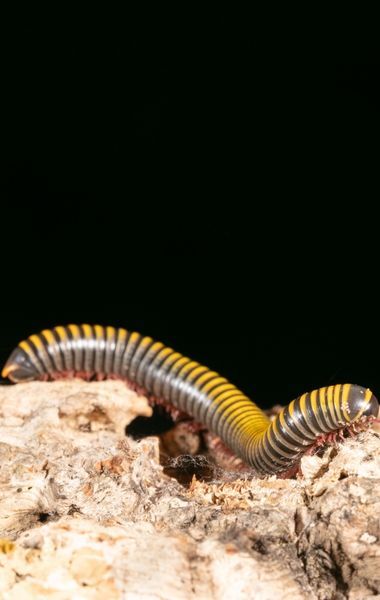
    The yellow–banded millipede is brown with yellow bands, and has red legs. Body length is 1-4 inches. Little is know about the yellow-banded millipede. These species may be attracted to lights.

    Hosts: Millipedes feed on decaying material and organic matter. They are commonly found in mulch however, they do not have specific nests where they live and breed. Millipedes are considered a beneficial organism.

    Importance: This harmless creature can be an indoor nuisance but not a plant pest. They can occur in large numbers, and have a habit of crawling up walls and accidentally coming indoors which may be somewhat unsettling. They do NOT bite.

    Damage: None

    Management: These millipedes can enter buildings and houses through wall holes, around service lines, around loose fittings windows and doors, or through damaged roof vents. Once they enter the building, they will soon die (usually within 24 hours) due to the dry conditions of most buildings and houses. They are not able to breed indoors. There may be some odor associated with these animals when they are disturbed so avoid vacuuming them up.

    Homeowner: Weather strip around doorways, especially over the threshold. Seal around windows. Turn off outdoor lights when not in use. Replace damages roof and vent screens, and caulk cracks and holes in walls.  If possible remove all organic material away from the building. Sometimes these millipedes will reside in potted plants near buildings.

    There are insecticides labeled for use against millipedes around the outside foundation walls which are successful at killing millipedes, however, this success is very short lived because more millipedes will have returned within 24 to 48 hours. This is one of those situations that what nature has created nature will have to cure. Once the population in an area has reached a balance the movement will cease.

    Follow our tips to prevent these intruders from getting inside your home or business and if you need help please don’t hesitate to reach out to Dave’s Pest Control for more info.

  • Plaster Bagworms

    Plaster Bagworms

    Have you seen these? These are Plaster Bag Worms and they feed on your wool and silk!

    The plaster bagworm is a small larva that creates a case from silk and debris, like soil, lint and paint fragments to help camouflage the case. This protects it from predators as it matures inside. Plaster bagworms are also known by the name household casebearer.

    Plaster bagworms are household pests as they feed on wool and silk. They will eat the webs of spiders as well. The plaster bagworms can be identified by the cases they build. They resemble pumpkin seeds in that they are wide in the middle and tapered on the ends. This allows the larva to turn around inside the case.

    These cases are easily seen on light-colored walls and can be found mainly in closets. Plaster bagworms may also be found near baseboards, under chairs and on the edges of rugs. These pests are typically found in the southeastern region of the US.

    Plaster bagworm moths are small and gray, with distinct dark spots and long, gray hairs on their hind wings. The adult moths of the species do not appear to feed. The female moths will deposit up to 200 tiny, light-blue eggs in a hidden area to keep them safe while they mature. Once the larvae hatch, they spin a case of silk and coat it with debris to protect them. The plaster bagworms will travel with the case dragging behind them as they seek out food. These insects will pupate inside the case.

    Keeping your home free of spider webs and cobwebs can help control plaster bagworms. Store your clothing only after it has been cleaned and inspect your closet regularly, especially where items are stored for long periods of time. Plaster bagworms will only feed on the fibers of silk and wool. They do not eat cotton fibers.

    If you have questions about plaster bagworms or other pest control issues, please give Dave’s a call.

  • Bed Bugs: What are the first signs of Bed Bugs?

    Bed Bugs: What are the first signs of Bed Bugs?

    Bed Bugs! Two words that most people don’t want to hear or even think about finding in their residence whether temporary or permanent. The very thought sends chills down the spine.

    Unfortunately, these pests and difficult to spot and even harder to get rid of without the help of a licensed & experienced professional.

    That’s why we are here to educate you on the most common signs of Bed Bugs and help you eradicate these pests if found.

    Bed Bugs are tiny reddish-brown wingless insects, about the size of an apple seed or flaxseed, that most commonly live in the crevices or seams of your mattress or box spring but come out when you are sleeping to feast on human blood. Bed Bugs’ favorite and main food source is human blood but there have been known to feed on other vertebrates.

    Bed bugs can also be found almost anywhere humans inhabit such as single-family homes, condos, apartments, hotel rooms, motels, and RVs. There have also been reports of bed bugs infesting businesses such as retail stores, movie theaters, cruise ships, retirement homes, public transportation, and restaurants.

    Where do Bed Bugs come from?

    These little blood-sucking hitchhikers have been around for thousands of years. It is a common belief that these insects were the first cave dwellers that fed on Bat blood but switched over to their human blood diet as we exited from cave dwellings long ago.

    But how did they get on you? Bed Bugs, though tiny, are deceptively fast, crawling about 5 ft in 1 min. They can crawl into your luggage or laundry to hitch a ride or they may crawl in to just lay eggs before returning to their hiding spot.

    Bed bugs can live about 10 months and can go weeks or months without food. They can also travel behind walls and loose wallpaper.

    What are the most common early signs of Bed Bugs?

    The first sign of a Bed Bug problem is often bed bug bites. If this is the case you will need to search for live bed bugs. They can be difficult to find so you will need to examine their favorite hiding places first. The tight cracks, seams, and crevices of the mattress and box spring, bed frames, headboard, pillowcases and bed sheets. It is also a good idea to search couches and all upholstered furniture as well as baseboards.

    The next most common sign of bed bugs is shell casing from the molting process. These casings will be yellowish-brown and a translucent shed of their exoskeleton. There may be various sizes of shed exoskeletons due to the fact that bed bugs will molt 5 times during their life from nymph to adult bed bugs.

    Yet another telltale sign of the pests is bed bug eggs. These tiny eggs and egg shells are only around 1mm long and the width of a pinhead. A female bed bug can lay up to 7 eggs a day and these usually hatch within 10 days.

    A few more signs that you have these insects are bed bug excrement, bloodstains, or a musty odor. Fecal spots or droppings will be dark spots that almost look like ink pen dots. Similarly, Blood stains will be random tiny specks of blood. Both may appear on the mattress, box spring, linens, and pillowcases. Some people can detect a musty odor that may smell a little like cilantro or coriander and in severe cases, it will smell like rust, wet towels, or moldy laundry.

    While most people may show no signs of an allergic reaction to bed bugs, 20% of the US population are allergic and may show symptoms of bed bug bites. This 20% could suffer possible severe itchy welts, hives, and even blisters.

    Can Bed Bugs hide on your body?

    The easy answer here is No, they can not. Bed bugs may attach themselves to clothing in order to transport to a new location or to lay eggs but they will only feed while their host is sleeping so that their presence isn’t detected before going back into hiding. Bed Bugs also can not fly. They are wingless insects but bothersome nonetheless. For more common myths around Bed Bugs

    How to Get Rid of Bed Bugs

    If you have or suspect a bed bug infestation or have any of the numerous signs of bed bugs, your best bet is to call a licensed exterminator who will know the proper pesticides to use.

    Many chemicals and strong pesticides were banned or weakened decades ago due to their toxicity and proximity of use to our families and pets. For a history of this, here is another blog post with more info.

    Dave’s Pest Control has over 40 years of experience exterminating bed bugs. We are your #1 exterminator for not only Bed Bugs but all manners of Pest Control. Get to know other common pests in your area by checking out this Scary bugs and Bites Post.

    With services in Lakeland, Port Orange, Orlando, Sanford, Palm Coast, New Smyrna, Ormund Beach, Deland, and Daytona Beach, we cover the greater Polk, Seminole, and Volusia, Florida Counties.

    Give Dave’s a call today for a free inspection!

  • Palmetto Bugs – Do You Have an Infestation?

    Palmetto Bugs – Do You Have an Infestation?

    Palmetto bugs are common pests in Florida. They like warm and damp environments that are common throughout Florida, including Daytona Beach, Holly Hill, Ormond Beach and other parts of Flagler and Volusia Counties. They look like cockroaches because they technically are cockroaches, the American Cockroach. They’re reddish brown and get as big as 1.5 inches if not a little larger. Both male and female palmetto bugs have wings although they’re used mostly for gliding.

    Palmetto bugs are almost always in groups. If you see one palmetto bug, that means there are usually more–often many more; palmetto bugs usually show up in large groups, as in hundreds or thousands. Palmetto bugs are rarely seen during the day; they hide from humans and other predators, so the ones you see are usually just the tip of the iceberg and an indicator of a bigger infestation. Even seeing just a single palmetto bug is often an indicator of a common problem.

    Since they hide from humans, you probably won’t notice them until after they have become a problem. Any sign of palmetto bugs is a warning, and homeowners should do everything to stop a palmetto bug “gathering” from turning into a full blown palmetto bug infestation.

    Often you might even see palmetto bug eggs and not the palmetto bugs themselves. They can go 2-3 months without eating, so they’re not going to rush to expose themselves. They lay an egg sack weekly. The thin brown sack is almost half and inch long. While palmetto bugs move, their eggs don’t.

    Given their efforts to stay hidden, homeowners in Florida should look for signs of a broader palmetto bug problem, especially if you see one or two of them. Palmetto bugs give off a musty smell, but they leave lots of visible evidence of their presence–chew marks on papers, curtains, book bindings, and even some clothes. You can also looked for shedded skin from when they molt along with their droppings, which will most likely be found in cracks and crevices around your home.

    Palmetto bugs do pose health risks from contaminating plates, utensils, toothbrushes and other parts of the home in the process of crawling over hidden areas like drawers and drains. If you see any sign of palmetto bugs, do not hesitate to call Dave’s Pest Control if you live in central or south Florida, we offer expert pest extermination in Port Orange, Daytona, Orlando, Sanford, Lakeland, Coral Springs and other areas of Florida.

  • How to Treat For Ghost Ants

    Pest Control Tips: Identifying ghost ants and where they live

    One of the most common ants we encounter in the pest control field is ghost ants. Many homeowners may refer to them as sugar ants or other colorful phrases like “piss ants”. The ghost ant is associated with species known as “tramp ants” that is widely distributed in tropical and subtropical regions worldwide. Ghost ant workers are extremely small, approximately 1.5 mm long, and monomorphic (one-sized). The head and thorax are a deep dark brown (black in appearance) and the abdomen are opaque or milky white almost appearing transparent hence the name ‘Ghost ant”. Ghost ants issues are among the eight most common ant pest control issues in the state of Florida.

    Ghost ants are highly adaptable in their nesting habits. They can nest readily indoors or outdoors. Their colonies are moderate to large in size containing numerous reproducing females. They are opportunistic nesters that will nest in areas that remain habitable for as little as a few days to a few weeks. Many of the sites in which ghost ants like to nest are usually too small or unstable to support larger colonies. While ghost ants are generally observed in kitchens and bathrooms, they are not limited to those areas. Some of the other areas they are commonly found nesting include potted plants, cabinet voids, and wall voids. Homeowners may be able to identify ghost ant workers by their “erratic” patterns while foraging. They will “zigzag” along trails almost appearing drunk.

    Within a very short time, multiple queens will spread out into multiple sub-colonies. This process is known as budding, which is when one or more reproductive females, accompanied by several workers and possibly some brood (larvae and pupae), leave the colony to start a new nest. There is no infighting between members of different colonies or nests, which allows ghost ants to flourish in numbers. In addition to the internal colony characteristics previously mentioned that promote colony growth, the ghost ant also has symbiotic relationships with other species, which also allows ghosts ants to proliferate. For example, ghost ants have even been observed in some areas nesting with other species like spiders on the underside of leaves. While the spiders provide protection from predators and parasites, the ant nest is used as a foundation for web construction. For larger infestations, contact Dave’s Pest Control for a free inspection and assessment.

    How To Get Rid of Ghost Ants

    The best method for getting rid of ghost ants is liquid baiting on the interior along with a liquid treatment around the exterior. A good pest control technician should try to get the liquid bait as close to where they are trailing as possible. The ants will gather around the liquid bait in a circle, gathering the bait to take back to the colony and the queen which will eliminate the nest. The workers don’t eat the bait; rather they take it to the queen, who in turn, digests the bait which will cause the colony to collapse.

    A good exterminator should be careful not to contaminate the bait when treating the interior with any pesticides. Exterior treatments should consist of treating around foundations, window and door frames, and any areas that might be holding moisture. For best results, use a product like Phantom or Fuse (any product containing Fipronil). Although ghost ants will feed upon many household foods, they seem to show a preference for sweets, feeding on sugar, cakes, and syrups. A good pest control technician will find the pheromone trail (an invisible trail of dots ants use to navigate from the nest to their food source) and placing the bait close to where they are trailing will optimize the effectiveness and time it takes to get rid of ghost ants in Florida. It’s important to remember that every situation is unique, so the inspection process is critical to success. Dave’s Pest Control technicians are highly trained to solve ghost ant problems so if you have ants problem in your home and you live in central or south Florida, just give us a call. We have the best exterminators in Port Orange, Lakeland, Davenport, Orlando, Davie and Weston.


  • You Should be Treating Your Lawn for Grey Leaf Spot Fungus

    Throughout each season in Florida, environmental factors play a huge role in retaining a lush, green lawn year-round. In the month we are in now, August, with humidity at its height and rainfall expected on a daily basis, Grey Leaf Spot Fungus is naturally flaring up all over lawns we treat in Daytona, Ormond Beach, New Smyrna, Deland, Palm Coast, Edgewater, and the rest of our customer’s lawns in other areas of Volusia, Flagler, and part of Brevard. Grey Leaf Spot Fungus can devastate a lawn, killing the entire blade of grass, and if left untreated, it can make its way all the to the runner, killing off sections of grass.

    Grey Leaf Spot in Florida LawnsGrey Leaf Spot thrives in conditions of high humidity above 95%, extended wet periods, including rainfall, and temperatures exceeding 80-90 degrees consistently. This fungus is one of the most aesthetically unpleasing fungi that appear on a lawn because it makes the lawn dingy and brown. The reason Grey Leaf Spot is so devastating to a lawn is that lesions start from the bottom of the grass blade and work up, making it incredibly difficult for the average technician to identify.

    After identification, it is not possible to save affected blades. All that can be done is a fungicide application and then wait for new growth. As Dollar Spot Fungus is corrected with a nitrogen application, the opposite is true for Grey Leaf Spot fungus. Applying nitrogen to active leaf spot fungus will literally melt a lawn down to the runner. Most lawn fungi react poorly to nitrogen. Melting out the fungus, in some cases, can be beneficial because new healthy blades will be promoted as long as a fungicide is included in the treatment mix. This method is obviously not the best way to go about treating Grey Leaf Spot fungus because the lawn will take a couple of weeks to recover and will look brown until it does so. The best way to keep Leaf Spot Fungus to a minimum is through early identification and following the instructions on the label of the chosen fungicide.

    Lawn Treatment for Grey Leaf Spot Fungus Understanding label rates of fungicides for application, proper follow-up time, and communicating with customers is the best way to keep these nuisance funguses from causing severe damage to St Augustine lawns. The technicians at Dave’s Pest Control are highly skilled and are able to identify and treat problems to keep your grass green.

  • Our fight against Bed Bugs

    Our fight against Bed Bugs

    When treating a bedroom for a bed bug infestation, many factors must be considered. Rooms need to be treated thoroughly and done multiple times. Bed bugs lay very small, almost clear eggs which are hard to see. Chemical sprays do not affect the eggs, and we must rely on the newborn nymphs to come into contact with the residual from sprays.

    To treat these tiny blood sucking creatures, you must have knowledge of the pests’ growth cycle, their feeding habits, and where they choose to hide.

    You must also determine which products to use. That’s when you can run into trouble. There are hundreds of products to choose from and they all basically say the same thing—”bug killer.” What most people do not realize is bed bugs, like many other bugs, are always evolving and adapting to their environment.

    It’s best to call a licensed pest control company with experience dealing with bed bugs.

    Bed bugs have evolved over the years and have become more resistant to chemical sprays. Chemicals previously used are no longer effective in controlling bed bugs. It’s time to surrender our old pesticides and usher in a new dawn of pesticides that will safely eliminate pests such as bed bugs, without harming the environment for future decades.

    Pesticides in the 1930s

    Up until the 1930s, farmers grew enough crops to feed themselves, their families, and maybe a few others. Most farms grew several different types of crops; any extra would have been sold at local markets.

    As farming technologies grew and improved, people began to grow only one type of crop. This was usually corn, wheat, or some other type of “cash crop.’’ By producing large amounts of one crop such as corn, farmers could make a profit and reinvest in their farms.

    By only growing one type of crop, insects had an endless supply of food and habitat without any interference from natural predators. Farms that were dependent on corn as an export had an influx of pests like cutworms, chinch bugs, and thrips, to name a few.

    Most of the early attempts at controlling pests with chemicals like arsenic, sulfur, and copper were futile. Arsenic was used for centuries as a poison and a way to kill unwanted pests. Arsenic and copper were used together as a fungicide. Some farmers would fill a copper bowl of water and dip their seeds in it to prevent crop diseases.

    Necessity is most often the mother of invention. We are naturally repulsed by bugs like roaches, spiders, bed bugs, and flies. Our brains are hardwired to fear these ancient creatures—for good reason. Modern advancements in science and technology led us to the understanding that filth and bugs bring sickness and disease.

    The Golden Age of DDT

    Early in the nineteenth century, DDT Dichlorodiphenyltrichloroethane, was first synthesized by a German chemist. Organochlorine pesticides are chlorinated hydrocarbons that do not break down easily and remain active for a long period of time. Although not soluble in water, organochlorines are easily absorbed by soil and sediments.

    When first made, DDT was known to kill insects, but its true potential was not realized until years later. Little was known about the correlation between insects and disease prior to the 1930s; everything would change with the advent of war.

    When Japan bombed Pearl Harbor and set in motion the wheels of war, our American troops needed every ounce of help they could get. Marching on foot in unfamiliar territory, our troops became targets for malaria infecting mosquitoes and many other pests. Fleas would spread the plague and flies caused typhoid and dysentery.

    This new understanding of the relationship between pests and disease was seen as nothing short of revolutionary. Something had to be done to destroy these pests.

    American and Allied troops needed a defense against these foreign parasites and the powerful insect killer DDT was used with reckless abandon.  It was considered a miracle that gave our overseas troops protection from many different pests worldwide and also gave them an added layer of protection from at least one of the perils of war: disease.

    DDT’s huge popularity became the secret weapon against mosquitos, fleas, flies, and bed bugs. It was also used in everything from powders to treat head lice, to paints for your home. It was made into dips, powders, sprays, and many other items. DDT is odorless, tasteless, and colorless. Parents sprayed their children with DDT, unaware of the risks associated with this wonder chemical.

    In time, scientists discovered that this miraculous pesticide caused serious ailments and put anyone who works with it in grave danger.

    The very things that made DDT so popular began to evoke concern. It was known that when this pesticide was applied to a surface, bugs that came into contact with it would die, but for how long would the treated area kill bugs? For six months? Or six years?

    Studies found that DDT could remain for many, many years. The most shocking revelation came with the discovery that it can take up to 15 years for half of the pesticide to degrade beyond detection. In addition, the poison would show up in animals far from treated zones.

    Organophosphates work by disturbing the normal functioning of neurons in the brain. Bugs that are exposed to organophosphates twitch and convulse uncontrollably. This is referred to as a neurotoxicity, and humans can also be affected by this poison.

    The widespread use of DDT was banned because of these health concerns. DDT remains active in treated areas for far too long, posing a grave heath risk for both applicators and the public. People could be exposed to this deadly insecticide just by accidentally coming into contact with a treated area.

    Organochlorines were not the first class of pesticides to be banned. Other early pesticides made from organochlorine are now banned, including methoxychlor and benzene hexachloride (Lindane). Tobacco has also been used for ages in pest control. The toxic compounds found in nicotine make an excellent pesticide and can also help prevent certain diseases caused by fungi.

    Pyrethrin Resistant Bed Bugs

    Pyrethroids are synthetic compounds that mimic the effects of pyrethrin and  are very commonly in use today. Pyrethrins and pyrethrums are derived from flowers in the chrysanthemum family. Other chemicals are added to the extracted pyrethrins to make a stable insecticide that does not break down quickly. Both natural and synthetic, pyrethrins can kill a broad range of insects and can provide long lasting residual control.

    This has been the standard insecticide for a quick knockdown of pests. Since pyrethrins are made from flowers, insects are predisposed to their toxic effects.

    Insect Growth Regulator

    By combining an IGR and an insecticide, the effectiveness of the treatment is more than doubled.

    Insect growth regulators work by stopping an insect’s ability to make chitin—the major constituent of the exoskeletons of insects—and inhibits their ability to produce growth hormones. IGR’s mostly affect the egg and larva stage in an insect’s life cycle and render the adults sterile.

    Bed Bugs Fight Back

    Bed bugs have become resistant to pyrethroids. Over many years, they have developed the ability to produce chemicals in their chitin that absorbs pyrethrins before the chemical enters their bloodstreams. This ingenious adaptation has helped bed bugs live through the many onslaughts of pyrethroid used against them.

    Some blame the resurgence of bed bugs on the ban of pesticides like DDT. During the 1980s and 90s, bed bugs were a historic tale that grandparents would tell. There was no need for the MTV generation to pray away bed bugs; there were none to be found.

    Today’s pesticides are incredibly safer than yesterday’s. Many of the synthetic insecticide compounds we find today provide excellent protection and do not persist for endless periods of time. Depending on many factors, most insecticides will provide about six months of residual control. Temperature, humidity, and sunlight can break down insecticides as well as many herbicides, fungicides, and neonicotinoids.

    Expert advice

    Dave’s Pest Control has technicians with decades of experience behind them who are ready to work for you. No job is too small or too big.

    Call us today for more information on protecting your home, business, or condominium against bugs.

  • Aphids, Boxelder bugs and Bed bugs….what you need to know.

    Aphids, Boxelder bugs and Bed bugs….what you need to know.

    Every avid gardener knows about aphids and often does battle with them. These tiny bugs feed on many garden plants and flowers. Aphids are soft bodied bugs that suck nutrient rich sap from the leaves, stems, and buds of many kinds of plants.

    Astonishingly, they have a great amount of reproductive power, but not in a way familiar to us. Virgin female aphids can produce genetically identical female aphids—clones—about every 20 minutes. Even the newborn aphids have a smaller aphid inside them ready to be born.

    To further their fight for survival, roughly half of the clones sprout wings. Being airborne gives them an added advantage for survival. By spreading out to neighboring plants, they increase their food supply, and their numbers will grow exponentially. 

    By producing a genetic variety of different DNA codes, aphids have been able to survive for thousands of years. It also has enabled them to survive throughout Earth’s environmental changes.

    Many other bugs feed on aphids such as ladybugs, lacewings, and certain beetles; thus, you are most likely to find a large number and variety of bugs in your garden all at one time.

    Aphids

    There are many different species of aphids; they come in many different colors and sizes. When the males mate with the green females, orange color aphid babies are born.

    Aphids suck the life out of plants. Without the vital nutrients for healthy growth, plants desiccate and die. Aphids excrete a sticky substance called honeydew, which in turn creates sooty molds that feed on nutrients from the honeydew. 

    The sooty molds are fungi spores that coat many ornamental plants that aphids feed on. The presence of black sooty mold does little harm to the plants, but it is a good indication that insects are feeding on them. 

    Boxelder bugs

    These tiny red bugs called boxelder bugs are native to the United States. Without fail, they swarm every spring in Volusia and Flagler Counties. They get their name from the boxelder trees they feed on, although they also feed on other types of trees and landscape plants. 

    When cooler temperatures arrive in the fall, they can overwinter indoors after finding small cracks and crevices to nest in. 

    Adult boxelder bugs are about a half inch long with very distinct red, orange. and black markings on their bodies. 

    This one in particular has a small mollusk attached to its face.

    Controlling boxelder bugs can be difficult, especially if large clusters are accumulating on the sides of your home or place of business. You can find the majority of boxelders in large clusters on the warm sunny side of structures, including windows. 

    The first line of defense to keep any bugs out, not just boxelders, is to make sure windows and doors do not have any large gaps or openings, especially at the bottom door sweeps, and around the structure’s foundation. 

    Boxelders have three life stages: egg, nymph, and adults. The nymphs are small and red, lacking the familiar dark black wings. As the nymphs grow, they eventually become mostly black and develop wings for flight. 

    Boxelder bugs gather in very large populations and may look intimidating.  However, they are harmless to humans and pets.

    Sometimes they are referred to as stink bugs. If you find yourself in a situation where boxelders are crawling inside your home or business, resist the temptation to smash them. They give off a putrid smell—hence, stink bug—and their guts can stain carpets, flooring, and furniture.

    Rather than smashing them, it is recommended that you vacuum up boxelder bugs and dispose of them. Or if you have a vacuum bag, once it’s full of the bugs, freeze it overnight. The bugs will die in the freezer and you then can dispose of the bag.

    A very popular home remedy for getting rid of boxelder bugs is to spray them with a small amount of dishwashing liquid mixed with warm water. This will cause the waxy layer on their exoskeleton to desiccate, leading to their death. This is a great way to spray for these bugs without using pesticides. One drawback is there will be no residual control from the spray, so you will have to reapply often. 

    Chemical barrier sprays are also a great way to control boxelders. When applied correctly and in the right areas, large populations of boxelders can be eliminated quickly. 

    Boxelder bugs are also found in great numbers on a variety of trees such as maple and ash in addition to boxelders These all can be sprayed with the dishwashing liquid and water mixture without harming the tree. If using a chemical spray on trees, make sure you strictly follow all the labeling directions. Some insecticides can wipe out beneficial insects that are needed for healthy growth of the trees or plants. Furthermore, some insecticides can chemically burn the leaves of a tree. Although the tree would not die from this, it would be put in great distress. 

    You could also remove any trees that accumulate boxelders, but that would be an extreme measure, and even if you did that, many boxelders would still be present in the ground. 

    Fortunately, boxelder bugs only appear in the spring and fall. We rarely see them during the summer months. As far as bugs are concerned, these bugs do not do damage to our homes nor do they feed on people or pets. Boxelder bugs are merely a nuisance pest and are rarely a problematic issue. 

    Bed Bugs

    Say these two little words aloud to anyone within hearing distance and watch them shake in disgust. Nothing else quite induces the fear and revulsion produced by the mere mention of these bugs feeding on your body while you are sleeping.

    Bed bugs nymphs are very small and clear, reaching about 1/16 of an inch long. The adults are about a quarter of an inch long, resemble an apple seed and are about the same size. Their minute size and stealthy disposition make them a worthy adversary. They came into our ancestors’ lives, have clung on to us, and we’ve never been able to eradicate them. 

    Baby Bed Bugs

    They emerge silently from their protected nests every night to drink human blood. This is a very real nightmare experienced by many homeowners and business owners and their customers alike. 

    What is even more nightmarish is that they inject you with an anesthetic and an anticoagulant, so you do not even realize you are getting bit! 

    The first symptom you may experience is itchy red bumps on your torso, arms, or legs—or all over your body. Unfortunately, there are many other bugs that can cause red itchy bumps, such as mosquitoes and fleas, so these symptoms are not always the best indicator of the presence of bed bugs.

    To further confuse the issue, each person’s reaction to bed bugs is wildly different and varied. Some may experience mild to no reaction while others can have severe allergic reactions. Since you are sleeping and cannot feel them biting you, hundreds of bites can cover your body in just one night.

    They leave sticky dark-black stains on bedding and furniture where they are feeding. The spots are caused by dried blood and excrement from the bed bugs. 

    Bed bugs go through several molts as they grow, shedding their old exoskeletons, which can be found anywhere that bedbugs have traveled. They go through what’s called a gradual metamorphosis starting with an egg, progressing to first, second, third, fourth, and fifth stage nymphs and then to adulthood.   

    Bed bugs can be accidentally introduced into your home in several different ways. For some people, bed bugs have crawled into luggage or clothing after they’ve stayed at a hotel or motel. They return home, and the bed bugs crawl out from hiding and lay eggs in their new surroundings.

    Other homeowners have gotten bed bugs from family members or friends that may have stayed overnight.  We see large occurrences of bed bugs after hurricanes have forced people to stay in storm shelters. Often when people are staying with relatives or sleeping in hotels, bed bugs come along for the ride. 

    Some homeowners who have used the store bought “bug bombs” may have initially had quick results; however, weeks or months later, they will inevitably see a return of bed bugs. 

    The reason for this is the eggs that bed bugs lay. Like many other insect eggs, they are protected from chemicals. Penetrating bed bug eggs with a chemical spray is next to impossible. The function of the egg is to protect the embryo inside from exterior pollutants and chemicals. 

    Once the bed bug hatches out of its egg, it is extremely small and fragile. If it does not come into contact with any residual pesticides, it will continue to feed and grow. Female bed bugs can give birth to anywhere from one to five nymphs a day and 500 in a lifetime. 

    If you suspect your home or business has bed bugs, call a professional company like Dave’s Pest Control. Getting rid of bed bugs can be very difficult, best accomplished by trained technicians. 

    If you see bugs in your landscape or inside your home, call us today for a free consultation.

  • Roaches, Silverfish, and Spiders—Oh, my!

    Roaches, Silverfish, and Spiders—Oh, my!

    No other bug prompts more calls to pest control technicians than cockroaches. The very sight of them sends chills down your spine. We are repulsed by them and abhor their presence.

    Can they fly? That is a good question, answered by some interesting facts.

    While the American roach cannot fly in the true sense of the word, it can  glide from a high spot like a tree limb down to the ground. Sometimes you can be just minding your own business and accidentally step into the flight path of one of these gliding repugnant roaches which then lands on your head and gets tangled up in your hair—a nightmare scenario!

    No matter what part of the country you live in, your home is not safe from cockroaches. They can effortlessly crawl through small openings or cracks and enter your home.  They often find their way into your cupboard with other well known pantry pests.

    These little bugs have been pestering humans from time immemorial. Archeologists recently found an ancient cockroach preserved in amber. Initially, studies suggested the roach was over 200 million years old, but new evidence suggests roaches as a species are far older than previously thought. New theories state that cockroaches are over 350 million years old, dating back to when all the land masses on earth were joined together in what is called a supercontinent.

    Roaches are survivors. They’ve survived the last five extinctions and will no doubt survive the next one.

    There are over 4,500 different types of roaches in the world, but the good news is that only about 70 species live in the United States. Among these roaches are two groups: domestic roaches and non-domestic roaches.

    American roaches, aka palmetto bugs, are large roaches that live outdoors. They thrive in warm, dark, and damp environments. Seeking moisture, they are often found in and around plumbing lines in bathrooms and kitchens. Refrigerators and dishwashers are common areas frequented by roaches.

    German Roaches

    These roaches live and breed sharing living space with humans. German roaches do not live outdoors; they wouldn’t survive the colder winters found in the northern parts of our state. The fact that these roaches have been become domestic—living with humans—is a testament to their survival. No sane person would live with these most unwelcome guests. They are foul, sickening bugs, daily multiplying. Surely, we intelligent humans should be able to stop and kill such a small bug. Although they do not fly, they move quickly; but not so fast we can’t smash them with a shoe or our hand.

    German roaches existed and have survived for thousands upon thousands of years living with humans because of their sheer numbers. They can multiply extremely fast. While human females give birth in about 9 months, a German roach gestation period is about 28 days. One egg can contain 35 or more nymphs.

    Remarkably, these tiny roaches look nothing like they will after molting a few times. They are so miniscule, they can easily crawl into things we carry around like shoes, purses, bags, clothing, electronics, and many other things.

    Finding just one German roach in your home is cause for alarm. Never think you just have one roach. While roaches will probably outlast humans for dominance on our planet, you don’t have to let them dominate your home. Call Dave’s Pest Control at first sight of a roach.

    Silverfish

    First, silverfish are not fish at all; they are bugs found throughout Volusia and Flagler Counties. They get their name from their silver color and because they move like a fish. They are closely related to another similar bug called a fire brat. Fire brats seek out warmth and often are found near a home’s furnace or stove.

    Customers often see silverfish scurrying across the floor and wonder, “What is that? Where did it come from?”

    These small bugs do not eat other bugs; instead, they feed on paper, hair, clothes, books, magazines, and many other household items. Many people have found old pictures of deceased loved ones with holes chewed in them by silverfish.

    They are frequently found in attics feeding on the paper backing of the home’s attic insulation. With a seemingly endless supply of food and a stable environment, attics are the perfect home for silverfish.

    Silverfish can also be found in bathrooms and kitchens. They are attracted to moisture and will feed on mold created in high humidity environments. Sometimes they can get stuck in your bathtub or sink; silverfish cannot climb out of a tub or sink because the porcelain is too smooth for them to gain traction.

    Silverfish are millions of years old. Their reproduction systems differ from most other insects. Instead of being born as one organism and metamorphosing into another, silverfish are born identical to the adult silverfish. Molting as they grow, they will get larger with each stage in their development. Silverfish can molt 30 or more times in one year and have scales which are different from most other insects.

    Most true insects, through evolution, develop wings for flight, but not silverfish. They are still the same bug that they were millions of years ago. Insects that developed wings have a great advantage over other insects that cannot fly.

    Bugs that fly can reach various kinds of food and keep clear of potential predators or danger. It is not known why some bugs evolved, gaining  wings, while others did not. It is theorized that some insects had to adapt to extreme climate changes while others were able to survive hiding under rocks, as silverfish did.

    Many bugs have exoskeletons that are comparable to other mammals such as humans that have endoskeletons—internal skeletons. A bug’s exoskeleton is made of chitin. Chitin gives the exoskeleton strength and stability.

    Exoskeletons protect a bug’s soft insides. It’s akin to having a suit of metal armor like the knights wore in medieval Europe. This hard protective shell is found on hundreds of organisms like ants, bees, roaches, and beetles, to name a few. Marine life such as lobsters, crabs, clams, and oysters also have exoskeletons.

    Exoskeletons not only prevent damage and injuries to organisms, but also inhibits water loss. An insect’s muscles will also attach to their exoskeleton for locomotion. The exoskeletons of silverfish are covered in small hairs that can pick up insecticide dust easily.

    Another remarkable trait is silverfish can live up to 300 days without feeding. They shirk from light and prefer to live under rocks or any other object that hides them from the light.

    Silverfish have three long “antennas” on their rear end. Two of them are called cerci that are not antennas at all. Cerci are modified legs that have developed over millions of years of evolution. Many bugs have cerci like the cockroach which have two. They are used for discerning the world around them.

    The third long antenna-like extension is used for balance, movement. and reproduction. It contains ovarioles which are part of their reproductive system. Many insects and bugs have this ancient type of ovaries used for reproduction.

    Silverfish live in warm, humid environments. Finding a lot of silverfish could be an indication you have a moisture problem, perhaps a leaky pipe or condensation from cool air conditioning lines housed in a super-hot attic.

    In New Smyrna Beach, we found a large subterranean termite colony in an attic. While treating for the termites, many silverfish were discovered living in the attic, practically side by side with the termites. We also found hundreds of spiders and other bugs taking advantage of the moisture in the attic. It was determined that the air conditioning was being vented into the attic. The mix of super-hot attic air and the cool air from the air conditioner created an ideal place for bugs to live, feed, and reproduce.

    Spiders

    There are many kinds of spiders in Volusia and Flagler Counties. We often see those like the garden spider or the golden orb weaver. Then there are some spiders that are hard to find, and we hope never to see!

    In our part of the world, venomous spiders are not as commonly found as non-venomous spiders. The common household spider only exists to catch bugs like mosquitos and do not pose a threat to the safety of humans. If one were to bite you, you would only suffer some mild irritation and swelling at the bite area.  Learn more in this blog about common spiders in Florida.


    False Widow Spiders

    We also have what are called false widow spiders. Hiding in darkness, they are often mistaken for real black widows. The bad news is false widows also have an extremely painful bite. The good news is they are not as harmful to humans as black widow spiders are.

    False widow spiders are similar in shape to other widow spiders. They are brown in color with lighter markings on their large abdomens. The females are larger than the males and are found in dark places like under rocks or fallen trees.

    Although they have a venomous bite, it is not a potent one. Usually, a bite from a false widow spider is like a sting from a wasp or bee.

    Black Widow and Brown Widow Spiders

    The black widow spider and the brown widow spider are commonly found in our part of Florida. They are usually found in corners of homes and shy away from people. They only will bite if they feel threatened. This usually happens by accidentally pressing on the spider’s body. People have been bitten by a black widow spider that was hiding inside a shoe or in bed sheets.

    Black widows are easily identified by their black bodies and distinctive red hourglass shape on their abdomen. They are small but can deliver a lot of venom.

    Brown widows are also common in Volusia and Flagler Counties. Brown widows are larger than black widows and look very similar. Since they are larger, they can deliver a more potent bite with more venom than a black widow.

    Regular pest control treatment to the outside of your home will greatly help reduce the presence of spiders and roaches. Additionally, interior treatments also work well at stopping roaches and spiders from getting very far. An attic dusting can last for years and is a great way to stop pesky silverfish from eating paper goods and cardboard boxes that you might store up there.

    Call us today for a free estimate for your home or business.

  • Invasive and Destructive Pests in your Landscape

    The Imported Red Fire Ant

    Anyone living in Florida knows what a fire ant mound looks like; but to the untrained eye, it may look like an ordinary pile of sand. None the wiser, you may walk right on top of it, setting off a flurry of angry fire ants moving at incredible speed for an unrelenting onslaught of stinging and biting all over your feet and legs and upwards.

    A non-Floridian onlooker, seeing you smack your legs and shins while jumping around may think you’re a lunatic, but a savvy Florida native knows exactly what is happening.

    While this scene may look hilarious, it is no joke to the one getting unmercifully bitten and stung all over. Fire ant colonies number not in the thousands, but the tens of thousands, all intent on biting and stinging.

    Fire ants both bite and sting, grabbing onto your skin with their pincers and bending their abdomen down to sting you. The hellfire-like venom they inject is called solenopsin and contains an alkaline venom which is 95% water insoluble. This toxic venom has cytotoxic, hemolytic, antibacterial, and insecticidal properties, which inflicts extreme pain at the sting sites that feels like you are on fire. Fire ants sting repeatedly, making an attack that much worse and widespread.

    The alkaloids in the venom are responsible for producing the pimple-like postulates that erupt on the skin. The venom also has up to four major allergenic proteins causing intense itching and can cause an anaphylactic response. This has been observed in both animals and humans.

    Fire ants are an invasive species accidentally brought into the United States from Brazil inside a cargo shipment some 80 years ago. Since then, these tiny ants have wreaked havoc, spreading across the southeastern United States.

    Fire ants can enter your home through small cracks or openings. Unlike most ants, fire ants will eat just about anything. They are not picky when it comes to feeding themselves.

    From the perspective of an ant, the world is not infinitely as large as we see it. For an ant, your life is all about survival and reproduction. Your world is nothing but a large colony of cloned replicas of yourself feeding and caring for the next generation of adults.

    Like the fictitious characters “The Borg” featured on the television show Star Trek, fire ants have a collective mind and work as one. When faced with an obstacle like water, fire ants will cling together in a large mass and float until land is reached. Though some ants may fall off and drown, the sacrifice of a few to save the many applies here.

    Fire Ant Mounds

    Fire ants make large dirt mounds, often in areas that get a lot of sunlight. The mound we see is just the tip of the proverbial iceberg. Beneath the surface is a dizzying maze of tunnels and chambers that make up the colony. The tunnels can stretch to 10 feet underground. This is why many homeowners who destroy a mound, later discover another one has popped up a few feet away. Some fire ant mounds can be so deep that the ants seem unstoppable as homeowners battle them every year.

    Typical granular and powder pyrethrins may work on the surface, but ants tunnel down deep, escaping the poison, and start a new colony elsewhere.

    In Volusia and Flagler Counties, fire ants are everywhere. In fact, there are more fire ants in Florida than people. Ants as a species outnumber humans by 1.5 million to one. In other words, for each human alive, there are over one million ants. In our coastal towns of Flagler Beach, Ormond Beach, and New Smyrna Beach, fire ants are literally everywhere. You can find them easily just by looking around for a few minutes in the woods. Nests are also commonly found next to the bases of trees.

    Fire ants get their name from the painful bites they produce when their nest is disturbed. If a single ant bites you, you may feel a small amount of pain or discomfort, but if 1000 or more fire ants bite you at once, the pain will be much worse.

    Getting bitten by fire ants is described as a burning pain. Red, swollen itchy bumps emerge from each bite. Secondary infections from scratching the bumps are also common. The swollen, itchy bumps can remain for 30 days or more. Scarring also is common and can last for many months or forever.

    Although fire ants are not deadly, the sheer number of them is sufficient cause for terror. Getting stung by one bug hurts but getting stung by hundreds to thousands of angry ants would be the impetus for calling pest control and maybe a trip to the emergency room.

    Lubber Grasshoppers

    Lubber grasshoppers can be seen every spring in Volusia and Flagler Counties. Every year, they crawl out of the ground in a relentless search for food. As they feed, the chewing and stripping of foliage destroys the plants.

    These grasshoppers are easily identified by their large size and vibrant colored markings. Usually, they can be found outside all over shrubbery, plants, and grasses. They chew irregular holes in plants and can destroy an average size plant in a matter of days.

    The immature lubber nymphs are very different in appearance from the adult grasshoppers. Young nymphs are all black with a distinct yellow line running down their bodies. As they mature, they go through several molts. Each time they molt, they change from all black to a more orange-yellow color.

    Lubber grasshoppers do a lot of damage to plants. Their favorite is sunflowers, but they will eat many different types of plants and grasses. When these grasshoppers emerge from the ground, they do so in large numbers. Finding 50 or more lubber grasshoppers on one plant is not unusual.

    Not many predators will eat these grasshoppers. Lubbers secrete a vile foam, making themselves toxic to most predators. Some may even spit or make a hissing sound if they feel threatened. The foamy secretion is often called “tobacco spit.”

    Lubber grasshoppers can be difficult to control. Directly spraying the grasshoppers with a pyrethrum may work if they are in their first or second molting. Larger grasshoppers should be removed by hand and destroyed. Using chemical sprays on mature grasshoppers usually doesn’t work well.

    Preventative treatments using a systemic insecticide like imidacloprid may help stop damage from nymph lubber grasshoppers, as well as aphids, beetles, scale, and mealybugs.

    If you see these grasshoppers eating your favorite plants, call Dave’s Pest Control for a free consultation on how we can get rid of them.

    Eastern Subterranean Termites

    The eastern subterranean termite soldiers are responsible for defending the colony from attack. Ants and termites are mortal enemies. The intricate tunnels and hollowed out wood that termites create make perfect homes for ants. Epic battles between termites and ants are waged. Termite soldiers use their long mandibles in defense against the onslaught of any invader.

    Damage from subterranean termites can go unnoticed for a long time before the culprits are found. Sometimes it can take up to five years before a termite colony swarms. When termites swarm, hundreds to thousands of small black bugs with long iridescent wings litter your home or place of business. This is an indication that a mature termite colony is nearby.

    Termites live in a social order like ants do. There is a queen, a king, workers, and soldiers. These stations in life are called castes and many insect colonies have this common division of labor. Each caste plays a different role in the colony. If you were to take away one caste—the workers, for example—the whole colony would die off.

    Worker termites do just about everything in the colony. They gather food and feed all the other termites, build nests, and carve out galleries. Worker termites can be either male or female, depending on the needs of the colony.

    Many homeowners do some spring cleaning before the long days of summer set in. Trips to the local garden stores are common as people clean up their yards. For example, you may purchase new mulch for your landscaping beds. This simple purchase and chore can be like the Trojan Horse that concealed the Greek soldiers inside it to enter the city of Troy. Many months or years later you find subterranean termites in your living room wall that were hidden in the mulch you brought home.

    In Florida, termites are responsible for millions of dollars of damage and considered one of the most destructive pests we have. Protecting your home should be as important as protecting your other assets. We all insure our vehicles for damage from crashes and accidents; your home should also be protected from damage by termites.

    If you notice damage to your home or find hundreds of bugs and wings all over your home, there is a good chance that you have had termites for several years.

    Owning and maintaining your home can be a lot of responsibility. Let Dave’s Pest Control take some of the burden off your shoulders. By providing regular maintenance and inspections, you can have the peace of mind of knowing your most valuable assets and your loved ones are protected from destructive, invasive pests in and around your home or place of business.

    Call us today for a free consultation.